Clinical Operations teams have spent years improving how quickly they can see what is happening across a study. FDA's move toward real-time clinical trials raises the next question: what happens when important trial signals become available sooner?
In April 2026, FDA announced two proof-of-concept real-time clinical trials designed to report selected endpoints and data signals to the agency as the studies progress. The agency also announced plans for a broader pilot and issued a Request for Information on how AI-enabled technologies could improve the efficiency, speed, and quality of decision-making in early-phase clinical trials.[1][2]
For Clinical Operations, this is not primarily a story about sending data to FDA faster. It is about what earlier visibility changes inside the trial operating model.
When an enrollment trend, protocol deviation, site-performance issue, vendor delay, or study risk becomes visible earlier, the time between detection and response matters more. Someone still has to interpret what the signal means, determine whether action is required, establish ownership, coordinate across functions, and follow the issue through to resolution.
That is where the operational pressure begins to shift.
The broader regulatory direction is covered in our pillar article; Real-Time Clinical Trials Are Now an FDA Priority. Maxis AI Has Been Building for This Shift.
For Clinical Operations leaders, the practical implication is more specific:
Earlier visibility puts more pressure on the operating model to respond while the information is still useful.
The question is no longer only whether teams can see emerging issues sooner. It is whether the operating model, people, and technology can respond while that information is still useful.
FDA has described its current work as proof-of-concept trials and a proposed pilot rather than a universal real-time operating requirement for clinical trials.[1][2]
From Periodic Review to a More Continuous Clinical Trial Oversight
Clinical trials already generate operational information continuously.
Enrollment changes. Sites enter data. Protocol deviations occur. Vendors deliver output. Milestones move. Risks emerge.
But operational response is often still organized around periodic processes such as study meetings, monitoring cycles, governance reviews, email follow-up, and manually maintained trackers.
That creates an execution gap, when a meaningful trial signal becomes visible, and when the organization assesses, assigns, and acts on it.
FDA has connected its real-time clinical trial work to a long-term goal of enabling more continuous clinical development by allowing key insights to become visible as trials progress.[1]
For Clinical Operations, this means delays between seeing a meaningful issue and acting on it become harder to ignore.
How Earlier Trial Signals Change Clinical Operations
Faster information does not automatically create faster execution.
A site enrollment issue identified earlier is useful only if someone evaluates what is driving it.
A protocol deviation detected sooner creates value only if the team can determine whether it is isolated or part of a broader pattern.
An emerging milestone risk matters only if there is still enough time to intervene.
The FDA clinical trial initiative therefore raises an operational question:
Does real-time oversight mean teams must respond to everything immediately?
No. Earlier visibility should help teams identify and prioritize meaningful signals, not create an expectation that every alert requires immediate intervention. The response still needs to be proportionate to the significance and risk of the issue.
This is consistent with ICH E6(R3), which emphasizes flexible, risk-based approaches, quality by design, and fit-for-purpose use of technology while maintaining participant protection and reliable trial results.[3]
For Clinical Operations, the shift is therefore toward earlier awareness combined with appropriate response, not constant reaction.
5 Areas Where Clinical Operations Teams May Feel the Impact
Site performance and enrollment
A site can begin falling below its enrollment trajectory before the issue becomes obvious in a scheduled review.
Earlier visibility gives Clinical Operations more opportunity to understand whether the cause is recruitment, screening, site capacity, protocol burden, or another constraint.
Protocol deviations
The operational advantage is not simply earlier detection; it is having more time to diagnose the constraint and determine whether intervention is warranted. One deviation may be isolated. Similar deviations across visits, patients, or sites may signal a wider operational issue.
FDA's proposed pilot specifically asked how AI's impact on protocol deviations should be assessed, alongside metrics for safety-signal response time and improvements in data completeness, accuracy, and consistency.[2]
For Clinical Operations, earlier identification creates more opportunity to recognize patterns without treating every individual event as equally urgent.
Study risks and milestones
Clinical trial risks are connected.
Site activation affects enrollment. Enrollment affects study timelines. Vendor performance can affect downstream activities. Data issues can delay review and decision-making.
More current signals can help teams understand these dependencies sooner.
For clinical trial operations management, the value lies in intervening before an emerging risk becomes a missed milestone.
Vendor and site coordination
Many trial delays happen after the problem is already known.
A site issue may need to move through a CRA, CRO, sponsor, Data Management, Safety, or another vendor before the appropriate response is agreed.
When information becomes available earlier, delays during these handoffs become more visible. For Clinical Operations teams, this can make the timing, ownership, and clarity of vendor and site coordination more important to examine.
Escalations and follow-up
Escalation is not the same as resolution.
Teams still need to determine who owns the issue, what action is required, whether another function needs to participate, and when the issue can be considered closed.
As visibility becomes more continuous, Clinical Operations teams may need to look more closely at how issues move from identification through follow-up and closure, particularly where escalation depends on multiple teams or systems.
Why Ownership and Response Times Become More Important
In a periodic operating model, unresolved work can remain between review cycles.
A more continuous environment makes that harder.
When an issue becomes visible earlier, several questions immediately follow:
- Who reviews it?
- Who determines whether intervention is required?
- When should another function become involved?
- How quickly should the team respond based on risk?
Not every signal needs the same response time. What matters is having clearer alignment between the importance of the signal and the expected operational response.
That helps prevent real-time visibility from turning into continuous firefighting.
How Cross-Functional Workflows Need to Evolve
Clinical Operations cannot respond to every trial signal independently.
A deviation might first become visible through Data Management, require clinical interpretation, involve the site, and then require operational follow-up. A safety issue may involve investigators, Safety, Medical Monitoring, Clinical Operations, and external partners.
In a more continuous environment, these workflows may need to become less dependent on sequential handoffs and scheduled reviews.
When a meaningful signal appears, the relevant function should be identified earlier, along with the context needed to assess it. Ownership should be clear, response expectations should reflect the level of risk, and issues that cross functional boundaries should move to the next responsible team without waiting unnecessarily for the next routine review.
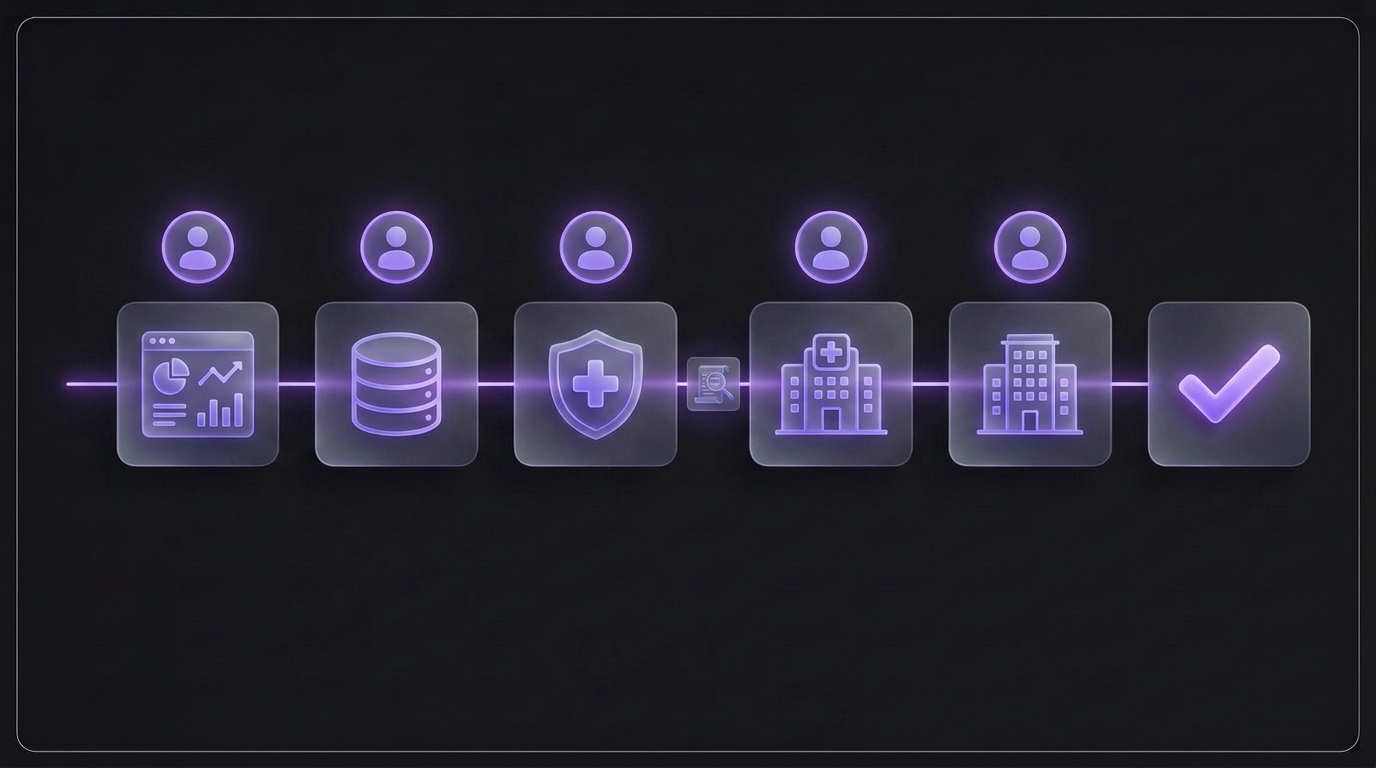
The workflow also needs a clearer path from escalation to closure. Teams should be able to see whether an issue has been reviewed, whether action is underway, and whether further involvement is needed.
For Clinical Operations, the evolution is therefore not simply “more collaboration.” It is more connected movement of work across Clinical Ops, Data Management, Safety, sites, CROs, and vendors, with clearer ownership at each handoff.
What This Means for Clinical Operations Technology
EDC, CTMS, eTMF, safety systems, laboratory platforms, and other clinical systems remain essential.
Real-time clinical trials do not eliminate systems of record.
Instead, they increase the importance of what happens after those systems surface something requiring attention.
A CTMS can show a missed milestone.
A monitoring platform can surface an emerging risk.
A dashboard can identify deteriorating site performance.
But identifying an issue and completing the work needed to address it are different operational capabilities.
The next challenge for clinical operations technology is therefore not simply generating more visibility, but connecting meaningful trial signals with governed, traceable operational action.
We explore that distinction in depth in the next article in this series, Real-Time Trial Monitoring vs Real-Time Trial Execution.
Preparing Teams for Continuous Oversight and Response
A practical starting point is to identify where earlier information could materially improve operational response.
Teams can ask:
- Which signals genuinely benefit from earlier attention?
- Who currently owns the response?
- What response time is appropriate?
- Which cross-functional handoffs create delays?
- Can current systems support timely follow-up?
These questions help reveal where current processes are already suited to more continuous oversight and where changes in ownership, coordination, or technology may be useful.
The goal is to make response timelier and more consistent as meaningful information becomes available sooner.
A more detailed readiness framework belongs to a later article in this series: How Sponsors Can Prepare for Real-Time Clinical Trial Execution.
Where a Governed AI Workforce Fits
The FDA clinical trial initiative does not require sponsors or CROs to deploy AI agents. FDA's RFI explores how AI-enabled technologies could contribute to early-phase trials, but it does not establish AI as a general requirement for clinical trial operations.[2]
For Maxis AI, the opportunity lies in addressing the execution gap that follows visibility.
Clinical organizations already have systems that record trial activity and technologies that help teams monitor performance. The remaining challenge is often the volume of operational work that begins after an important signal is identified.
Maxis AI is designed to help close that execution gap.
The Maxis AI platform provides a governed AI Workforce for Clinical Trials designed to add supervised execution capacity across existing clinical workflows and systems while keeping human experts in control.
Rather than replacing EDC, CTMS, eTMF, safety, or other established platforms, Maxis AI helps coordinate and advance defined follow-up work across them under supervision.
For Clinical Operations, that means helping move defined operational work forward while human teams retain judgment and accountability for decisions requiring clinical, regulatory, or operational review.
This distinction becomes increasingly relevant in a more continuous trial environment:
Earlier information creates value only when teams have the capacity to respond to it consistently.
For a deeper look at how visibility differs from execution, continue with Real-Time Trial Monitoring vs Real-Time Trial Execution. The next article, Why Governed AI Agents Matter in Real-Time Clinical Trials, examines what changes when AI begins supporting defined operational work in regulated workflows.
Key Takeaways
The FDA clinical trial initiative has implications beyond how quickly information reaches regulators.
For Clinical Operations:
- Earlier signals can expose slow response processes.
- Site performance, deviations, study risks, vendor coordination, and escalation may require earlier attention.
- Risk-based prioritization remains essential.
- Ownership and response expectations become more important, particularly across cross-functional handoffs.
- Existing clinical systems remain critical, while clinical operations technology increasingly needs to connect visibility with action.
The operational question is not simply how quickly a trial can generate information.
It is whether the organization can act on information that matters while there is still time to influence execution.
Frequently Asked Questions
Frequently asked questions
What is FDA's Real-Time Clinical Trials initiative?
Does FDA require all clinical trials to operate in real time?
What does real-time clinical trial oversight change for Clinical Operations?
Will real-time trials replace CTMS or EDC platforms?
Does FDA require sponsors to use AI agents?
How should Clinical Operations teams prepare for more continuous trial oversight?
Continue Reading: Real-Time Clinical Trials Series
This article focuses specifically on what the move toward real-time clinical trials means for Clinical Operations. Continue with the next topics in the series:
- Real-Time Trial Monitoring vs Real-Time Trial Execution — Why seeing an operational risk in real time and resolving it are two different capabilities.
- Why Governed AI Agents Matter in Real-Time Clinical Trials — What changes when AI begins supporting defined operational work and why governance matters.
- How Sponsors Can Prepare for Real-Time Clinical Trial Execution — How sponsors can assess workflows, systems, governance, execution bottlenecks, and organizational readiness.
Move From Earlier Visibility to Governed Execution
Real-time clinical trials increase the value of earlier visibility. They also increase the importance of ensuring that meaningful signals can move into appropriate action
Maxis AI helps sponsors and CROs add governed execution capacity across clinical workflows through The First AI Workforce for Clinical Trials, designed to work alongside existing clinical systems while keeping human experts in control.
References
Sources & references
- FDA Announces Major Steps to Implement Real-Time Clinical Trials — U.S. Food and Drug Administration, April 28, 2026
- AI-Enabled Optimization of Early-Phase Clinical Trials Pilot Program; Request for Information — U.S. Food and Drug Administration, Federal Register, April 29, 2026
- E6(R3) Good Clinical Practice (GCP) — U.S. Food and Drug Administration, Final Guidance, September 2025

About the author
Rebecca Collins
VP, Clinical Operations Transformation
Rebecca Collins specializes in clinical operations transformation, workflow automation, and scalable execution models across complex clinical programs.