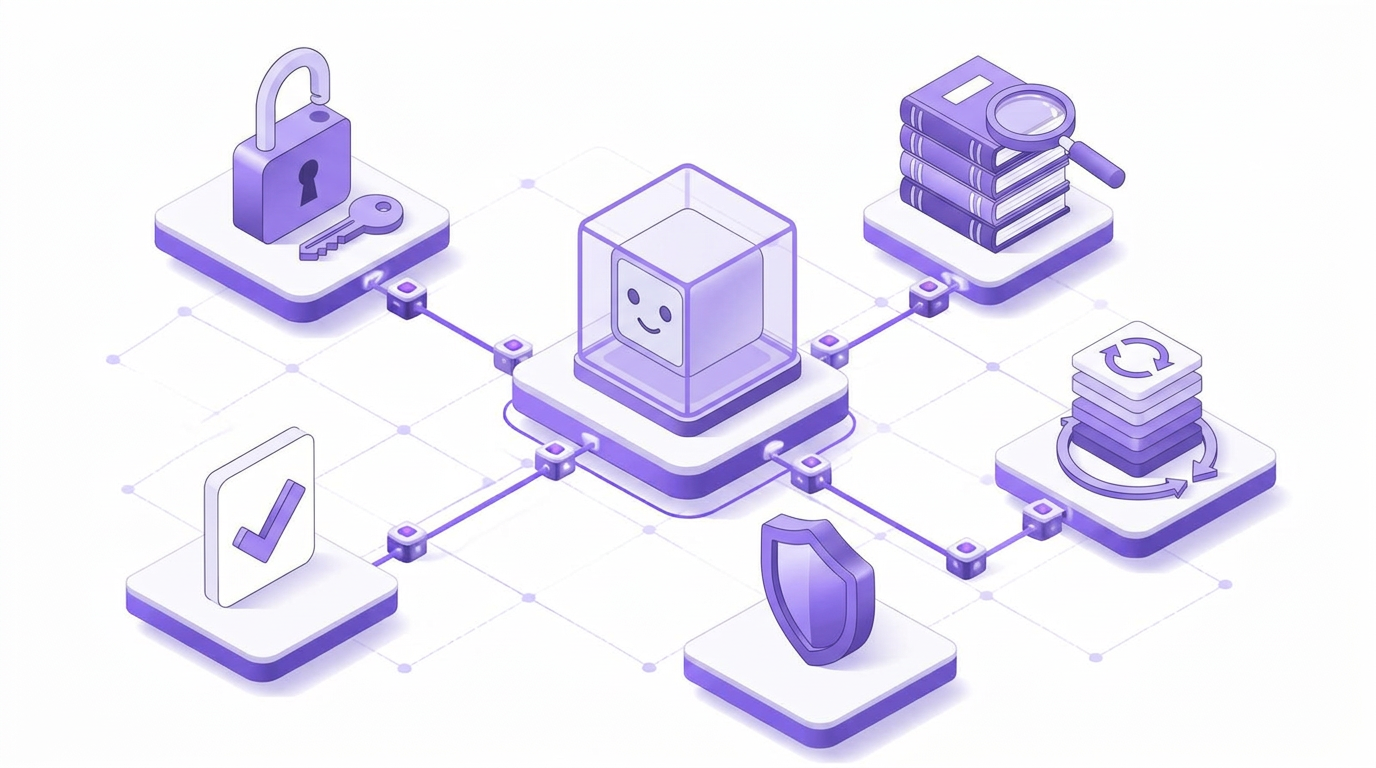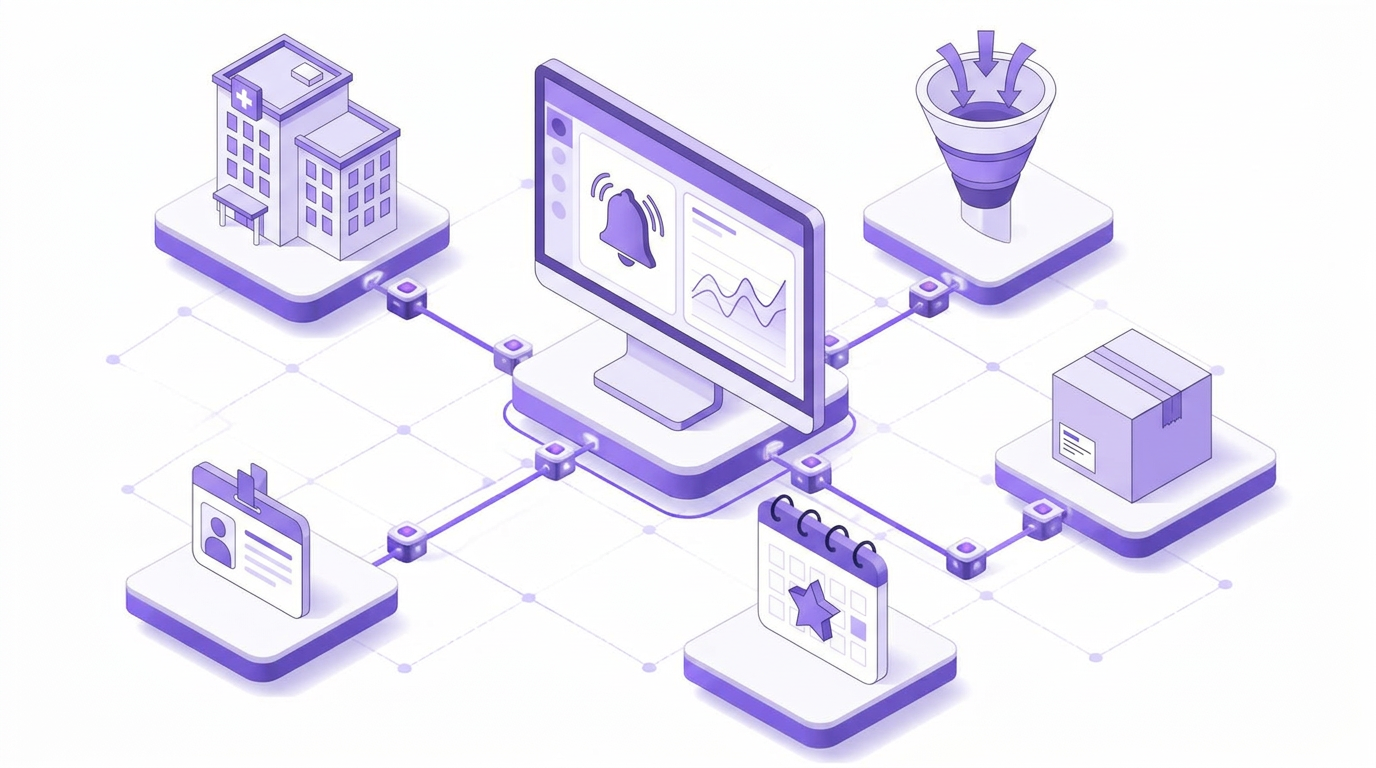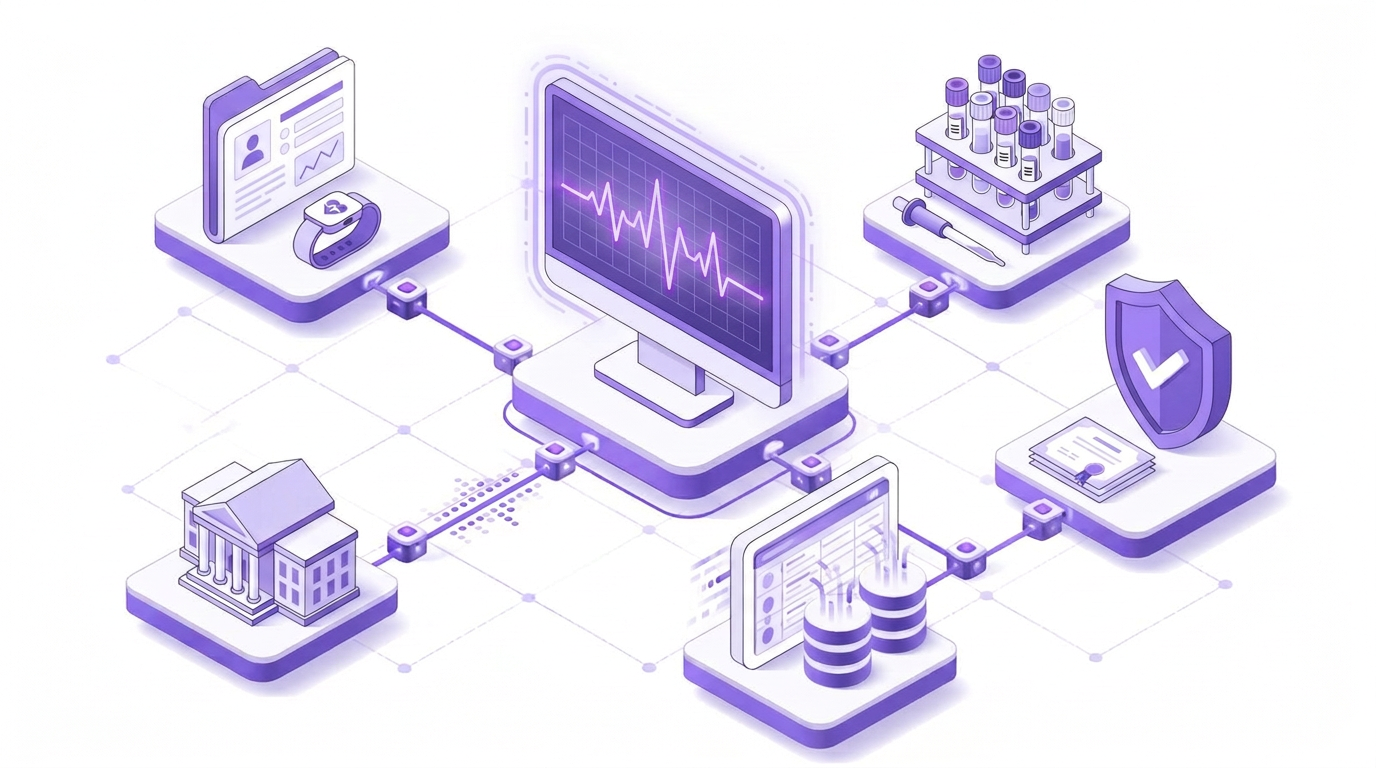
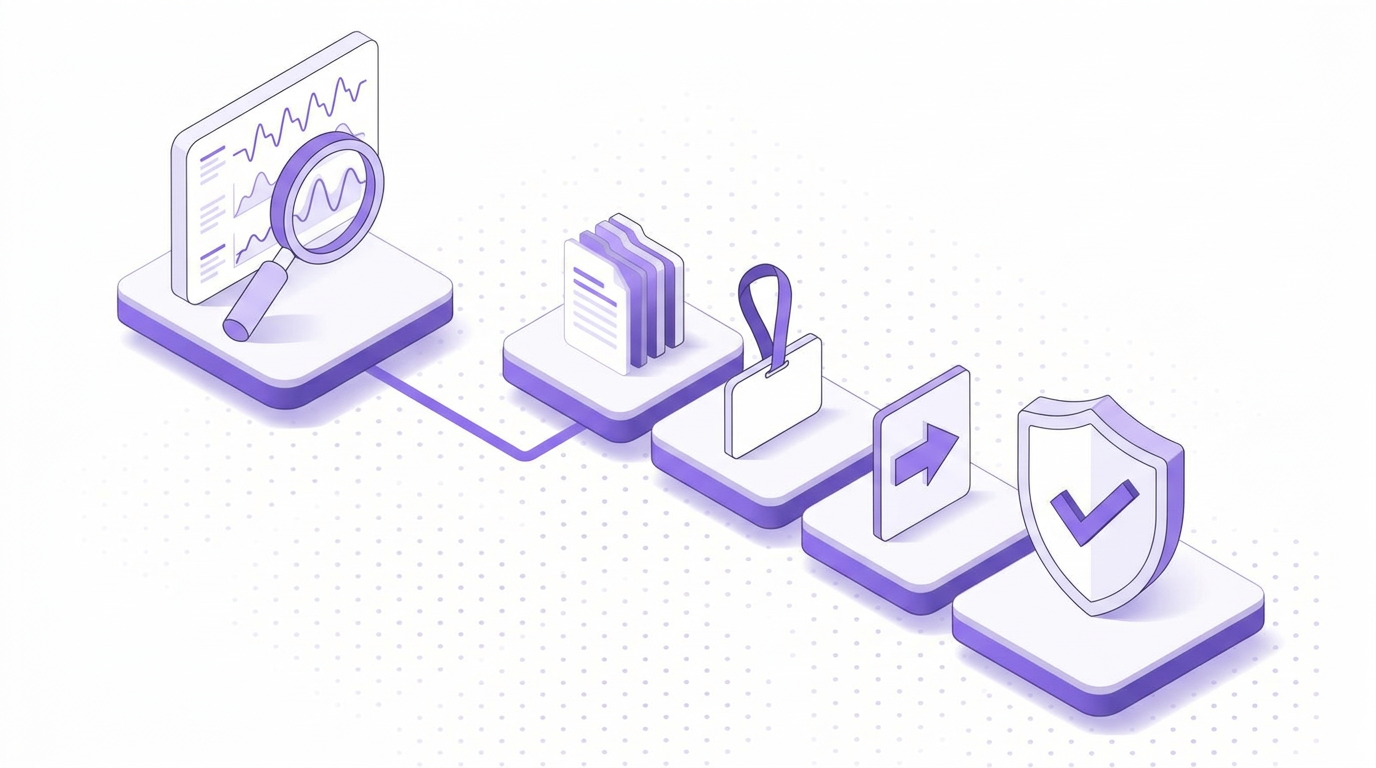
Real-time trial monitoring has improved how quickly study teams can identify where attention is needed. Centralized review, risk indicators, and analytics can surface patterns that may have taken longer to emerge through traditional monitoring approaches.
ICH E6(R3), for example, recognizes centralized monitoring and data analytics as ways to identify systemic and site-specific issues, including protocol noncompliance and potentially unreliable data.[1] Research published in Contemporary Clinical Trials similarly describes the shift from labor-intensive source data monitoring toward targeted, risk-based approaches that concentrate effort on critical information.[2]
This is meaningful progress. But earlier detection solves only one part of the operational challenge.
Once a relevant signal is identified, the work still has to move. Teams may need to gather context, assess significance, establish ownership, coordinate across functions, follow up with a site or vendor, update systems, escalate an issue, and confirm what happened.
Monitoring improves where attention goes. Execution determines how effectively the resulting work moves.
That distinction is increasingly important for real-time clinical trials, as clinical organizations become better at detecting risks without necessarily adding equivalent capacity to resolve them.
What Is the Difference Between Real-Time Trial Monitoring and Real-Time Trial Execution?
Put simply, monitoring asks: Where does attention need to go?
Execution asks: What needs to happen next, and how does that work move forward?
The two capabilities depend on each other. Reliable execution needs reliable signals. But improving detection does not automatically increase the amount of downstream work a clinical team can handle.
Monitoring Is More Than Dashboards and Alerts
Clinical trial oversight should not be reduced to dashboards, alerts, or technology alone.
ICH E6(R3) describes monitoring broadly, including communication with sites and other parties, review of trial information and records, centralized and on-site monitoring, and data analytics. Its purpose is to support appropriate trial conduct, participant protection, and reliable results.[1]
Risk-based approaches have also changed where monitoring effort is directed. Brulotte and colleagues noted that 100% source data monitoring can divert attention from more critical trial elements, while targeted approaches can concentrate monitoring resources where they matter most.[2]
The value of modern monitoring, therefore, is not simply more information.
It is better prioritization of attention based on risk.
The operational challenge begins once that attention has been directed somewhere.
A site signal may need investigation. A protocol deviation may require interpretation and follow-up. A data issue may need another function involved. A milestone risk may require coordination across several owners.
Finding those issues earlier is valuable, but the work created by them still consumes capacity.
A 2024 study involving 355 clinical research site respondents found that protocol complexity continues to increase site effort and that operational and managerial activities contribute materially to site burden. The study also found that introducing more technology does not uniformly reduce that burden.[3]
A systematic review of international clinical trials similarly identified recurring operational challenges across trial management, data management, site operations, infrastructure, and coordination.[4]
Finding work faster and creating capacity to complete that work are not the same improvement.
Why Monitoring Alone Does Not Increase Execution Capacity
Better monitoring can help a team identify and prioritize the right issues earlier. But after selection, the same people may still have to investigate the issue, gather context, identify the responsible owner, coordinate follow-up, document actions, and confirm the outcome. That means monitoring has improved selection and prioritization, while the volume of work the organization can actually move may remain largely unchanged.
This is where two different forms of delay become useful to distinguish.
Signal latency is the time between a relevant change occurring and the organization identifying it. Real-time trial monitoring can help reduce this delay.
Action latency is the time between recognizing that a meaningful signal needs attention and moving the appropriate response through the required workflow. We use “action latency” here as an operating concept, not an FDA or ICH-defined term.
Action latency can accumulate while teams:
- 1.retrieve relevant context;
- 2.determine significance;
- 3.establish ownership;
- 4.coordinate across functions;
- 5.prepare and review the response;
- 6.complete follow-up; and
- 7.confirm the outcome.
No single step has to be unusually slow. Delays accumulate across the workflow.
Reducing signal latency therefore does not guarantee a comparable reduction in action latency.
Where Real-Time Trial Execution Begins
We use real-time trial execution to describe the operational capability that moves appropriate work after a meaningful signal has been identified. It is also an operating concept rather than an FDA-defined regulatory category.
Execution can be understood through five connected functions.
1. Contextualize
Bring together the study, site, patient, milestone, deviation, vendor, or historical information needed to understand the signal.
2. Determine the Next Responsible Step
Establish who is responsible for the next step, whether Clinical Operations, Data Management, Medical Monitoring, Safety, Quality, a CRO, a site, or another partner.
3. Prepare the Work
Move relevant information, prior actions, and documentation with the task so the next person does not have to reconstruct the issue.
4. Advance the Action
Move through the required communication, follow-up, system update, review, or escalation. Some steps may be automated; others require human judgment or approval.
5. Verify the Outcome
Confirm whether the action occurred and whether the issue is resolved or requires another step.
The distinction is straightforward:
Monitoring identifies where attention should go. Execution moves the work that attention creates.
How Monitoring and Execution Connect Across the Workflow
Monitoring and execution are most useful when they operate as parts of the same workflow rather than as separate technology capabilities.
The handoff occurs when a detected condition requires operational follow-through.
| Workflow Stage | What Happens | Primary Contribution |
|---|---|---|
| Detect | A trend, risk, threshold, or relevant change becomes visible | Monitoring |
| Assess | The signal is reviewed in context to determine whether action is needed | Monitoring + human judgment |
| Assign | Responsibility for the next step is established | Execution |
| Act | Follow-up, communication, escalation, or another defined action moves forward | Execution |
| Verify | The team confirms what happened and whether further action is required | Execution + oversight |
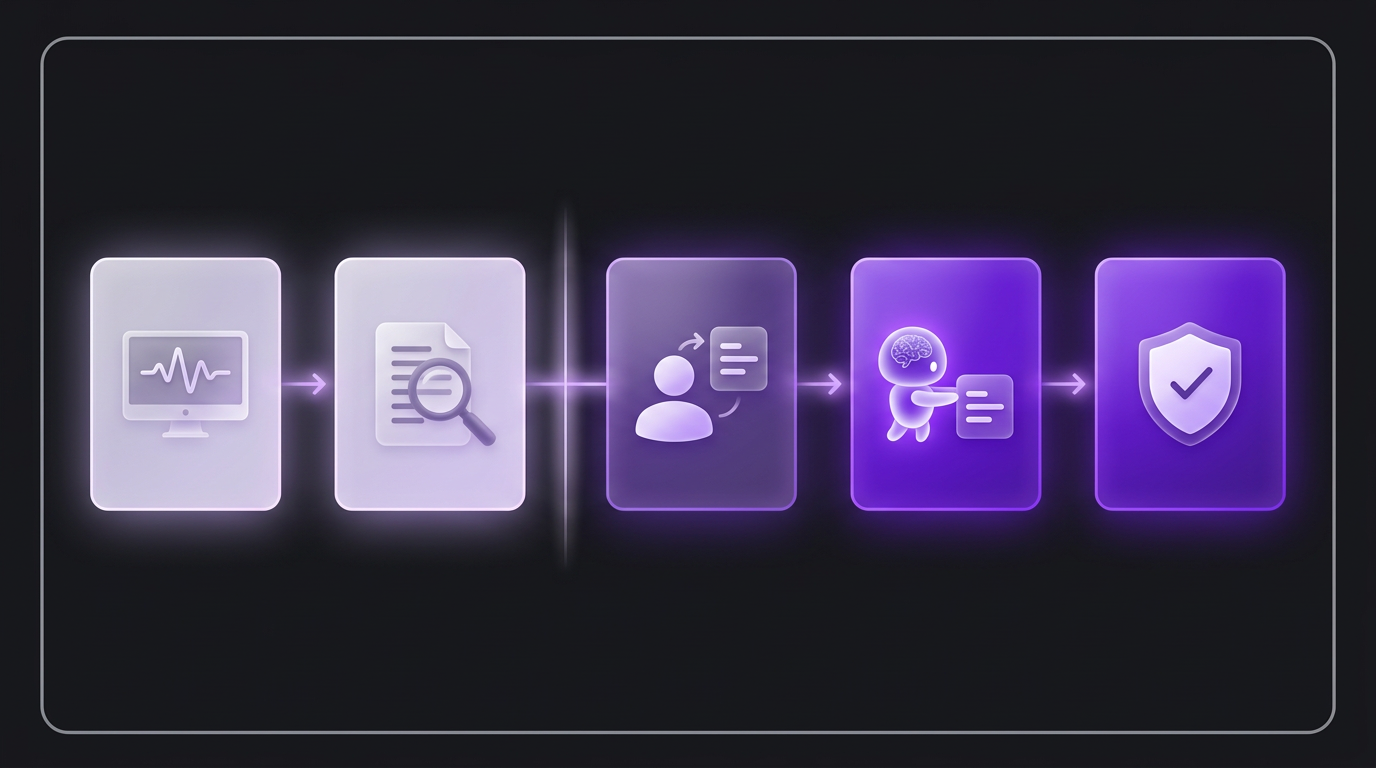
This sequence shows why the two capabilities should be connected.
Monitoring provides the signal and supports prioritization. Execution carries the required response through the operational steps that follow.
For clinical trial oversight, the value comes from having both: reliable visibility into what requires attention and sufficient capacity to move the appropriate response forward.
How Better Monitoring Exposes an Execution Gap
When monitoring becomes more effective, an existing downstream constraint can become easier to see.
Issues surface earlier, but teams may still rely on manual context gathering, email-based routing, spreadsheets, repeated status checks, duplicate system updates, and handoffs between functions.
Monitoring did not create this workload. It exposed it sooner.
That matters because identifying more actionable issues does not reduce the effort required to address them. Research on site burden and operational complexity shows that trial teams already manage substantial workload across protocol requirements, data activities, trial management, and coordination.[3][4]
The execution gap appears when the organization's ability to detect important work improves faster than its ability to move that work.
How does Monitoring-Execution Gap Looks Like in Practice
Site Performance
Monitoring may identify declining enrollment, rising screen failure, or delayed data entry. Execution brings together the relevant context, moves follow-up to the appropriate study team, and tracks whether the agreed action changes performance.
Protocol Deviations
Centralized analytics can help identify deviations or patterns of noncompliance.[1]
Execution moves a relevant finding through assessment, ownership, site communication, appropriate follow-up, or escalation.
Data and Query Issues
Monitoring may reveal rising or aging queries at particular sites. Execution moves the appropriate items through follow-up instead of leaving the backlog visible but unresolved.
Study Risks and Milestones
Monitoring can show that a dependency is moving away from plan. Execution coordinates the required response across owners while there is still time to influence the outcome.
Across these workflows, the pattern remains:
Signal → Context → Ownership → Action → Verification
This signal creates awareness. The remaining steps require execution capacity.
Why Another Alert Is Not More Capacity
The distinction between another alert not suggesting more capacity gains further relevance as AI improves risk detection.
A 2025 scoping review in npj Digital Medicine analyzed 142 studies applying AI to clinical trial risk assessment and found substantial activity in safety, efficacy, and operational risk prediction. It also identified limitations including data quality, selection bias, and a lack of prospective studies.[5]
A 2024 review in the Journal of the American College of Cardiology similarly described opportunities for AI across the clinical trial lifecycle while emphasizing accuracy, bias, privacy, and appropriate evaluation.[6]
Better prediction remains primarily an information capability unless the technology can also support the workflow that follows.
The more useful question is not:
How many additional signals can AI generate?
It is:
Which parts of the work created by those signals can technology safely and reliably help move forward?
What to Look for in Execution Technology
An alert, summary, or recommendation should not automatically be considered execution.
Look at what happens next.
Can the technology:
- Assemble the context needed for the next step?
- Route defined work using established workflow logic?
- Initiate or advance permitted actions?
- Coordinate work across the systems involved?
- Incorporate required human review?
- Continue tracking work after handoff?
- Record outcomes and surface exceptions?
If people still have to manually collect, route, chase, update, and verify every item, the technology may have improved intelligence without materially increasing execution capacity.
Where an AI Workforce Fits
This is the operating problem Maxis AI is designed around.
Clinical organizations already have systems that capture data, maintain records, monitor quality, and support clinical trial oversight. Those systems continue to serve essential roles.
An AI Workforce for Clinical Trials adds supervised execution capacity around defined operational workflows.
When a meaningful signal requires action, AI agents can support permitted steps such as assembling context, preparing workflow actions, routing work, coordinating follow-up across systems, tracking progress, and escalating exceptions.
The question is not human versus AI.
It is where human judgment is required and where repeatable operational work can move under supervision without requiring the same manual effort at every step.
This can preserve human attention for clinical interpretation, regulatory judgment, operational decisions, and exception handling.
The evidence base for AI in clinical trial operations is still developing. Recent reviews appropriately caution against assuming that model performance automatically translates into validated workflow benefit.[5][6]
For that reason, the relevant unit of value is not simply the AI model.
It is the governed workflow the technology can reliably support.
How those boundaries, human oversight, traceability, validation, and accountability should be designed is the focus of the next article in this series, Why Governed AI Agents Matter in Real-Time Clinical Trials.
What Is Execution Gap in Real-Time Trials?
For real-time clinical trials, the goal is therefore not monitoring or execution.
It is an operating model in which monitoring directs attention and execution capacity moves the work that follows.
Key Takeaways
- Monitoring improves visibility and prioritization.
- Monitoring does not automatically increase capacity.
- Execution moves work beyond the signal.
- Better monitoring can expose execution bottlenecks.
- A supervised AI Workforce can extend execution capacity around defined workflows.
Frequently Asked Questions
Frequently asked questions
What Is Real-Time Trial Monitoring?
What Is Real-Time Trial Execution?
Why Doesn't Monitoring Increase Execution Capacity on Its Own?
Can Better Monitoring Expose Execution Bottlenecks?
Does Real-Time Trial Execution Replace EDC, CTMS, RBQM, or Safety Systems?
Continue Reading: Real-Time Clinical Trials Series
- What FDA's Real-Time Clinical Trial Initiative Means for Clinical Operations Teams
- Why Governed AI Agents Matter in Real-Time Clinical Trials
- How Sponsors Can Prepare for Real-Time Clinical Trial Execution
Explore the Execution Layer for Clinical Trials
Better monitoring helps clinical teams direct attention to the right issues.
The next opportunity is to increase how much of the resulting work can move without equivalent growth in manual coordination.
Maxis AI provides The First AI Workforce for Clinical Trials, adding supervised execution capacity across defined clinical workflows while working with the systems clinical teams already use.
References
Sources & references
- E6(R3) Good Clinical Practice (GCP) — U.S. Food and Drug Administration, Final Guidance, September 2025
- A risk-based monitoring approach to source data monitoring and documenting monitoring findings — Brulotte M, Alvey JS, Casper TC, et al. Contemporary Clinical Trials. 2024;143:107581. doi:10.1016/j.cct.2024.107581
- Quantifying Site Burden to Optimize Protocol Performance — Florez M, Smith Z, Olah Z, Martin M, Getz K. Therapeutic Innovation & Regulatory Science. 2024;58(2):347–356. doi:10.1007/s43441-023-00602-5
- Operational complexities in international clinical trials: a systematic review of challenges and proposed solutions — Gumber L, Agbeleye O, Inskip A, et al. BMJ Open. 2024;14. doi:10.1136/bmjopen-2023-077132
- A scoping review of artificial intelligence applications in clinical trial risk assessment — Teodoro D, Naderi N, Yazdani A, Zhang B, Bornet A. npj Digital Medicine. 2025;8:486. doi:10.1038/s41746-025-01886-7
- Artificial Intelligence in Cardiovascular Clinical Trials — Cunningham JW, Abraham WT, Bhatt AS, et al. Journal of the American College of Cardiology. 2024;84(20):2051–2062. doi:10.1016/j.jacc.2024.08.069

About the author
Priya Natarajan
Director, Clinical Operations
Priya Natarajan specializes in risk-based monitoring, site oversight, and AI-enabled clinical operations. Her work focuses on turning emerging risk signals into earlier, governed action across clinical trials.