If you lead clinical data management or clinical technology, the ICH M11 guideline probably arrived as a protocol-authoring change. One year on, it is more than that. The protocol is becoming data, and every system in your study stack, from EDC to statistical computing to medical writing, now wants to act on it. The question for your team is no longer whether to adopt M11. It is who governs the work that flows from it.
What is the ICH M11 guideline?
The ICH M11 guideline, formally the Clinical Electronic Structured Harmonised Protocol (CeSHarP), is an international standard for the format, content, and electronic exchange of interventional clinical trial protocols. It applies across all phases and therapeutic areas.
According to the ICH M11 explainer, M11 was adopted for implementation on November 19, 2025, and covers pharmaceuticals, biologics, vaccines, drug-device combinations, and cell or gene therapies. Before M11, no globally harmonized protocol standard existed, so formats varied by sponsor and region.
The three components of the ICH M11 framework
M11 has three interlocking documents:
| Component | What it does | Who uses it most |
|---|---|---|
| Guideline | Sets the design principles behind the template and specification | Clinical development, regulatory |
| Protocol template | Fixes the table of contents, common headings, and instructions for where content goes | Medical writers, protocol authors |
| Technical specification | Defines each data element with its definition, conformance, and cardinality for electronic exchange | Data standards, clinical systems |
FDA's final M11 guidance notes that higher-level headings are fixed while many lower-level sections can be added or removed.
ICH M11 one year on: where FDA and Health Canada stand
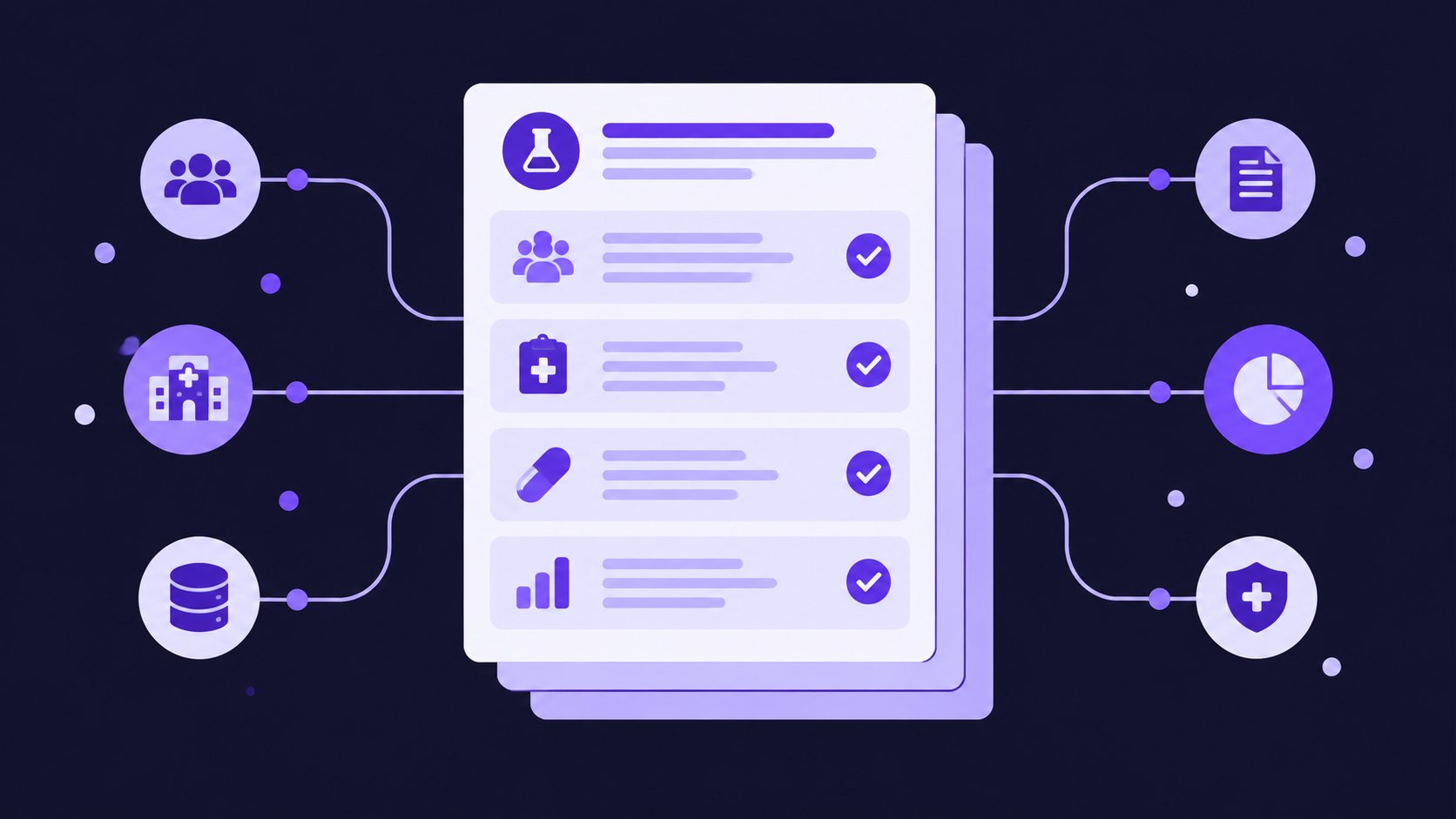
ICH M11 is now guidance in both the United States and Canada. FDA finalized it in May 2026, and Health Canada began phased implementation on November 4, 2026. Both treat M11 as a standard for protocol structure and exchange, not a new rulebook for trial design, so the work now shifts to implementation.
FDA finalized ICH M11 in May 2026
ICH adopted M11 at Step 4 on November 19, 2025. FDA issued the guideline, template, and technical specification as final guidance in May 2026. Like all FDA guidance, it contains nonbinding recommendations.
Health Canada's two-phase rollout
- 1.Phase 1, from November 4, 2026: Health Canada starts phase 1 of M11 implementation, with sponsors submitting M11-aligned protocols in PDF or DOCX.
- 2.Phase 2, date to be announced: submissions move to structured formats such as JSON or XML, once specifications, guidance, and timelines are published.
For US–Canada multi-site trials, write new protocols in the M11 structure now and build the structured data behind them before phase 2 arrives.
The ICH M11 framework connects the protocol to USDM and Digital Data Flow
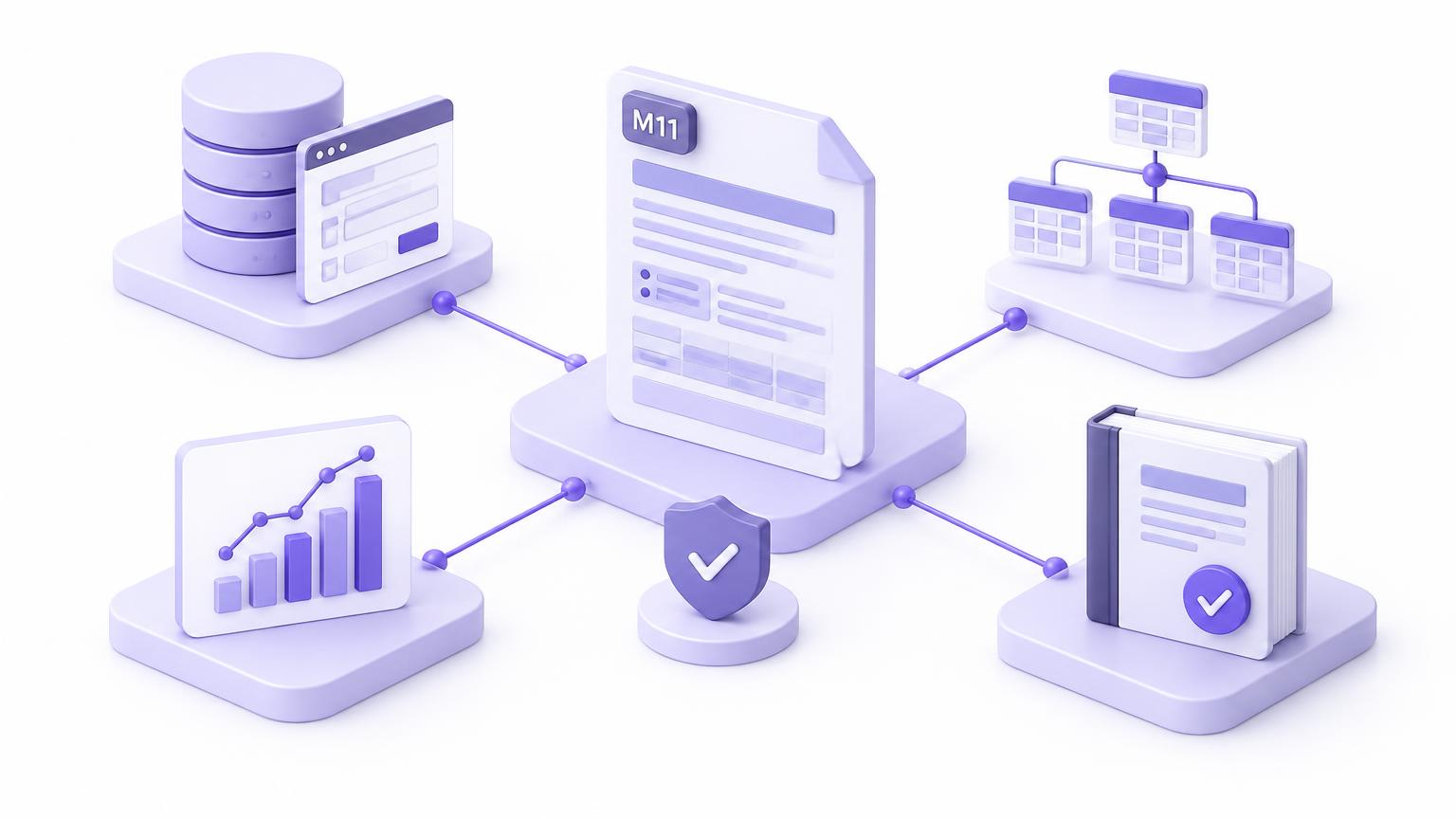
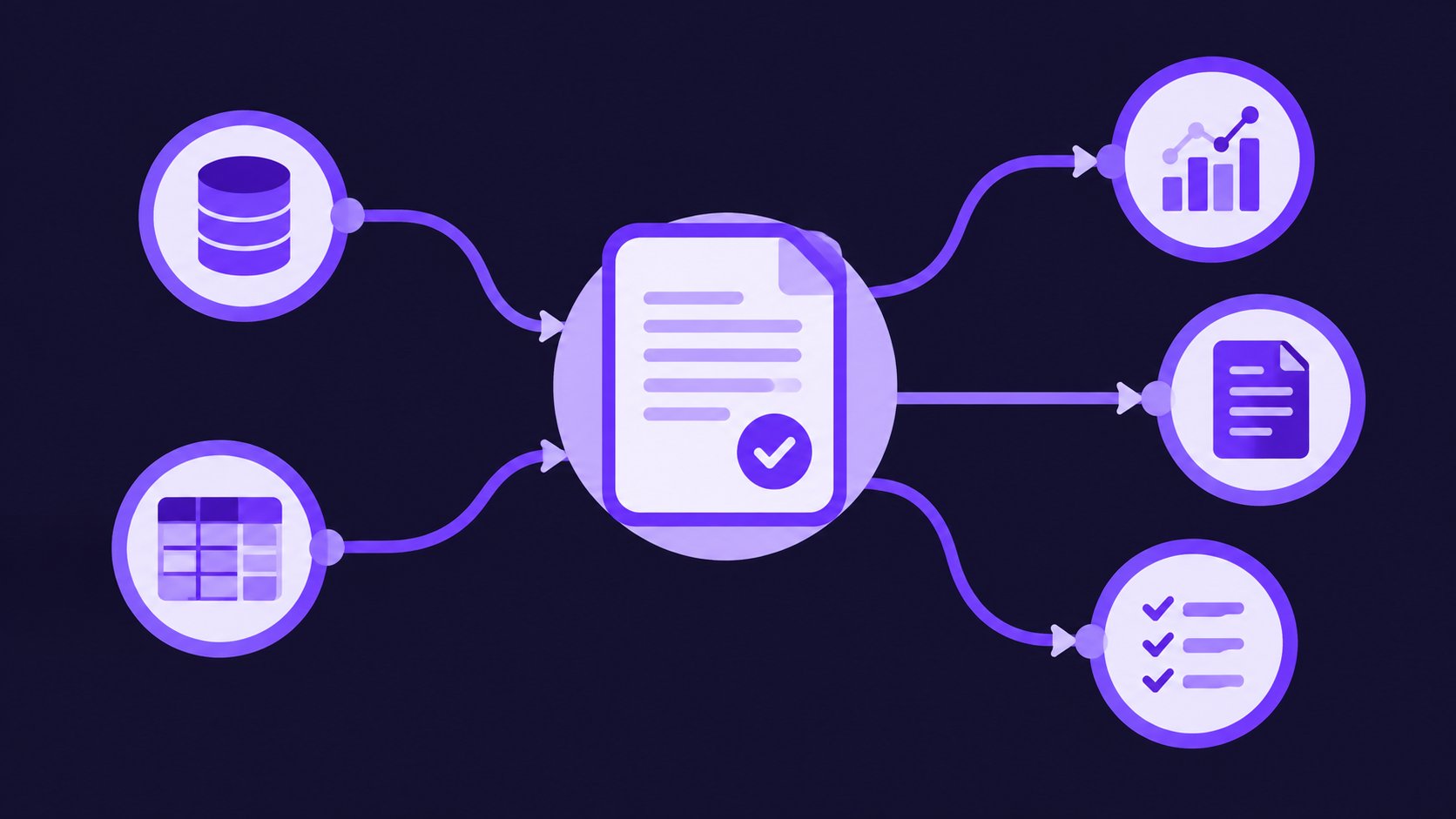
The ICH M11 framework matters most because of what sits downstream of it. CDISC's Unified Study Definitions Model (USDM) was built so that M11 data elements are a subset of USDM, which means a structured M11 protocol can feed study build, data standards, and reporting from one study definition.
USDM turns M11 elements into a study definition
The HL7 Clinical Study Protocol implementation guide describes USDM as an output of the Digital Data Flow (DDF) initiative and states that CDISC will support maintenance of M11 controlled terminology. DDF's stated aims are shorter cycle times, more reliable data, and automated system configuration.
FDA expects protocol content to be reused
FDA's guidance names three reuse purposes for protocol content: trial management and review, publication on registries, and standardized data capture. In plain terms, the protocol becomes the single source that EDC builds, SDTM specifications, statistical analysis plans, and the clinical study report (CSR) draw from.
What the ICH M11 template leaves to your teams: the amendment test
The ICH M11 template structures the protocol, but it does not move a change through your systems. When an amendment is approved, someone still updates the EDC build, mapping specifications, analysis plans, and CSR sections, and proves which version each used. That work is where most M11 implementation value is won or lost.
How one amendment travels today
In many studies, one amendment still moves like this:
- 1.Clinical development updates the protocol.
- 2.Data management reworks the EDC build and edit checks.
- 3.Data standards updates the SDTM mapping specification.
- 4.Biostatistics revisits the statistical analysis plan (SAP) and table, listing, and figure (TLF) shells.
- 5.Medical writing flags CSR sections that now need edits.
Five teams, several systems, and someone asking which version was used. With the protocol structured under M11 and USDM, the impact of a change can be worked out once and traced through every downstream artifact. People still review and approve each step. They stop being the integration layer.
Metrics data management and biometrics should track
Clinical data management should track days from amendment approval to updated build, edit-check rework, and post-go-live query volume. Biometrics should track TLF rework after late specification changes. Baseline them on your next amendment to measure what automation changes.
Agent sprawl is the new ICH M11 implementation risk
Agent sprawl is the growing number of AI agents acting on the same protocol across separate systems, each with its own audit trail. EDC, medical-writing, and programming tools increasingly ship agents that act on structured protocols, and many sponsors and CROs are building their own. Each agent may work well inside its system; nobody owns the handoffs.
ICH E6(R3) keeps oversight with the sponsor
That gap is a governance problem, not just an efficiency one. ICH E6(R3) states that a sponsor may transfer activities but retains overall responsibility for them, and that computerized systems should be fit for purpose. FDA issued E6(R3) as final guidance in September 2025, and Health Canada implemented it on April 1, 2026.
Three questions an inspector will ask
When an agent changes a dataset specification or drafts a CSR section, an inspector will not ask which vendor built it. Expect three questions:
- Who approved this change?
- What did the agent see when it made it?
- Where is the evidence, and can you reproduce it?
Most teams can answer those inside one system, but few can across the handoff to the next. Every new point tool also adds what we call a stitching tax: integrations to revalidate, mappings to reconcile when a standard changes, and audit trails that stop at each system's edge.
Four tests for a governed execution layer
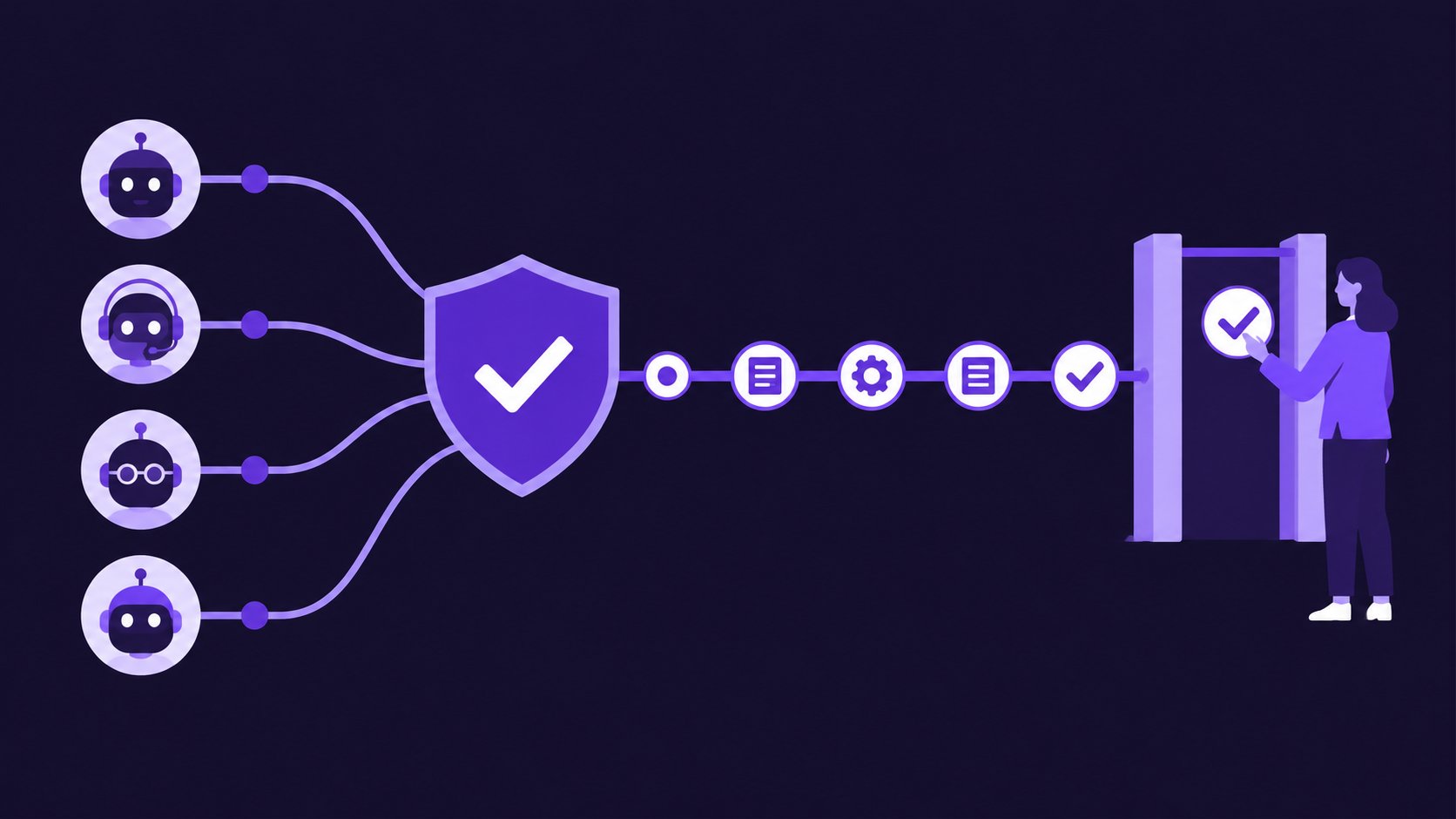
A governed execution layer is the coordination tier between systems of record that carries one study definition from protocol to CSR, with human approval and one audit trail. Any provider, including in-house builds, should pass four tests before it governs work on an M11 protocol.
Checklist for any ICH M11 implementation partner
- Neutral: works with any system of record, its built-in agents, your own agents, and any AI model, with no single-vendor bet.
- Governed: defines autonomy tiers, human approval gates, and one audit trail across all agents.
- Standards-driven: uses M11 and USDM as the backbone, with lineage through SDTM, ADaM, and Define-XML.
- Reusable: what you configure for one study carries to the next, so you do not rebuild it per program.
Set autonomy tiers before agents touch a study
The operating model matters as much as the technology. Some tasks, such as rerunning TLFs after a specification change, can run on their own. Some need a human gate and a named approver. Others, such as deciding what a derivation means, stay with the statistician. Write those tiers down before any agent touches a live study, and judge value by cost per governed outcome rather than cost per tool or seat.
How ICH M11 implementation differs by segment
ICH M11 implementation looks different depending on who owns the protocol and who executes against it. Sponsors own M11 content and oversight, CROs and FSPs execute across many sponsors' standards, and site networks feel the result in consistency and amendment burden. The table summarizes where each segment should focus first.
| Segment | What changes with M11 | Where to start |
|---|---|---|
| Mid-size and small pharma, emerging biotech | One structured protocol can drive build and reporting with lean teams; oversight of CRO and vendor agents stays with you | Write the next protocol in M11 structure; define human gates for every outsourced handoff |
| Large and mid-size CROs | Sponsors will expect M11- and USDM-ready delivery across varied systems | Standardize amendment impact analysis across sponsor stacks; make audit evidence portable |
| FSPs (biometrics, data management) | Structured inputs reduce rework but raise traceability expectations | Map M11 elements to SDTM and ADaM lineage; document which tasks agents may run alone |
| Site networks | A common protocol layout across sponsors; amendments still drive retraining and version risk | Track time on superseded protocol versions; ask sponsors how amendment changes reach site systems |
For clinical data management leaders across all four segments, the shift is the same: from rework to review, with one approved change traced across every system.
Frequently asked questions
Is the ICH M11 guideline mandatory in the United States?
What does Health Canada require for ICH M11?
How is ICH M11 related to CDISC USDM?
Does ICH M11 change how trials are designed?
How should AI agents be governed when working from an M11 protocol?
Watch Protocol to CSR, Governed on demand
On ICH M11's first anniversary, Maxis AI Founder and CEO Moulik Shah walked one protocol amendment from M11 to CSR: which agent touched which artifact, where a person approved each change, and where the evidence lives. The session also covers the four tests above, a Human × AI operating model with autonomy tiers, and how to evaluate agents before they touch a study. Platform screens are illustrative, using a synthetic study.
Maxis AI is the first AI Workforce for clinical trials, with 169+ AI agents and 100+ system integrations that execute regulated workflows under human oversight.
Sources & references
- ICH M11: Clinical Electronic Structured Harmonised Protocol (CeSHarP) explainer — ICH, 2026
- M11 Clinical Electronic Structured Harmonized Protocol (CeSHarP): Guidance for Industry — US Food and Drug Administration, 2026
- Phased implementation of ICH M11: Clinical electronic Structured Harmonised Protocol (CeSHarP) – Notice to stakeholders — Health Canada, 2026
- Clinical Study Protocol implementation guide: information models — HL7 International, 2026
- ICH E6(R3) Guideline for Good Clinical Practice, consolidated Step 4 — ICH, 2026
- E6(R3) Good Clinical Practice (GCP) guidance — US Food and Drug Administration, 2025
- Health Canada implementation of the ICH E6(R3) guideline: Notice to stakeholders — Health Canada, 2025

About the author
Moulik Shah
Founder & CEO, Maxis AI
Moulik Shah is the Founder and CEO of Maxis AI, an enterprise agentic AI platform for the pharmaceutical and life sciences industry. With over 20 years of experience in healthcare technology, he has spent the majority of his career helping pharma, biotech, and CRO organizations modernize clinical trials through data and AI. He is a Forbes Technology Council contributor, writing on artificial intelligence and enterprise innovation.