
Certain protocol-design risks can be identified before they lead to amendments. Their early signs often sit in the draft itself: an eligibility criterion few real patients meet, a visit schedule sites cannot staff, a procedure no endpoint needs. Yet study teams rarely have time to test every assumption before the protocol is finalized.
Catching these risks early matters. Once a protocol is approved, design issues are harder to fix: they can trigger amendments, leave sites on different protocol versions for months, and delay timelines at a cost far above the original design effort.
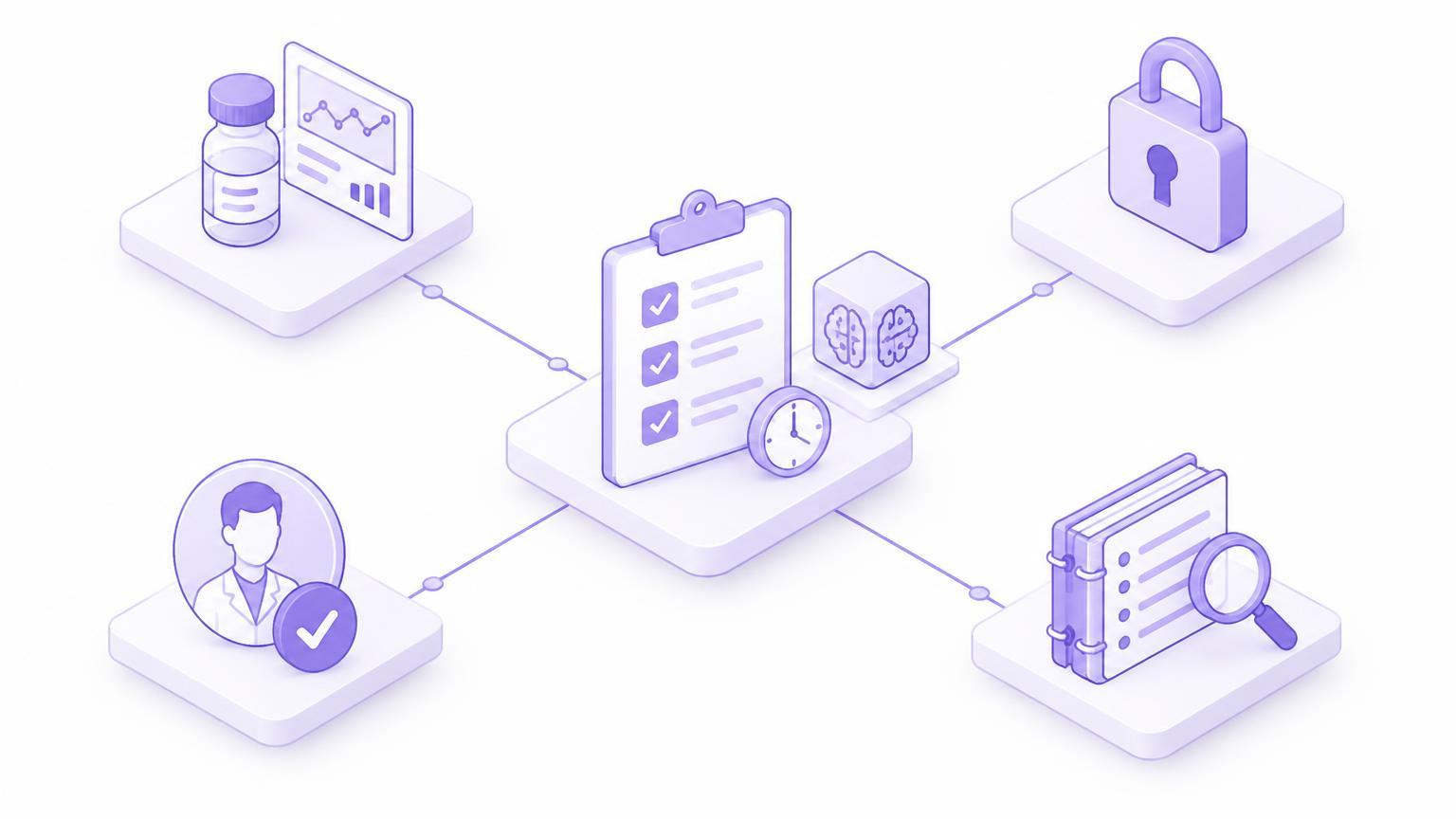
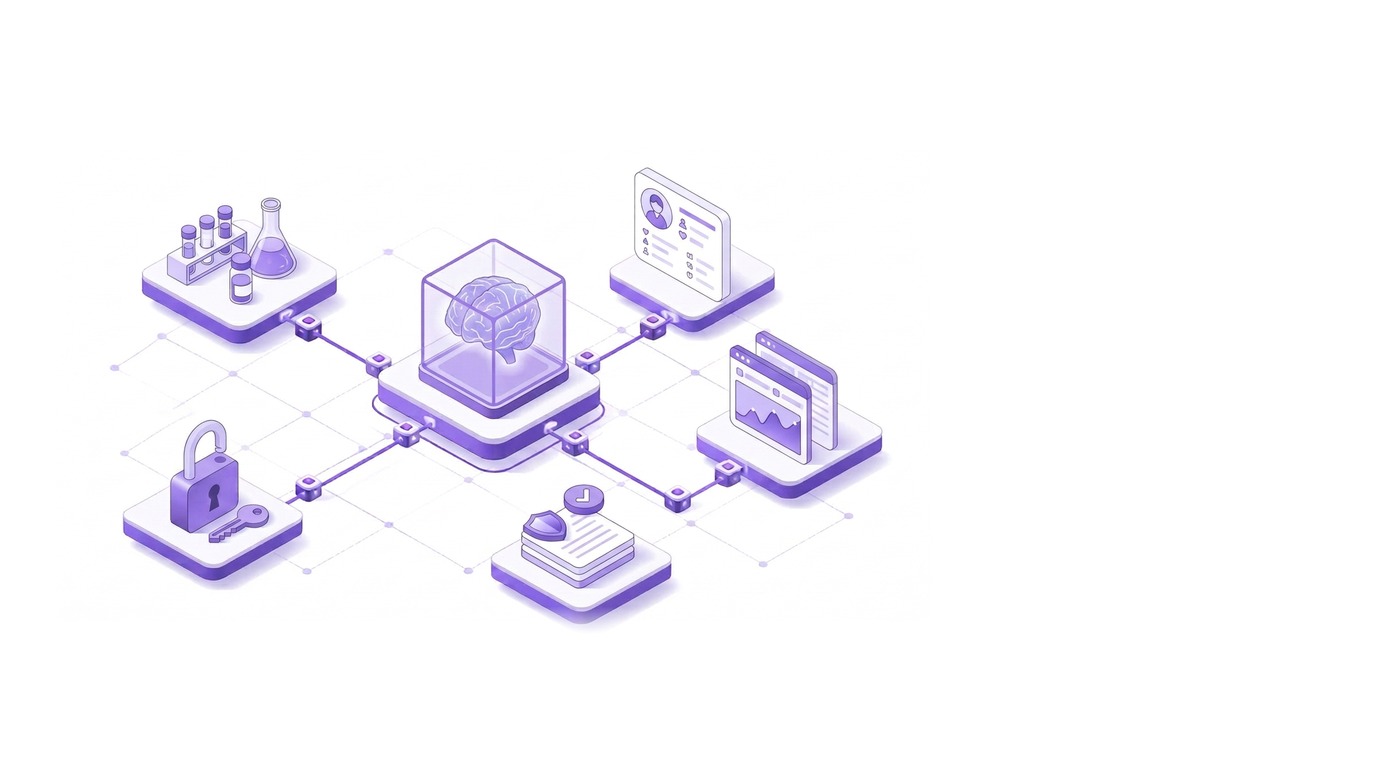
This is where AI agents for clinical trial design become relevant. A protocol rests on connected assumptions about patients, sites, procedures and statistics, and testing them means cross-checking the draft against prior studies, screening logs and real-world data. That detailed, repetitive work suits agents well. They can review protocol content section by section, checking that objectives, endpoints, procedures and the schedule of activities align. They can assess key assumptions, such as whether eligibility criteria and visit schedules hold up against prior study evidence. And they can identify potential risks, such as criteria that shrink the patient pool or visits that overload sites, for expert review. Agents surface the evidence; qualified experts make the decisions.
This blog covers where agents fit in clinical trial protocol optimization, what stays with experts, how to govern the work, and where to start. For the wider picture, see our complete guide to AI agents in clinical trials.
Why protocol complexity creates downstream risk
A 2024 Tufts CSDD study in Therapeutic Innovation & Regulatory Science found that, since 2015, the share of Phase I–IV protocols with at least one amendment has risen from 57% to 76%, and the mean number of amendments per protocol from 2.1 to 3.3. Total implementation time has nearly tripled over the past decade, to about 260 days from identifying the need for a change to the last oversight approval. Sites also operate under different protocol versions for an average of 215 days.
That means for about seven months, some sites may still follow the old protocol while others use the amended one. Sites retrain, monitors track which version applies where, and data managers reconcile records collected under different rules.
Volume adds a second layer of risk. A 2025 Tufts CSDD and TransCelerate analysis of 105 Phase II and III protocols found that nearly one-third of procedures either do not support primary, key secondary, or safety endpoints, or are performed more often than needed. Phase III protocols now average 5.9 million data points. Data that supports no endpoint must still be entered, cleaned, queried and reconciled, adding review effort for clinical data management teams.
The 2024 Tufts study also found that sponsors judged 77% of amendments unavoidable. Even so, issues found once a trial is underway cost more to fix. The lesson: test assumptions while the protocol is still a draft.
Where AI can support trial design
AI protocol design is not about generating a protocol from a prompt; agentic AI runs multi-step checks across data sources and reports findings with an audit trail.
| Design question | What an agent does | What the study team receives |
|---|---|---|
| Can we enroll the intended population? | Assesses each eligibility criterion against approved historical and real-world data | Estimated patient pool impact per criterion |
| Can sites run it? | Converts the schedule of activities into time and staffing load | Estimated per-visit patient and site burden |
| Does every procedure have a documented rationale? | Maps each procedure to an objective or endpoint | List of unlinked procedures |
| Which sections need closer review? | Compares the draft with amendment history from similar studies | Risk-scored sections with precedent |
| Do the adaptive options hold true? | Organizes simulation scenarios and assumption evidence | Documented evidence and scenario comparisons for statistical review |
Structured protocols make AI protocol design more reliable. ICH M11, adopted at ICH Step 4 on 19 November 2025, defines a common template and technical specification with standard data elements. When protocol content lives in defined fields, agents read the exact visit window or dose instead of interpreting free text.
Eligibility criteria and feasibility analysis
Protocol feasibility usually relies on site surveys and expert opinion. Agents add an evidence layer. They break each inclusion and exclusion criterion into testable conditions, run them against data sources the sponsor is permitted to use (prior screening logs, completed study data, de-identified real-world data), and estimate which criteria remove the most patients.
A 2025 Journal of Clinical Oncology analysis of 509 screen failures across 18 pancreatic and biliary cancer trials found 13.6% were potentially modifiable exclusions, mostly borderline lab values for liver and kidney function.
Hypothetically, an agent might note that one lab-value threshold excludes a large share of otherwise eligible patients and cite comparable completed studies that used a wider threshold, with their safety data. The medical lead weighs that evidence and decides. Better criteria at design stage also make AI-supported patient recruitment far more productive.
Visit and assessment burden
A schedule of activities looks manageable until it is translated into time and effort. Agents can assess each visit to estimate patient time on site, the number of invasive procedures, fasting or overnight requirements, and site staff time per visit.
A key check is endpoint traceability: every procedure should map to an objective, endpoint, or documented safety rationale. This aligns with ICH E6(R3), finalized by FDA in September 2025, which asks sponsors to build quality into trial design by focusing on factors critical to quality.
Example: an agent flags a quarterly ECG with no linked endpoint and no stated safety reason. The team may keep it for a known cardiac signal in the drug class, or drop it. Either way, the decision is now deliberate and documented.
Protocol amendment risk detection
Some amendment risks begin as small inconsistencies. Agents run checks that human reviewers rarely have time to complete across a 150-page document:
- Schedule of activities that contradicts body text
- Endpoints with no matching assessment or timepoint
- Visit windows that overlap or conflict
- Dose, unit, or population definitions that differ between sections
Agents also compare the draft with the sponsor's amendment history for similar studies to identify sections that previously required changes, and why. Each flag includes the source text, reason, and precedent.
The learning loop continues after go-live. Recurring deviations at sites may indicate a design issue, or an operational one. Patterns surfaced through AI-enabled risk-based monitoring can help inform the design of future protocols.
AI support for adaptive and evidence-informed design
Adaptive clinical trial design demands more upfront work. The draft ICH E20 guideline (ICH Step 2, June 2025), issued as FDA draft guidance in September 2025, recommends that adaptations be prespecified, Type I error controlled, trial integrity protected, and simulation studies used to evaluate operating characteristics, with the simulation approach and assumptions documented.
Agents can take on much of the preparatory work: gathering evidence for assumptions such as effect size and dropout rates from prior studies, organizing the simulation scenarios that statisticians define, and assembling the supporting documentation. Statisticians choose the design.
FDA’s January 2025 draft guidance on AI does not cover AI that only speeds up internal work, such as checking a protocol for errors. It applies when AI output feeds into decisions about a drug’s safety or effectiveness, such as setting a trial’s sample size, and sponsors must then show the output is credible. So define each agent task’s scope and boundaries before deployment.
What must remain under human judgment
Named experts decide and sign. Keep these decisions with people:
- The scientific question, primary endpoint, and estimand (a precise definition of the treatment effect being measured)
- Safety thresholds within eligibility criteria
- Final adaptive clinical trial design and statistical analysis plan
- Ethical calls, including representation of underserved populations
- Trade-offs between global feasibility and regional regulatory expectations
- Final protocol approval
Our blog on human-in-the-loop AI in clinical trials explains how to set these checkpoints.
Governance and validation
The FDA and EMA guiding principles for good AI practice, released in January 2026, give a clear frame: a defined context of use, a risk-based approach, data governance and documentation, and life cycle management. For AI protocol design, that means:
- Define the context of use for each agent task
- Log the data sources behind every recommendation
- Version-control rules, prompts, and models
- Record whether reviewers accepted or rejected each flag, and why
- Back-test agents on completed protocols where amendment outcomes are already known
- Apply change control before any update reaches live studies
KPIs for protocol optimization
Measure clinical trial protocol optimization by its effect on execution, not by the number of flags raised.
| KPI | What it tells you |
|---|---|
| Substantial amendments per protocol (first 12 months) | Whether design risk is falling |
| Days sites run mixed protocol versions | Operational cost of each change |
| Projected vs. actual screen failure rate | Accuracy of feasibility estimates |
| Patient hours per visit | Participant burden |
| Share of procedures linked to an endpoint | Procedure justification and traceability |
| Draft-to-final protocol cycle time | Speed of review |
| Agent flag acceptance rate | Relevance of agent flags to reviewer assessment |
Practical starting use cases
- 1.Consistency checks on numbers, dates and terms before final review: low risk, quick value.
- 2.Procedure-to-endpoint traceability on one Phase II or III draft.
- 3.Protocol feasibility analysis of eligibility criteria using approved historical screening data.
- 4.Retrospective back-test on three to five completed protocols, comparing agent flags with actual amendments.
Start in assist mode: agents flag, people decide. Expand once flags prove accurate.
Frequently Asked Questions
Frequently asked questions
What are AI agents for clinical trial design?
Can AI agents write a clinical trial protocol?
How do AI agents support adaptive clinical trial design?
What data does protocol feasibility analysis need?
Does clinical trial protocol optimization with AI need validation?
References
Sources & references
- Getz K, Smith Z, Botto E, Murphy E, Dauchy A. "New Benchmarks on Protocol Amendment Practices, Trends and their Impact on Clinical Trial Performance." Therapeutic Innovation & Regulatory Science, 58, 539–548. March 2024.
- Tufts CSDD and TransCelerate BioPharma. "Insights Informing Strategies for Optimizing the Collection of Clinical Trial Data." Therapeutic Innovation & Regulatory Science. 2025.
- Saj F, et al. "Broadening the gates: Analysis of potentially modifiable screen failures in pancreatic and biliary tract cancer trials." Journal of Clinical Oncology, 43(16_suppl), e23011. June 2025.
- ICH. "M11 Clinical Electronic Structured Harmonised Protocol (CeSHarP) Explainer." May 2026.
- U.S. FDA. "E6(R3) Good Clinical Practice (GCP)." Final guidance. September 2025.
- U.S. FDA. "E20 Adaptive Designs for Clinical Trials." Draft guidance. September 2025.
- U.S. FDA. "Considerations for the Use of Artificial Intelligence to Support Regulatory Decision-Making for Drug and Biological Products." Draft guidance. January 2025.
- U.S. FDA and European Medicines Agency. "Guiding Principles of Good AI Practice in Drug Development." January 2026.

About the author
Dr. Amanda Whitmore
VP, Biostatistics & Adaptive Trial Strategy
Dr. Amanda Whitmore specializes in biostatistics, adaptive clinical trial design, and evidence-driven development strategies. Her work focuses on interim decision frameworks, statistical rigor, real-world evidence integration, and the application of governed AI to support faster, traceable decisions across complex clinical development programs.