Every pharma enterprise is learning the same lesson: AI can make individual teams faster before it creates enterprise-wide execution capability.
A regulatory team pilots document intelligence. Medical affairs tests literature triage. Safety explores case review support. Commercial accelerates content review. Clinical operations experiment with AI-enabled execution support. Each initiative may show value.
But when every function scales AI on its own, the enterprise inherits a new problem: different permissions, different review rules, different evidence standards, different escalation paths, and no shared operating logic.
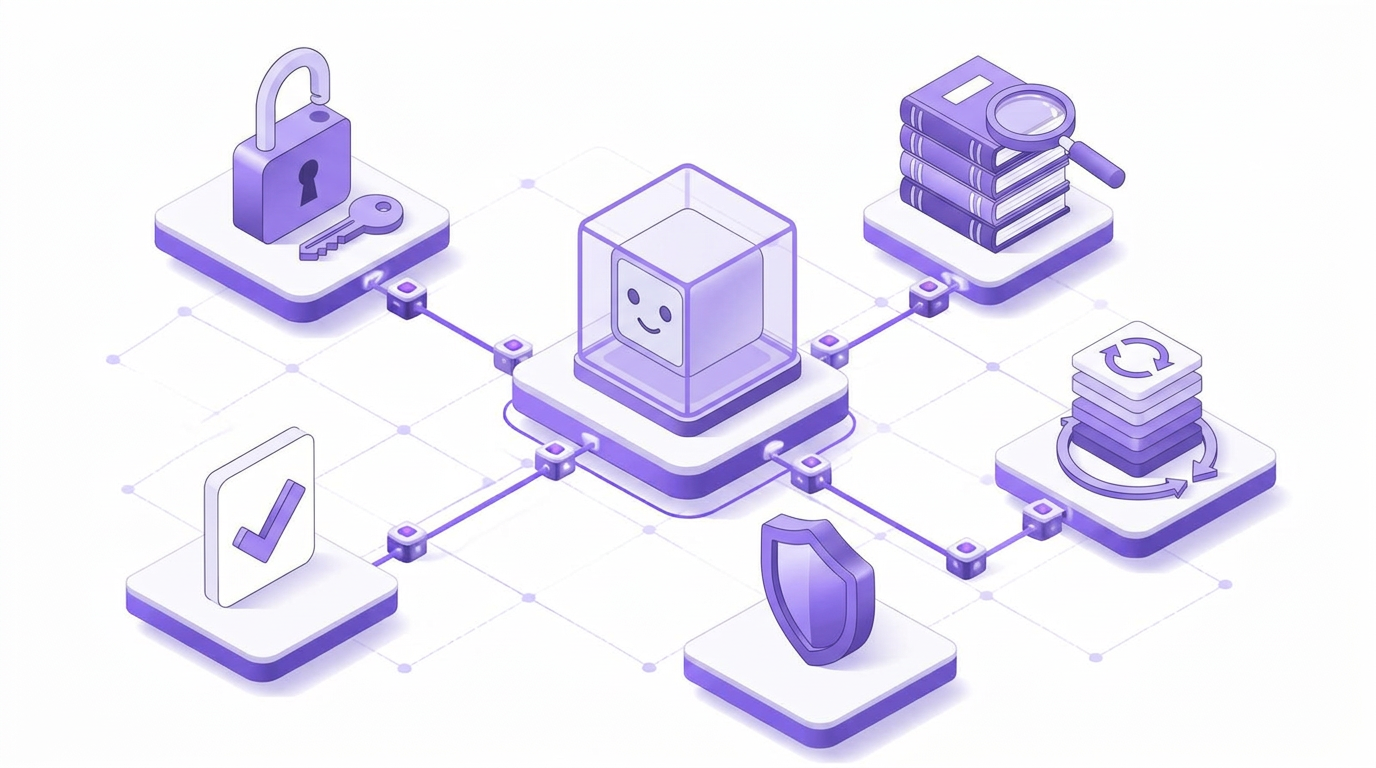
That is where the concept of an Agentic Operating Systems becomes strategically important: a governed layer for coordinating AI agents, workflows, policies, lifecycle controls, and human accountability across the enterprise.
The next phase of enterprise pharma AI will not be defined by who launches the most pilots. It will be defined by who can turn AI capability into controlled, repeatable execution.
They help pharma move from isolated pilots to scalable enterprise AI execution.
Why Enterprise Pharma Is Moving Beyond AI Tools
Pharma has already passed the first stage of AI maturity. The question is no longer whether teams can find useful AI use cases. They can.
The challenge is that tool-level AI does not create enterprise-level performance.
A point solution can summarize content. A workflow automation can move a task forward. An AI assistant can reduce manual effort for one team. But enterprise pharma operates through regulated handoffs, documented decisions, cross-functional dependencies, and inspection-ready evidence.
That requires more than local productivity.
McKinsey's 2025 life sciences research found that all surveyed pharma and medtech leaders had experimented with generative AI, but only 32% had taken steps to scale it. The same research highlights the gap between experimentation and sustained business value.[1]
This is why enterprise leaders are moving from AI tools toward a pharma AI operating model.
The maturity question is now clear: can the organization govern AI-enabled work with the same discipline it applies to quality, compliance, and operational execution?
What Agentic Operating Systems Mean at Enterprise Scale
An AI tool helps complete a task.
An AI workflow connects to a sequence of actions.
An Agentic Operating System governs how multiple agents are designed, deployed, permissioned, monitored, escalated, changed, audited, and retired across the enterprise.
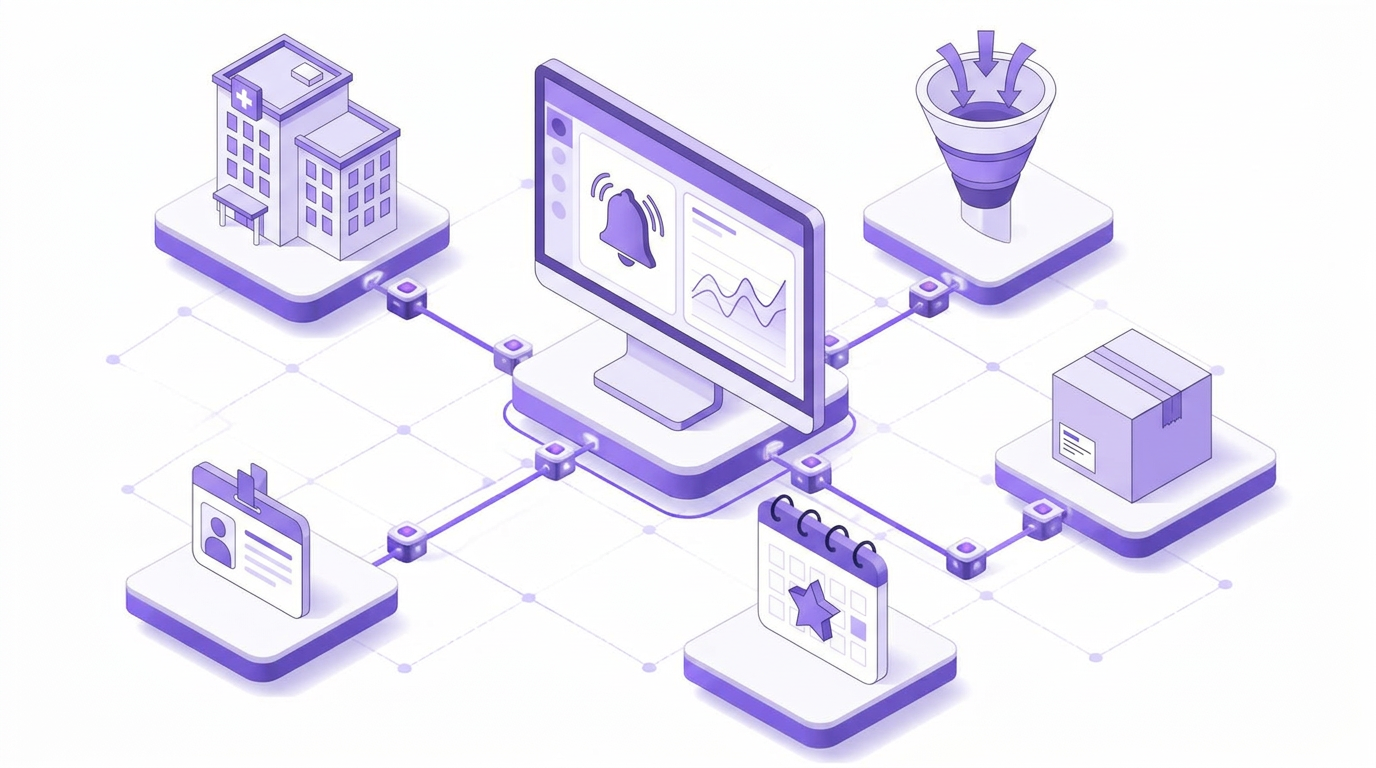
That distinction matters because AI agents in pharma will not remain inside one department. They will touch regulatory intelligence, safety surveillance, medical information, clinical execution, commercial review, quality operations, knowledge management, and enterprise service functions.
If each area defines its own controls, scale becomes fragmented. If those controls sit inside a shared operating layer, scale becomes governable.
A practical definition of Agentic Operating Systems is this:
Agentic Operating Systems are governed execution infrastructure for enterprise pharma. They connect agents, workflows, permissions, policies, human review, and evidence into one accountable operating model.
This is how governed AI agents become part of a scalable enterprise operating model rather than isolated productivity experiments.
From Functional Pilots to Enterprise AI Execution
The scale of opportunity is substantial. McKinsey analysed more than 270 life sciences workflows and more than 1,200 tasks, finding that 75%–85% of pharma workflows contain tasks that could be enhanced or automated by agents. It also estimated that agents could free 25%–40% of organizational capacity.[2]
But this should not be read only as an automation story. It is an operating model story.
When agents support more work across the enterprise, the hard questions become practical. Who approved the agent? What data can it access? What can it recommend? What can it change? When does it escalate? Who owns the final decision? How is the evidence retained?
That is the difference between AI experimentation and enterprise AI execution.
AI pilots prove possibility. Enterprise AI execution proves control.
The Enterprise AI Layer Pharma Now Needs
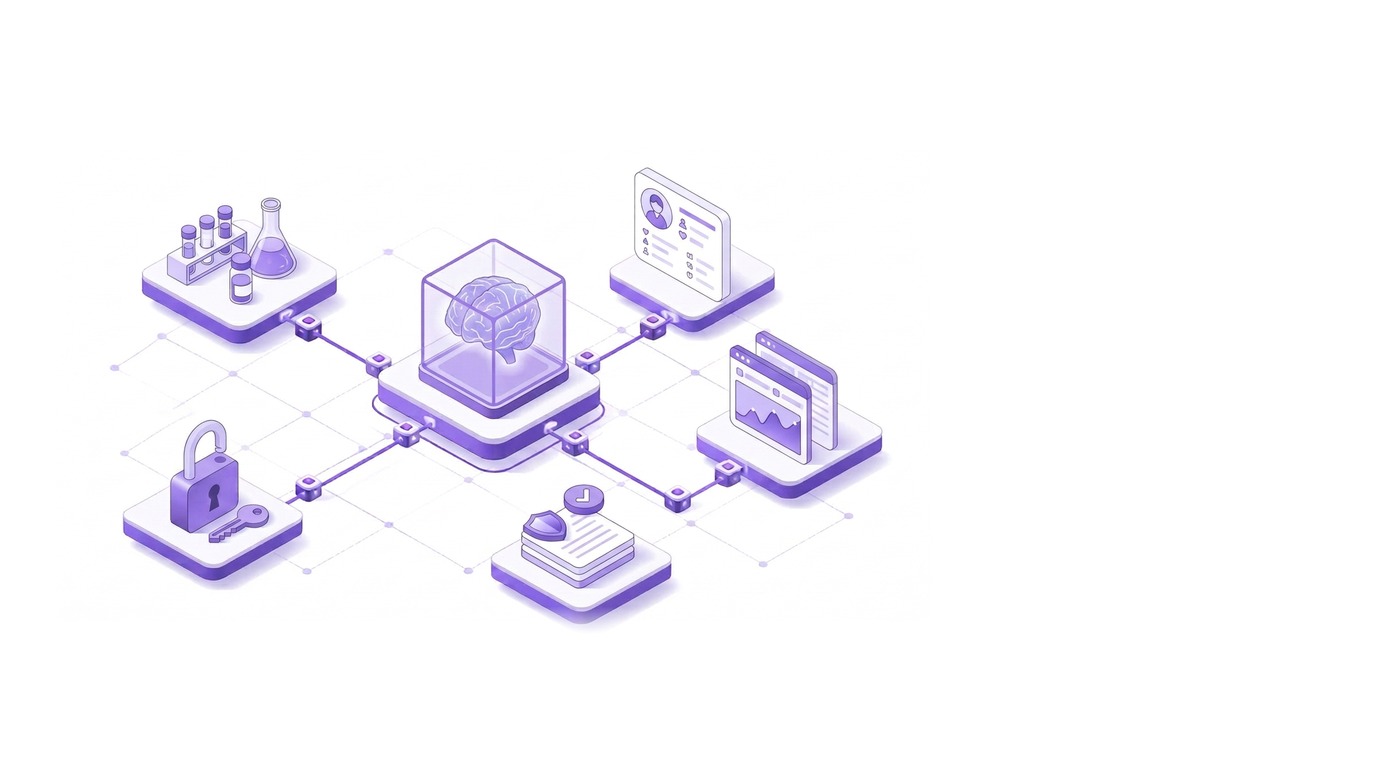
The enterprise AI layer pharma now needs must connect seven things that often sit apart: agents, data, systems, workflows, permissions, policies, and audit trails.
This layer should not only help work move faster. It should make work more accountable.
It should define what an agent is allowed to do, where human review is required, how exceptions are routed, how outputs are checked, and how every material action is recorded.
This is where the pharma AI operating model becomes more important than the tool itself.
A tool can improve a task. An operating model determines whether the enterprise can trust that task at scale.
For pharma CIOs, Chief Digital Officers, regulatory leaders, and medical affairs leaders, this is the strategic shift. AI cannot be managed as a collection of use cases forever. It has to become part of the enterprise execution architecture.
That shift requires more than deploying agents into existing workflows; it requires a structured way to govern, monitor, and evolve them throughout their operational lifecycle. This becomes especially important as organizations move from isolated pilots to multiple agents operating across interconnected, regulated processes.
Why Agent Lifecycle Management Becomes Critical
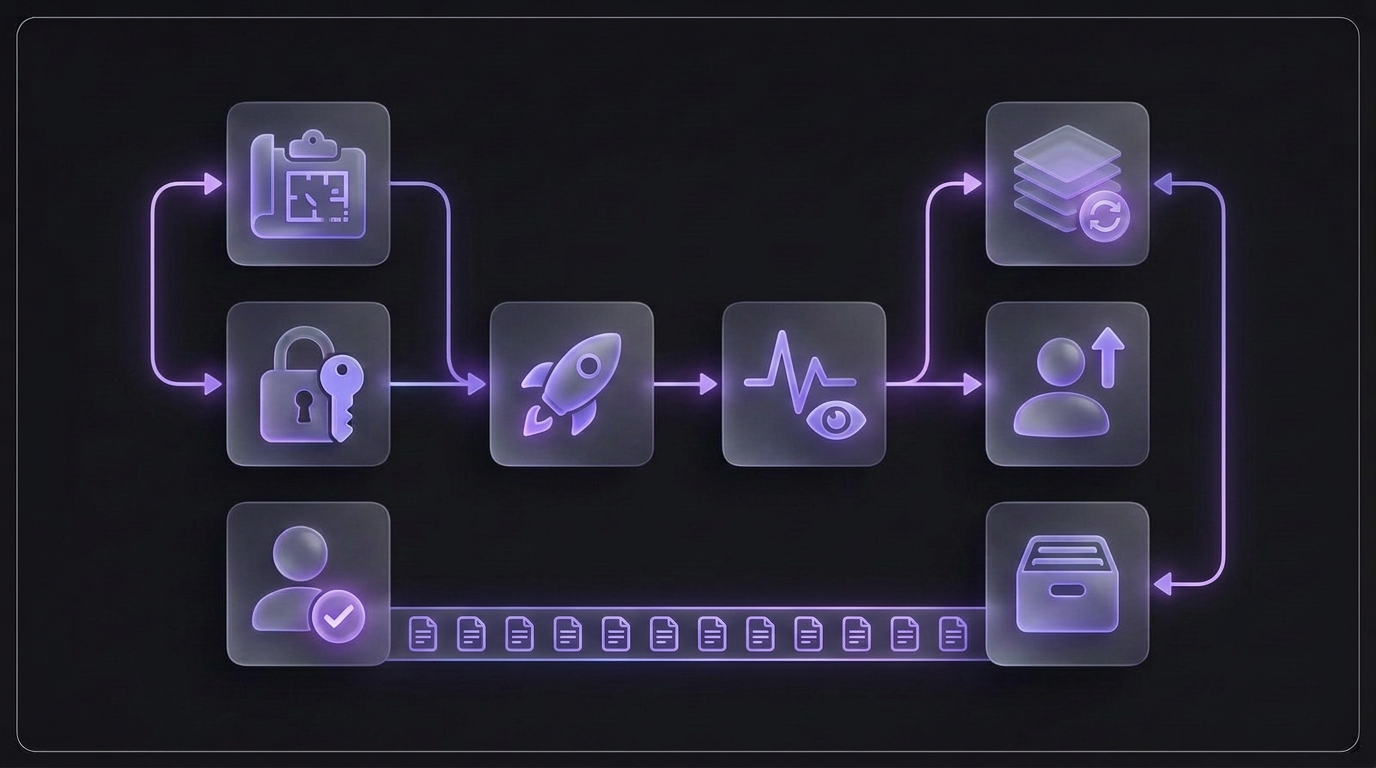
The most overlooked requirement in enterprise pharma AI is agent lifecycle management.
Most organizations know how to approve software. Fewer know how to govern digital agents that can interpret context, generate outputs, recommend actions, route work, and operate across changing business conditions.
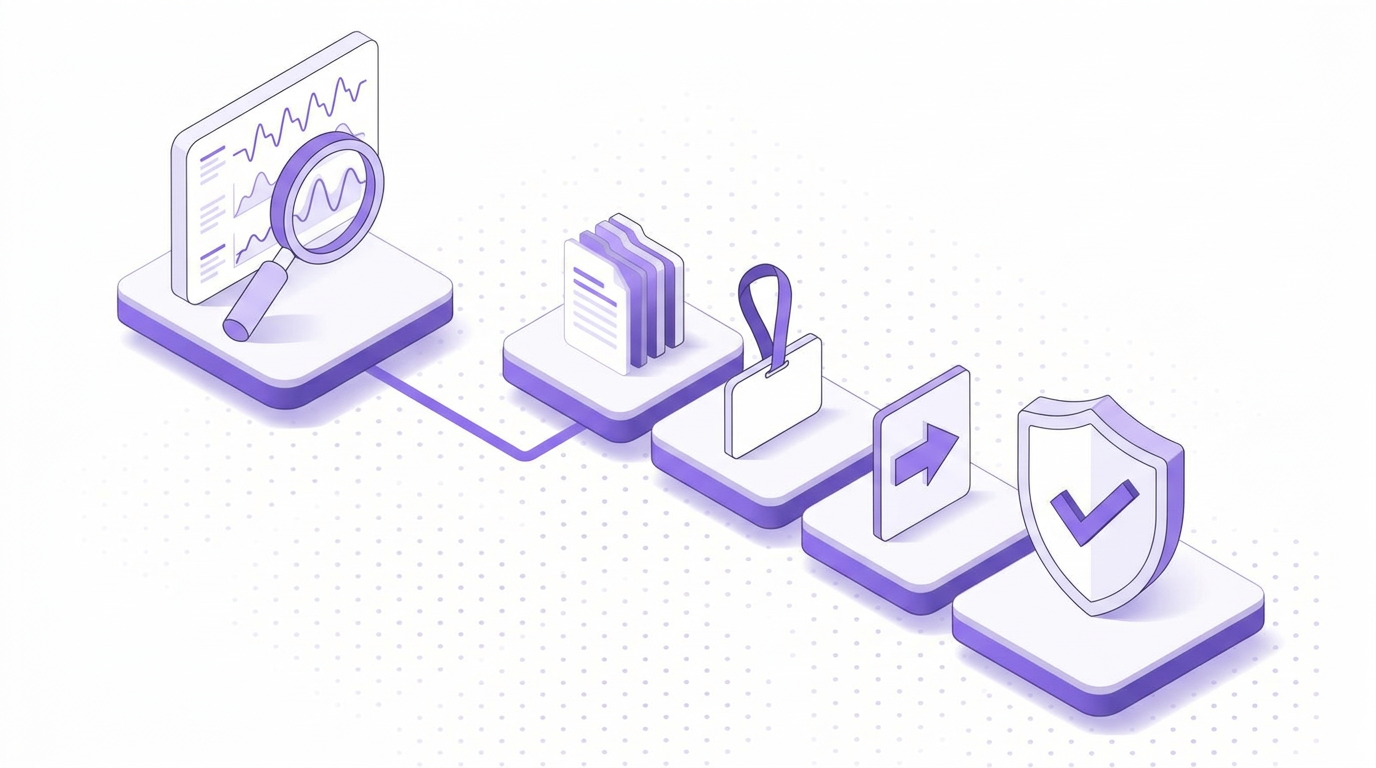
That is why Agentic Operating Systems need more than access control. They need a lifecycle model that defines how every agent is introduced, monitored, changed, escalated, and eventually retired.
Define the Agent Before Deployment
Every agent needs a documented context of use, intended function, risk profile, data boundary, workflow boundary, decision proximity, and human oversight model.
The control level should match the agent's potential impact. A knowledge retrieval agent may need basic monitoring, while an agent supporting regulatory response preparation, safety triage, medical review, or quality documentation needs stricter validation, auditability, and human oversight.
Deployment then requires permission scoping
Agents should not receive broad access because they are part of an enterprise AI program. They need role-based permissions, function-specific entitlements, restricted action rights, and clear limits on what they can read, write, recommend, route, or escalate.
Monitor Performance After Launch
Agent governance does not end at deployment.
Leaders need visibility into output quality, completion reliability, exception frequency, user override rates, escalation volume, latency, and drift. Drift can come from the model, but also from regulatory change, workflow change, source-system updates, or revised business rules.
Build Escalation Into the Workflow
Exception handling must also be designed in advance. When evidence conflicts, confidence drops, thresholds are exceeded, or the agent cannot complete the workflow, the system should route the issue to the right human owner with context. It should not simply stop, guess, or proceed.
Manage Change and Retirement
Material changes to prompt logic, model configuration, retrieval sources, permissions, workflow actions, review thresholds, or escalation pathways should be documented and approved.
Agents should also be retired when their context expires; performance degrades, workflows change, or a better governed version replaces them.
FDA's January 2025 draft guidance on AI for regulatory decision-making emphasizes context of use and risk-based credibility assessment for AI models used to support drug safety, effectiveness, or quality decisions.[3]
The message for pharma is direct: agent governance has to follow intended use, risk, evidence, accountability change, and retirement across the full lifecycle.
Human-Agent Collaboration in Regulated Pharma Workflows
Human-agent collaboration in pharma is not about replacing people with autonomous systems. It is about redesigning where human judgment is required.
Agents can support triage, routing, summarization, evidence assembly, reconciliation, and next-step recommendations. But it also involves regulatory, safety, medical, quality, or legal accountability. Then the need arises to strengthen human role - defined decision ownership. Final accountability should remain with appropriately authorized human roles.
The operating model must define review thresholds clearly.
Some outputs may allow retrospective review. Others may require pre-approval, dual review, or escalation to a named accountable function.
The same model must define what happens when an agent detects missing documentation, conflicting evidence, unusual safety language, or policy-sensitive claims.
In those cases, the agent should not push the workflow forward. It should surface the issue, provide context, and preserve the audit trail.
Human-in-the-loop AI in pharma is not a comfort phrase. It is a control design.
Governance Will Decide Which Agentic Operating Systems Scale
Governance will decide which Agentic Operating Systems remain pilots, and which become enterprise infrastructure.
FDA's AI-enabled early-phase clinical trials pilot RFI focuses on how AI and data science can improve efficiency, safety monitoring, dose selection, and early go/no-go decisions while maintaining scientific and regulatory standards.[4]
EMA's AI workstream also frames AI around guidance, policy, tools, change management, and structured experimentation across medicines regulation.[5]
ICH E6(R3) reinforces expectations around computerized systems, validation, access controls, audit trails, change control, and lifecycle management based on intended use and risk.[6]
NIST's AI Risk Management Framework similarly emphasizes governance, mapping, measurement, and management across the AI system lifecycle.[7]
For pharma leaders, the implication is clear. Governance cannot remain in a PDF policy. It has to become executable.
Policies must become permissions. Risk classifications must become review thresholds. Audit expectations must become system-generated evidence. Change-control requirements must translate into governed agent versioning, configuration management, and documented approval of material changes.
That is the operating environment Agentic Operating Systems are built to support.
Where Agentic Operating Systems Create Enterprise Value
Agentic Operating Systems create enterprise value by connecting AI capabilities to the workflows, controls, data, and decisions that determine business performance.
They can help organizations reduce operational friction, improve decision speed, strengthen compliance, increase knowledge reuse, and coordinate work across functions without creating disconnected AI tools.
The value is not simply deploying more agents. It comes from building a governed operating layer that helps the enterprise to apply agents consistently, measure their impact, and scale them where they improve outcomes.
What Pharma Leaders Should Prioritize Now
Enterprise leaders should start before agent proliferation becomes difficult to control.
First, map where agents may operate across functions. Then classify those workflows by risk, decision impact, data sensitivity, regulatory relevance, workflow criticality, and human oversight needs.
Next, define lifecycle standards for commissioning, deployment, monitoring, change control, escalation, and retirement.
Finally, align digital, IT, regulatory, quality, safety, legal, clinical, medical, and business leaders around one shared model for enterprise AI execution.
The companies that scale will not be those with the most AI pilots. They will be the companies that can prove control, repeatability, and accountability across functions.
That is the real future of enterprise pharma AI. Maxis AI helps pharmaceutical organizations build governed, scalable AI systems that connect agents, workflows, data, and human oversight, so teams can move from isolated pilots to measurable, compliant business impact.
FAQs
Frequently asked questions
What are Agentic Operating Systems in pharma?
Why does pharma need an AI operating model?
What is agent lifecycle management?
Do governed AI agents replace pharma teams?
What is enterprise AI execution?
References
Sources & references
- Scaling gen AI in the life sciences industry — McKinsey & Company, January 2025
- Reimagining life science enterprises with agentic AI — McKinsey & Company, September 2025
- Considerations for the Use of Artificial Intelligence to Support Regulatory Decision-Making for Drug and Biological Products — FDA, Draft Guidance, January 2025
- AI-Enabled Optimization of Early-Phase Clinical Trials Pilot Program; Request for Information — Federal Register, May 2026
- Artificial Intelligence — European Medicines Agency
- ICH E6(R3) Guideline for Good Clinical Practice — ICH, Step 4 Final Guideline, January 2025
- Artificial Intelligence Risk Management Framework — NIST

About the author
Nisha Panwar
Content & Research, Maxis AI
Nisha Panwar is a content and research professional with more than five years of experience across clinical research, scientific writing, and pharmaceutical technology. Her work focuses on translating developments in clinical trials and Agentic AI into clear, practical insights for clinical development teams. She writes about how emerging technologies, including the AI Workforce for Clinical Trials, are reshaping clinical operations, decision-making, and study execution.