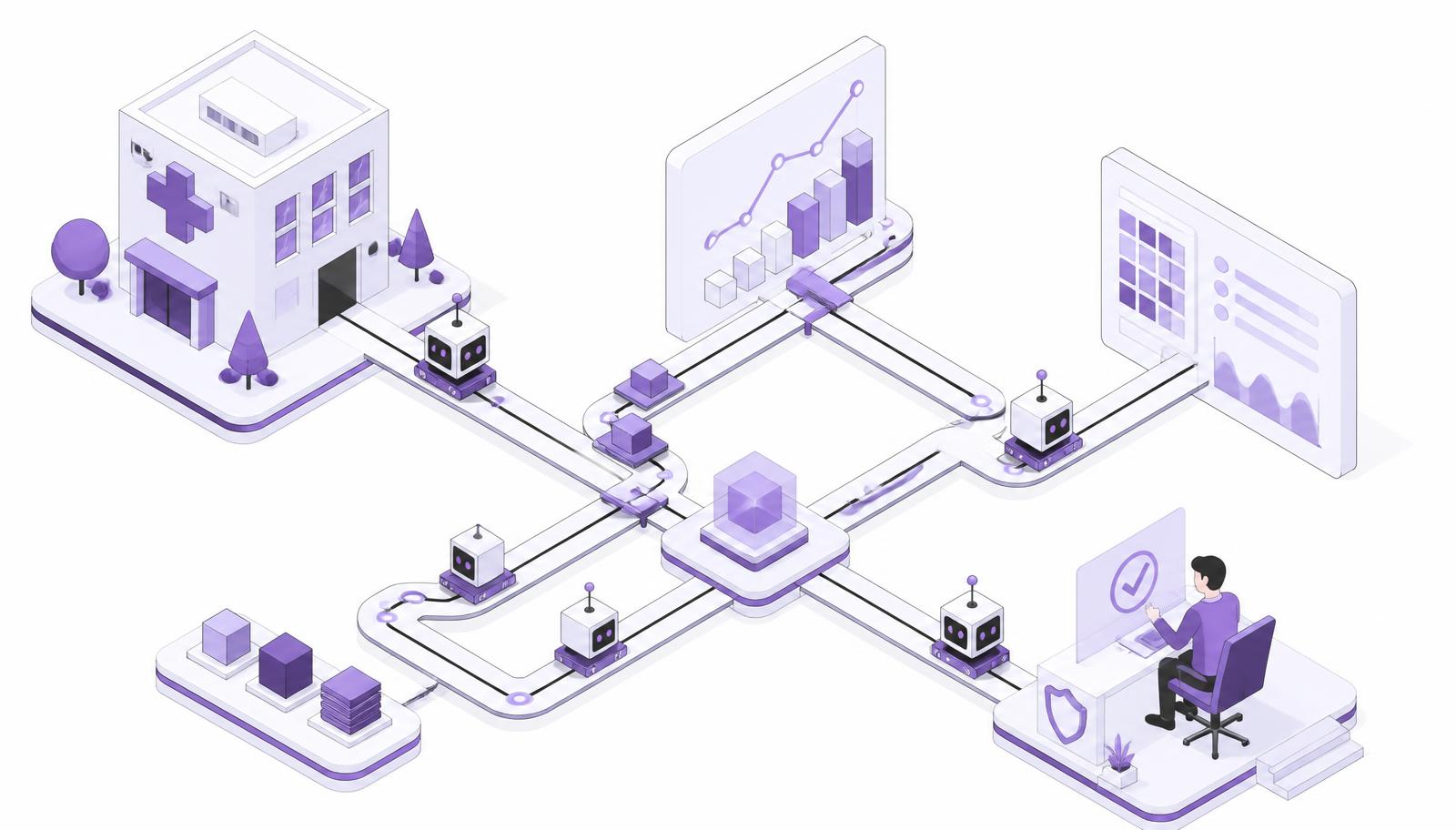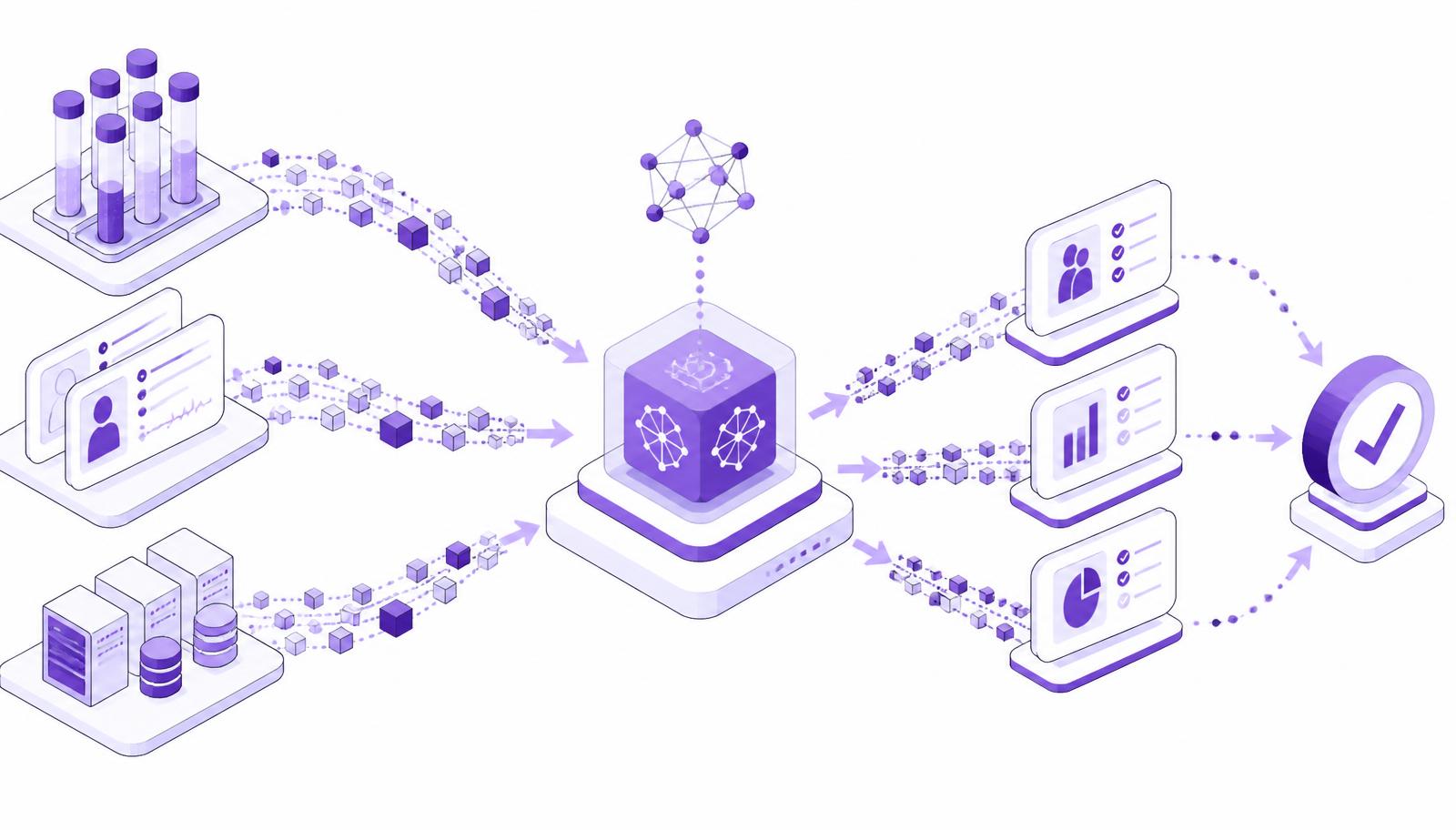
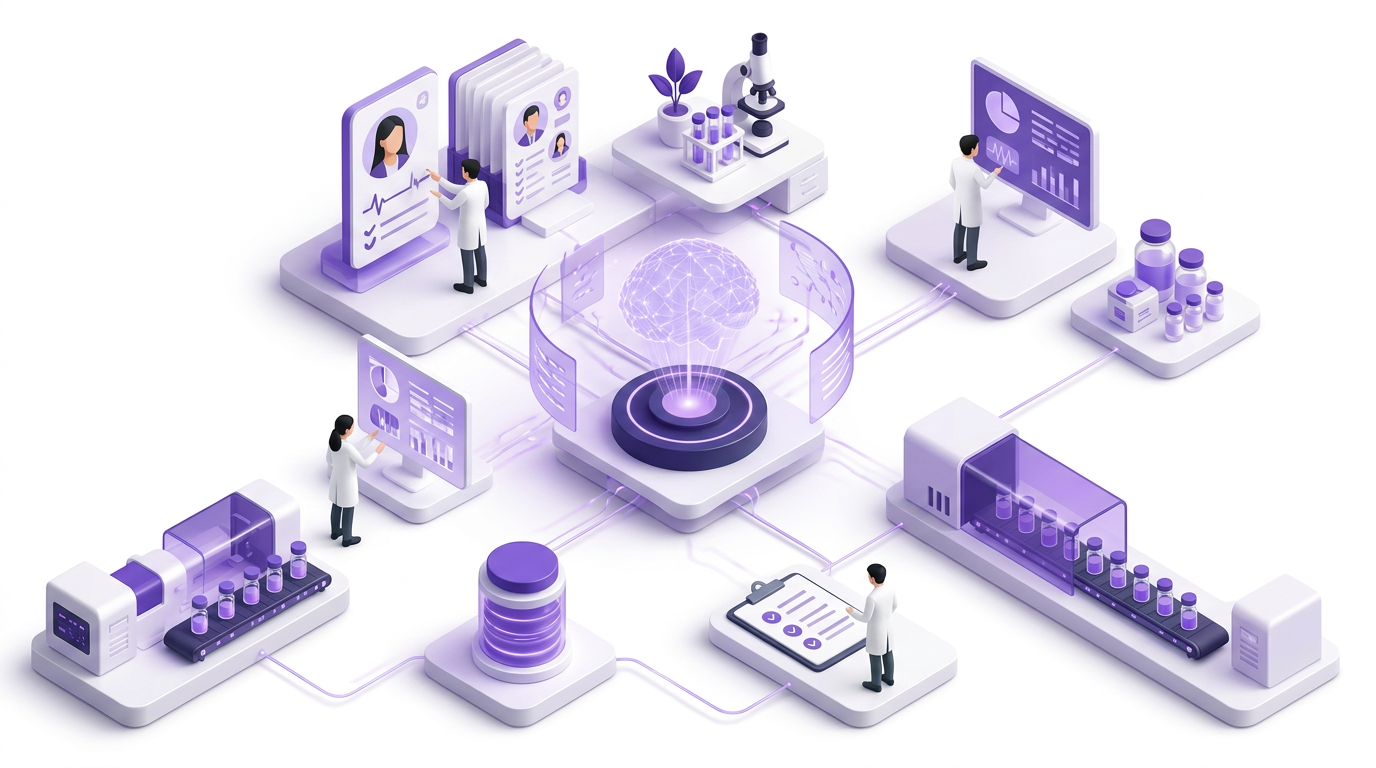
Use cases, ROI, FDA considerations, and an implementation roadmap for deploying AI agents inside regulated clinical operations in 2026.
1. Why clinical trials need a new operating model
Clinical trials are getting more expensive, more complex, and harder to staff — while sponsors are under pressure to deliver faster evidence with fewer resources. The result is a widening gap between what trials demand and what teams can execute with traditional processes and tools.
This gap is no longer just operational; it's structural. Teams are being asked to run modern, data-heavy trials on workflows designed for a different era — where insight is available, but execution still depends heavily on manual handoffs, reactive reviews, and overstretched teams.
What's driving the pressure
Escalating development costs. The mean out-of-pocket cost to develop a new drug is $172.7M at baseline, rising to $515.8M when accounting for failures. Phase II/III trials cost tens of thousands of dollars per day to operate, and each day of delay carries significant opportunity cost from delayed market access.
Protocol complexity explosion. Modern protocols are longer, more complex, and harder for sites to execute consistently. Each amendment creates cascading effects:
- Site retraining requirements
- Re-monitoring activities
- System re-validation
- Extended timelines and budget overruns
Critical workforce shortage. The clinical research workforce crisis has reached alarming levels: 7x more coordinator positions posted than filled, and experienced coordinators resigning 60% more often than in 2020. Sites are struggling with administrative burden, reducing focus on patient care and protocol adherence.
Where traditional approaches fall short
Traditional clinical trial management tools provide visibility but don't reduce workload.
| Dimension | What teams have | What teams need |
|---|---|---|
| Problem handling | Dashboards showing problems | Systems that solve problems |
| Risk | Risk signals | Automated risk mitigation |
| Delays | Reports on delays | Actions that prevent delays |
| Data cleaning | Manual data cleaning | Automated query resolution |
| Monitoring | Reactive monitoring | Proactive issue detection |
This is why AI in clinical trials is evolving from analytics to execution — from identifying issues to actually resolving them. Dashboards and reports help teams identify issues, but they still leave the work to be done manually. In practice, this is where delays accumulate: queries wait, reviews stack up, and handoffs slow execution.
2. What are AI agents and agentic AI in clinical trials?
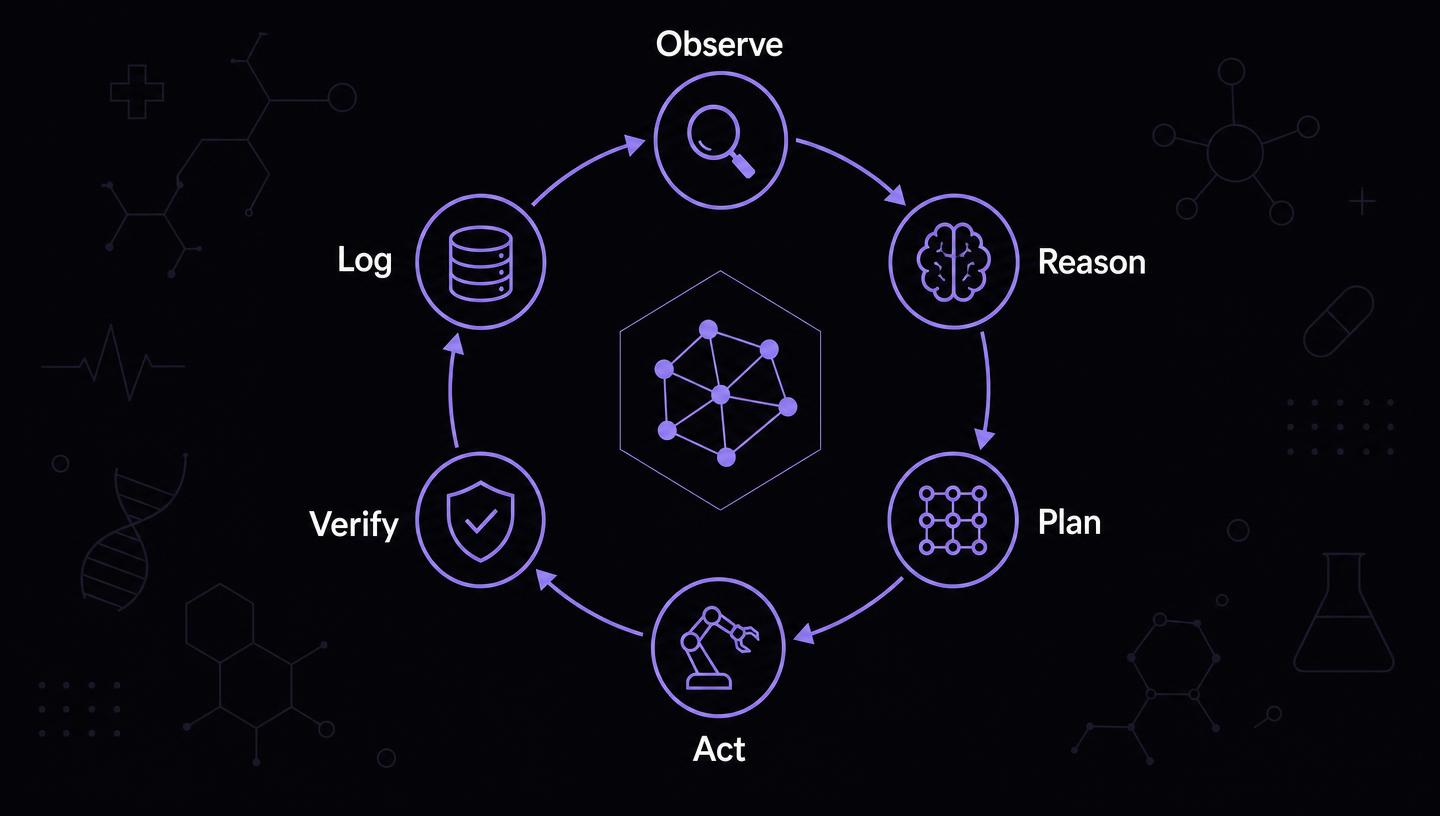
AI agents are software systems that can understand trial context, decide what needs to happen next, and take action across clinical workflows under defined rules and human oversight. In clinical development, this means agents can support workflows like data review, monitoring prioritization, safety triage, and document QC with governed autonomy.
Instead of stopping at insights, they actually move work forward — making AI in clinical trials practical for day-to-day execution, while keeping people in control and every action traceable. This is the core idea behind an AI workforce for clinical trials: systems that don't just assist, but execute work responsibly within regulated environments.
Agentic AI vs. other AI approaches
| Approach | What it does well | Where it breaks | Example in trials |
|---|---|---|---|
| Rule-based automation | Repeats predictable steps consistently | Brittle when inputs vary; doesn't adapt to protocol changes or missing context | Auto-email a report every Monday |
| ML / predictive analytics | Finds patterns, forecasts risk | Needs clean training data; doesn't execute site actions end-to-end | Predict likely enrollment rate by site |
| Generative AI (chatbot) | Summarizes, drafts, answers questions | May hallucinate; often lacks auditability, system access, and governed actions | Draft a monitoring visit report |
| Agentic AI (AI agents) | Plans and executes multi-step work with tool use and checks | Requires strong governance, validation, and integration design | Detect outlier labs → create query → notify DM → log rationale |
What agentic AI is (and is not)
- Agentic AI is not a chatbot running clinical trials.
- Agentic AI is not fully autonomous or uncontrolled.
- Agentic AI is governed execution with human oversight.
- Agentic AI is designed for GxP workflows with audit trails.
This distinction matters, especially for regulatory, quality, and IT teams evaluating new technology.
Autonomy levels (recommended for GxP)
- Assist (read-only): the agent summarizes, recommends, and drafts; a human executes actions.
- Execute with approval: the agent prepares actions (queries, tickets, notifications) and routes them for human approval.
- Bounded autonomy: the agent executes low-risk actions automatically under pre-approved rules, with monitoring and audit logs.
3. Top agentic AI use cases delivering ROI
AI agents create measurable value when applied to high-effort, rule-based workflows. The most successful deployments share three characteristics: high manual workload consuming significant staff time, well-defined rules and quality standards, and clear, measurable success metrics.
Clinical data management (CDM)
Current challenge: data managers spend 40–60% of their time on repetitive query follow-up, cross-system reconciliation, and preparing review packets — work that directly delays interim reviews and database lock.
What AI agents do:
- Automated query triage and resolution: identify and resolve common discrepancy patterns (out-of-range lab values, missing required fields, date inconsistencies).
- Cross-source discrepancy detection: continuously scan EDC, ePRO, and lab feeds to flag inconsistencies before they become database lock blockers.
- Review packet automation: assemble relevant data reports, listings, and summary tables for data review meetings.
Real-world example: an agent detects repeated lab range mismatches across multiple sites using the same equipment. It auto-resolves them using predefined correction rules, eliminating 3–4 days of back-and-forth email communication per query.
How to measure impact: 30–50% reduction in open query backlog; 40% faster average query resolution; 2–4 weeks faster cycle time to interim and final database lock; 60% reduction in data review preparation hours per week.
Patient recruitment and enrollment
Current challenge: enrollment delays stem from inefficient pre-screening, late visibility into site bottlenecks, and inconsistent patient outreach — often discovered only when timelines are already at risk.
- Intelligent eligibility pre-screening: analyze patient profiles from EMRs against detailed inclusion/exclusion criteria to identify likely candidates before manual review.
- Predictive enrollment forecasting: continuously update site-level enrollment predictions, identifying bottlenecks early enough for corrective action.
- Automated outreach workflows: manage patient matching, appointment scheduling, and routine communications with appropriate privacy controls.
Real-world example: an agent flags three sites trending toward screen-failure thresholds based on real-time data patterns, and automatically routes corrective action recommendations to the enrollment team before significant delays occur.
How to measure impact: 15–25% reduction in screen failure rate; 20–30% faster time to first patient enrolled; 25% increase in enrollment rate per site per month; 70% reduction in manual pre-screening hours per patient.
Safety and pharmacovigilance
Current challenge: safety teams face increasing case volumes with manual triage processes and time pressure to identify emerging risks before they become serious safety signals.
- Automated case intake: extract key information from incoming adverse event reports and pre-populate safety database fields.
- Narrative drafting assistance: generate initial case narratives from clinical notes and lab reports for medical reviewer refinement.
- Pattern and trend detection: monitor AE and lab data continuously to identify emerging signals, AESIs, and clustered abnormalities.
- Intelligent evidence routing: assemble supporting documentation packets and route to reviewers based on expertise and workload.
Real-world example: an agent clusters similar hepatic laboratory abnormalities across three oncology studies and alerts safety leads 10 days before the pattern would have been caught in routine manual review — enabling faster signal evaluation and regulatory reporting.
How to measure impact: 35–45% faster case processing time; 40–50% increase in medical reviewer throughput; 7–14 days earlier signal detection; 95%+ data entry accuracy with automated extraction.
Site management and oversight (RBQM)
Current challenge: risk-based quality management generates more data but not necessarily better insights — leading to late findings, reactive monitoring, and missed opportunities for early intervention.
- Continuous KRI monitoring: calculate and update site risk scores in real time based on enrollment velocity, data entry timeliness, query rates, and protocol deviations.
- Proactive deviation detection: identify protocol non-compliance, missing visits, and data anomalies before they compound.
- Automated action routing: trigger CAPA workflows, schedule targeted retraining, or recommend focused monitoring visits.
Real-world example: an agent detects a rising trend of missed lab collection windows at a high-enrolling site. It flags the pattern, prepares a targeted retraining plan, and schedules a remote monitoring review — preventing 15+ protocol deviations that would have become audit findings.
How to measure impact: 50–70% faster time from issue occurrence to detection; 30–40% reduction in monitoring hours per site; 60% fewer late findings at audit or inspection; 25–40% fewer protocol deviations per 100 patient visits.
Trial design and protocol optimization
Current challenge: protocol complexity and amendment risk often go unrecognized until sites are already struggling with execution, leading to costly mid-study changes.
- Feasibility analysis: review historical similar studies to suggest realistic enrollment targets and identify potentially burdensome procedures.
- Amendment risk prediction: analyze draft protocol complexity (visit frequency, procedure count, eligibility criteria) to flag high-risk sections.
- Operational burden modeling: simulate different visit schedules, consent processes, and data collection approaches to forecast site impact.
How to measure impact: 30–50% reduction in protocol amendment rate; 3–6 weeks faster study start-up cycle time; 20–30% reduction in site burden indicators; enrollment performance within 15% of forecast.
Regulatory and submission readiness
Current challenge: document QC and traceability checks are time-consuming, often rushed late in the study lifecycle, and prone to human error under deadline pressure.
- Automated template compliance: compare submission documents (CSRs, protocols, IBs) against regulatory templates and required content checklists.
- Evidence traceability assembly: build matrices linking endpoints to data sources, protocol requirements to CRF collection, and analysis outputs to statistical plans.
- Change impact documentation: generate detailed summaries of what changed between protocol versions, SAP updates, or submission document revisions.
How to measure impact: 50–60% reduction in QC cycle time per document; 40% fewer document rework loops; 30–50% fewer submission audit findings; 2–4 weeks faster from database lock to submission.
4. Real-world ROI and cycle time improvements
Most organizations see returns in three practical areas: reduced manual effort, faster cycle times, and improved quality. Importantly, these gains come from removing friction in everyday workflows — not from replacing people.
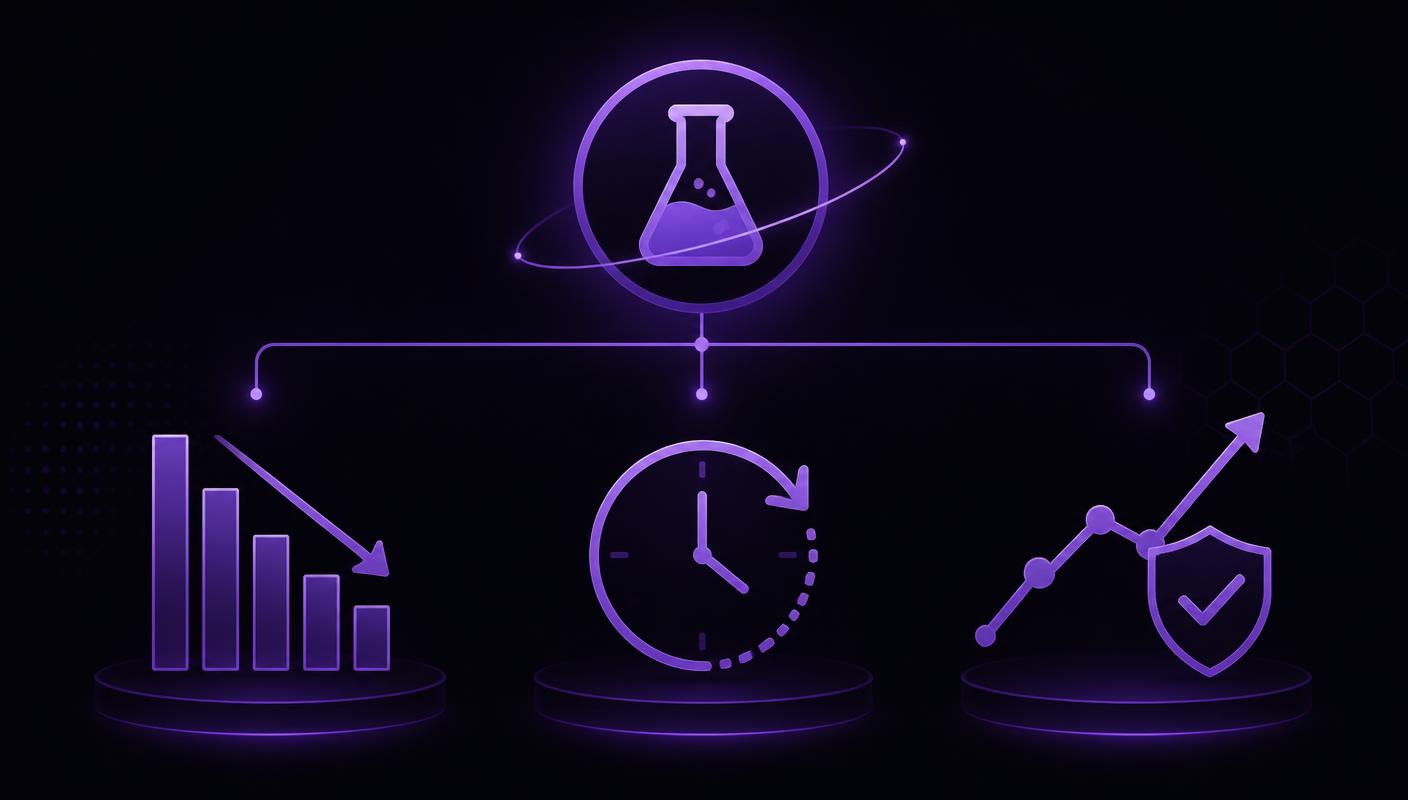
Where ROI typically comes from
1. Fewer manual hours (40–60% reduction). Agents take over repetitive tasks: query triage and follow-up, document QC and template checks, routine monitoring checks, and report preparation and data extraction. What teams notice first: backlogs shrink, handoffs between functions become smoother, and experienced staff can focus on complex cases requiring expert judgment.
2. Shorter cycle times (20–40% improvement). When routine work accelerates, critical milestones move earlier: interim data cuts arrive 2–3 weeks earlier, database lock cleaning time drops by 3–6 weeks, and safety review queues clear 30–45% faster. Even small reductions here create significant downstream impact on trial timelines and opportunity costs.
3. Improved quality (30–60% fewer late findings). Continuous monitoring surfaces issues earlier, when they're easier and cheaper to fix: fewer late findings during close-out and audit preparation, less rework during final database lock, cleaner audit trails, better inspection readiness, and reduced risk of regulatory observations.
How teams measure ROI in practice
Successful organizations use a baseline-and-after approach across four stages:
- Establish baselines before deployment: weekly hours spent on the target workflow, current backlog size and age, average resolution time, and quality metrics (error rates, late findings).
- Run a controlled pilot (4–8 weeks): deploy the agent in parallel with the existing process, track the same metrics daily and weekly, and document all failures and edge cases.
- Calculate tangible value: direct cost savings = hours saved × loaded labor rate; opportunity value = days saved on critical path × (daily burn rate + revenue opportunity cost); quality value = rework hours avoided + regulatory delay cost avoided.
- Monitor quality alongside speed: include at least one quality metric, ensure acceleration doesn't compromise compliance, and track user satisfaction and adoption.
What successful teams do differently
- Start with ONE workflow and prove value before expanding.
- Define success metrics BEFORE piloting begins.
- Run pilots in parallel with existing processes, not as replacements initially.
- Scale only after quality, compliance, and user acceptance are proven.
- Maintain executive sponsorship and cross-functional alignment.
5. North America considerations: FDA, Part 11, HIPAA, and vendor risk
In North America, adoption of AI in clinical trials is shaped as much by regulation as by technology. The good news: AI agents can be deployed safely when designed with governance from the start. This is where trust is built — not through promises of speed, but through systems that are transparent, auditable, and designed for regulatory scrutiny from day one.

FDA perspective: what regulators expect
While the FDA has not issued agent-specific guidance, expectations around credibility, transparency, and control are clear and enforceable. Five documentation elements are required:
- Defined intended use: specific workflows where the agent operates, explicit boundaries on what it can and cannot do, and clear delineation between automated actions and human decisions.
- Performance validation evidence: testing results showing the agent works as intended, accuracy metrics for each workflow, and comparison against a human performance baseline.
- Documented limitations: known failure modes and edge cases, conditions requiring escalation, and performance boundaries (data types, volumes, complexity).
- Ongoing monitoring plan: how model drift or performance degradation is detected, frequency of validation checks, and triggers for re-validation.
- Change control process: all updates treated like software releases, with impact assessment before deployment and a testing and approval workflow.
21 CFR Part 11 and GxP validation
For AI agents to be usable in regulated trials, the system must demonstrate:
- Role-based access controls for all agent actions
- Computer-generated, time-stamped audit trails that cannot be altered
- Record integrity (versioning, retention policies, traceability)
- Electronic signatures where required by procedure
- Validation evidence (IQ/OQ/PQ or an equivalent contemporary approach)
- Ongoing performance monitoring with a documented review cadence
This ensures clinical trial automation does not introduce compliance risk or data integrity concerns.
HIPAA and privacy protection
AI agents often access sensitive patient data, particularly in recruitment and pre-screening workflows. Privacy must be designed in from the start — not retrofitted.
- Data minimization: least-privilege access to PHI, de-identification or tokenization wherever possible, and agent access limited to only necessary data elements.
- Clear data flow mapping: document where PHI is stored, processed, and logged; define retention and deletion policies; map data movement across systems and vendors.
- Vendor requirements: Business Associate Agreements (BAAs) in place, SOC 2 Type II or ISO 27001 certification, documented incident response procedures, and regular penetration testing.
Managing vendor risk
Not all AI platforms are built for regulated environments. Before piloting, clinical and IT teams should assess:
| Assessment area | Key questions |
|---|---|
| Audit trail | Can logs be exported in a regulatory-ready format? Are they immutable and time-stamped? |
| Model updates | How are changes controlled? Who approves updates? What testing is required? |
| Validation support | Does the vendor provide validation protocols and documentation? |
| Data residency | Where is data processed and stored? Is it region-specific? |
| Failure handling | How are errors detected? What is the escalation process? How are users notified? |
| Business continuity | What is the disaster recovery plan? What happens if the vendor ceases operations? |
Vendor risk management is as critical as the technology itself — inadequate vendor controls can create compliance exposure regardless of how well the AI performs.
6. How to evaluate AI agent platforms
Most platforms sound similar in demos and marketing materials. The critical difference is whether they can operate safely and effectively inside regulated workflows. Use this checklist to evaluate vendors objectively — and see how a governed AI execution platform for clinical trials approaches each of these requirements in production.
| Evaluation area | What to verify | Red flags | Ideal state |
|---|---|---|---|
| Governance & auditability | Can the platform provide end-to-end audit logs of agent actions, exportable for regulatory submission? | No audit trails; logs not tied to user identity or timestamps; “black box” outputs; logs can be modified | Immutable, exportable audit logs with user attribution, timestamps, input/output tracking, and reasoning transparency |
| Clinical domain alignment | Are agents aligned to CDISC/MedDRA/WHO-DD? Do they understand protocol structures and ICH-GCP requirements? | Generic chatbot repackaged; no domain-specific validation; weak performance on real trial data | Built on clinical trial data; validated against industry standards; demonstrated accuracy on protocol interpretation |
| Integration & tool use | What systems can the agent safely read from and write to (EDC, CTMS, safety databases, IWRS)? How are permissions enforced? | Copy-paste integrations only; no write actions; unclear security model; manual workarounds required | API-based integrations with role-based access control; write capabilities with approval workflows; clear security architecture |
| Human-in-the-loop model | Can autonomy be configured by workflow risk? Are approval gates and escalation logic available? | All-or-nothing autonomy; no approval mechanisms; no override controls; unclear escalation paths | Configurable autonomy levels; mandatory approvals for high-risk actions; clear escalation protocols; human override |
| Validation & change control | What validation artifacts are provided? How are model updates handled? Is there drift monitoring? | No validation package; frequent silent changes; no performance monitoring; unclear versioning | Complete IQ/OQ/PQ documentation; controlled release process; continuous monitoring; version control with impact assessment |
| Data security | What is the hosting model? How is encryption managed and tenant data isolated? What are retention policies? | Vague answers; unclear data deletion; shared tenancy without isolation; no BAA available | Dedicated or properly isolated environment; end-to-end encryption; clear retention policies; BAA and compliance certifications |
| Clinical operations experience | Does the vendor understand trial operations workflows? Have they deployed in regulated GxP environments? | No pharma/CRO references; unclear understanding of trial operations; generic enterprise AI positioning | Multiple pharma/CRO deployments; dedicated clinical operations expertise; case studies with measured outcomes |
| Support & training | What implementation support and training are provided? What is the ongoing support model? | Self-service only; no dedicated support; unclear escalation path | Dedicated implementation team; comprehensive training program; ongoing support with SLA commitments |
7. Implementation roadmap
Successful adoption of AI agents in clinical trials requires treating implementation as a controlled operational change — not just a technology deployment. Use this roadmap as a repeatable playbook.
| Phase | Focus | Typical timing |
|---|---|---|
| Phase 1 | Select a high-value, low-risk workflow | Weeks 1–2 |
| Phase 2 | Confirm data readiness and governance | Weeks 2–3 |
| Phase 3 | Pilot with human oversight | Weeks 4–9 |
| Phase 4 | Validate and formalize | Weeks 10–12 |
| Phase 5 | Scale with governance | Weeks 13+ |
Phase 1: Choose a high-value, lower-risk starting point (weeks 1–2)
Workflow selection criteria: repetitive and rules-based, high manual effort measured in hours per week, low clinical risk (primarily operational), and clear success metrics already tracked.
- Good first candidates: query triage and resolution for common patterns; automated deviation detection and flagging; safety case narrative drafting with medical review; document QC against templates.
- Define success upfront: document current baseline metrics (hours, backlog size, cycle time, quality indicators).
- Set specific improvement targets (e.g. “30% reduction in query backlog”) and identify quality safeguards.
- Establish review frequency and decision criteria.
Phase 2: Confirm data readiness and access controls (weeks 2–3)
- Data source mapping: identify all required sources (EDC, labs, CTMS, safety databases, documents), document permissions, design a secure API-first integration approach, and confirm data quality for the pilot workflow.
- Governance framework setup: define user roles, determine who reviews outputs and who approves actions, set up comprehensive audit logging, create escalation paths, and involve IT, Quality, and Compliance early.
- Access control configuration: implement least-privilege access, set role-based permissions for reviewers, test integration security and logging before production use, and document all access grants.
Phase 3: Pilot with intensive oversight (weeks 4–9)
Run the agent alongside the existing process rather than as a replacement. The agent operates on real data, but outputs are reviewed before taking effect. Compare agent outputs against human-generated results daily, and track both efficiency gains and quality metrics.
- Daily performance review: are queries accurate and complete? Is the reasoning sound and explainable? Are edge cases handled appropriately? What failures or unexpected behaviors occurred?
- Continuous improvement: log every failure, false positive, or unexpected behavior; iterate on prompts, rules, and data inputs; adjust autonomy levels as confidence builds.
- Documentation collection: gather validation evidence (accuracy, false positive/negative rates), record all adjustments and rationale, and capture user feedback and adoption challenges.
Phase 4: Validate, document, and formalize (weeks 10–12)
- Performance validation: compare baseline and pilot metrics rigorously, confirm operational value, document observed behavior patterns and failure modes, and verify compliance with governance requirements.
- Formal documentation: prepare a complete validation package, document intended use, limitations, and performance characteristics, obtain Quality and Compliance sign-off, and create an audit-ready evidence package.
- Standard operating procedures: write SOPs covering agent operation, human review requirements, and escalation; create training materials; define ongoing monitoring; establish change control.
Phase 5: Scale with governance (weeks 13+)
- Gradual expansion: transition from 100% human review to risk-based sampling for routine cases, expand to additional studies or sites with proven workflows only, and maintain validation and change control discipline.
- Ongoing monitoring: establish performance dashboards, set acceptable thresholds and alert triggers, run regular validation reviews (quarterly recommended), and document deviations and corrective actions.
- Governance evolution: update SOPs based on operational experience, refine autonomy levels as confidence grows, share best practices across studies and therapeutic areas, and build organizational capability.
Conclusion
In North America, AI agents are becoming the execution layer of AI in clinical research — connecting data, systems, and people into compliant workflows that move trials forward. The path forward is simple: start small, prove value, and scale with governance.
Teams that begin with clearly defined use cases, establish oversight from day one, and involve clinical, quality, and IT partners early are the ones building durable capability — not just running pilots. Over time, these foundations allow AI agents to expand across functions, support more complex workflows, and adapt as trials evolve, without losing control or compliance.
As regulatory expectations continue to mature, the advantage will belong to organizations that treat AI agents as part of their operating model. At Maxis AI, we help sponsors and CROs operationalize this shift — through our governed AI services for clinical operations, deploying AI agents that are governed, auditable, and designed to work inside real clinical systems from day one. Ready to scope a pilot? Talk to our experts.
Frequently asked questions
Will AI agents replace clinical operations staff?
How do AI agents stay compliant with FDA expectations?
Are AI agents 21 CFR Part 11 compliant?
What data is needed to deploy agents?
What happens when an agent makes an error?
How do we measure ROI?
How much technical expertise is needed?
Can AI agents write and route EDC queries?
How do we prevent hallucinations in regulated workflows?
What should AI agents not be used for?
What ROI do AI agents deliver in clinical trials?
Do we need a BAA for recruitment workflows using AI agents?
How can AI be used in clinical trials?
What are the limitations of AI in clinical trials?
Can AI speed up clinical trials?

About the author
Dr. Emily Carter
Head of Clinical AI
Dr. Emily Carter specializes in governed AI agents and their application across regulated clinical trial workflows.