Slower enrollment, data bottlenecks, and endlessly back-and-forth reviews — these are the everyday challenges clinical operations teams deal with. The data is available, but acting on it quickly is usually the toughest part.
That is where agentic AI comes in. By cutting down delays, handling routine tasks, and helping teams make faster decisions, it shifts the focus from just spotting issues to resolving them.
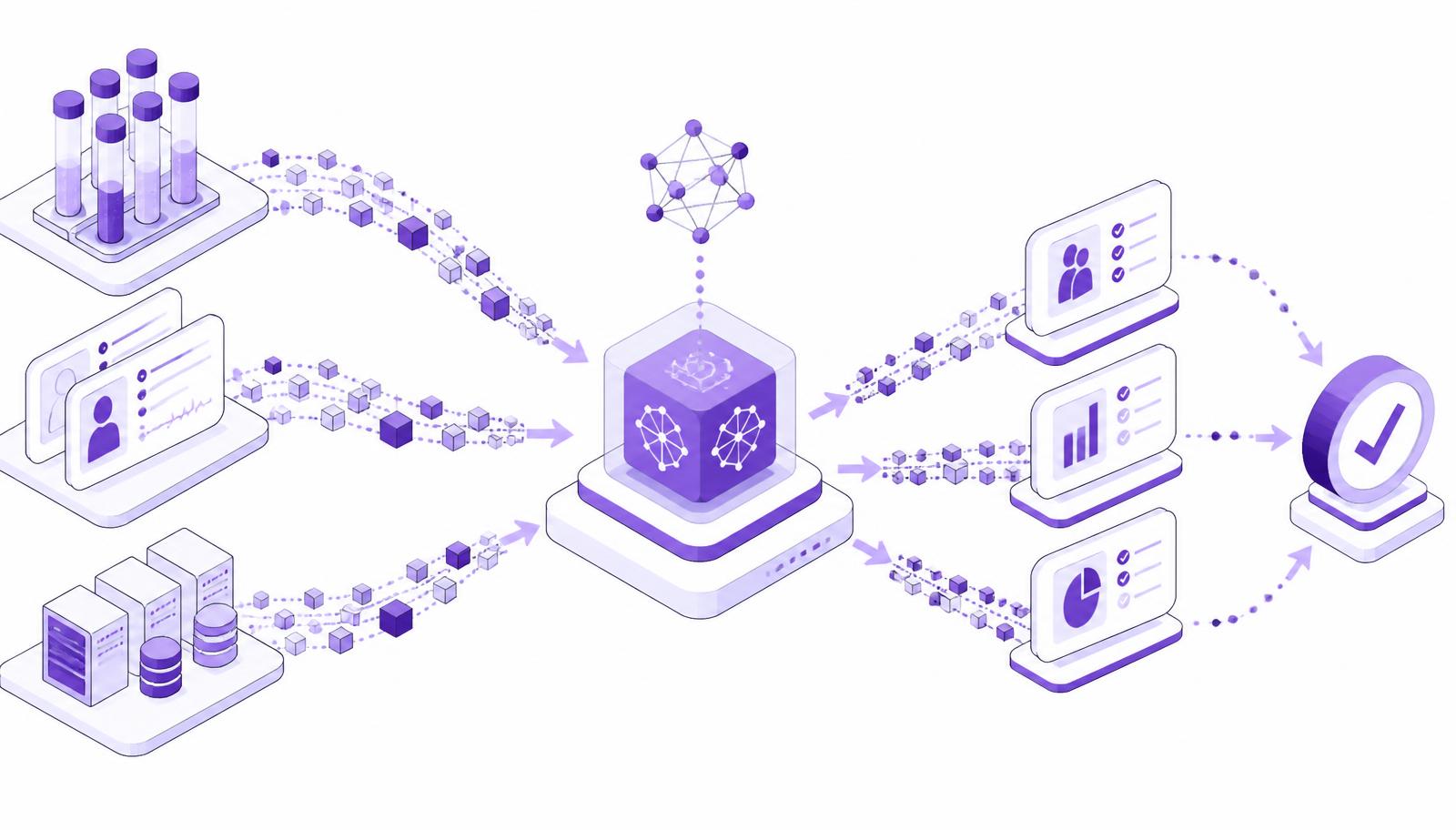
Clinical trials already generate huge amounts of data from research sites, electronic health records, labs, and connected devices. Dashboards and reports can show where things are going wrong, but they rarely lead to immediate action. That picture is starting to shift with the emergence of agentic, or autonomous, AI. Instead of stopping at analysis, it takes the next step. Imagine a system that does not just flag a site with slow enrollment — it steps in and kicks off the right fix on its own.
This article breaks down what autonomous AI agents mean for clinical trials, how they work, where they help, where they do not, and how early pilots are already improving the process. For the broader foundation, see our pillar guide on AI agents in clinical trials.
The evolution of AI: from foundation models to agentic intelligence
| Stage | What it does | What it lacks |
|---|---|---|
| Foundation model | Trained on massive datasets to generate text, code, and images | Cannot reason or adapt beyond training data; needs specific prompts |
| Few-shot prompting | Learns from a few examples to better understand tasks | Lacks deep reasoning; struggles with multi-step problems |
| Chain-of-thought prompting | Breaks problems into step-by-step reasoning | Can think logically but not act; still only generates text |
| ReAct agent | Thinks and acts, using tools such as search or APIs | Works only for single interactions; no memory or long-term planning |
| Multi-agent systems | Multiple agents collaborate, each specializing in different tasks | Needs coordination between agents; lacks full autonomy |
| Agentic AI | Plans, remembers, and improves over time with less human direction | Needs safeguards so actions stay aligned with human goals |
Source: Everest Group, © 2025.
What are autonomous AI agents?
Built on machine learning, natural language processing, and decision-making algorithms, an agent operates with a degree of independence. Instead of producing a static enrollment report, it can track recruitment in real time and redirect outreach to underperforming sites. Unlike dashboards that wait for human action, an AI agent has agency: it can adapt, learn, and act without constant prompts.
- Autonomy: executes tasks without constant input.
- Reasoning: makes context-aware decisions.
- Flexible planning: adjusts when clinical trial data changes.
- Workflow optimization: manages multi-step processes.
- Natural language understanding: acts on complex instructions.
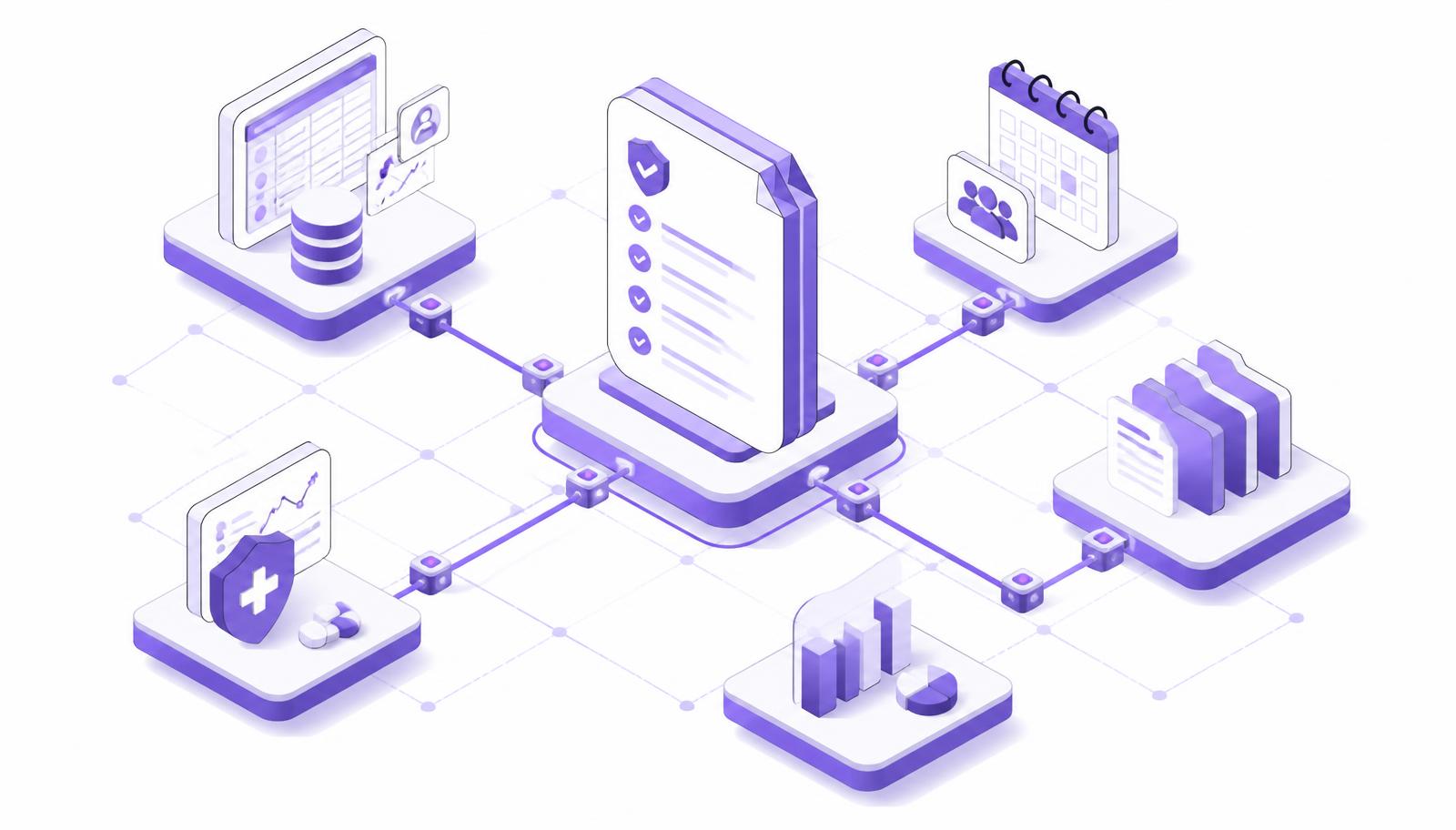
- Systems integration: connects with EHRs, CTMS, and eCRFs.
AI agents are powerful but task specific. They can monitor clinical data, flag patterns, and send reminders, but they do not replace human judgment. Experts remain essential for reviewing and validating complex clinical decisions. The best use is targeting well-defined tasks while keeping humans in the loop — the oversight models described in human-in-the-loop AI in clinical trials. In short, think of them as powerful teammates rather than substitutes for people.
Beyond dashboards: agentic AI in clinical trials
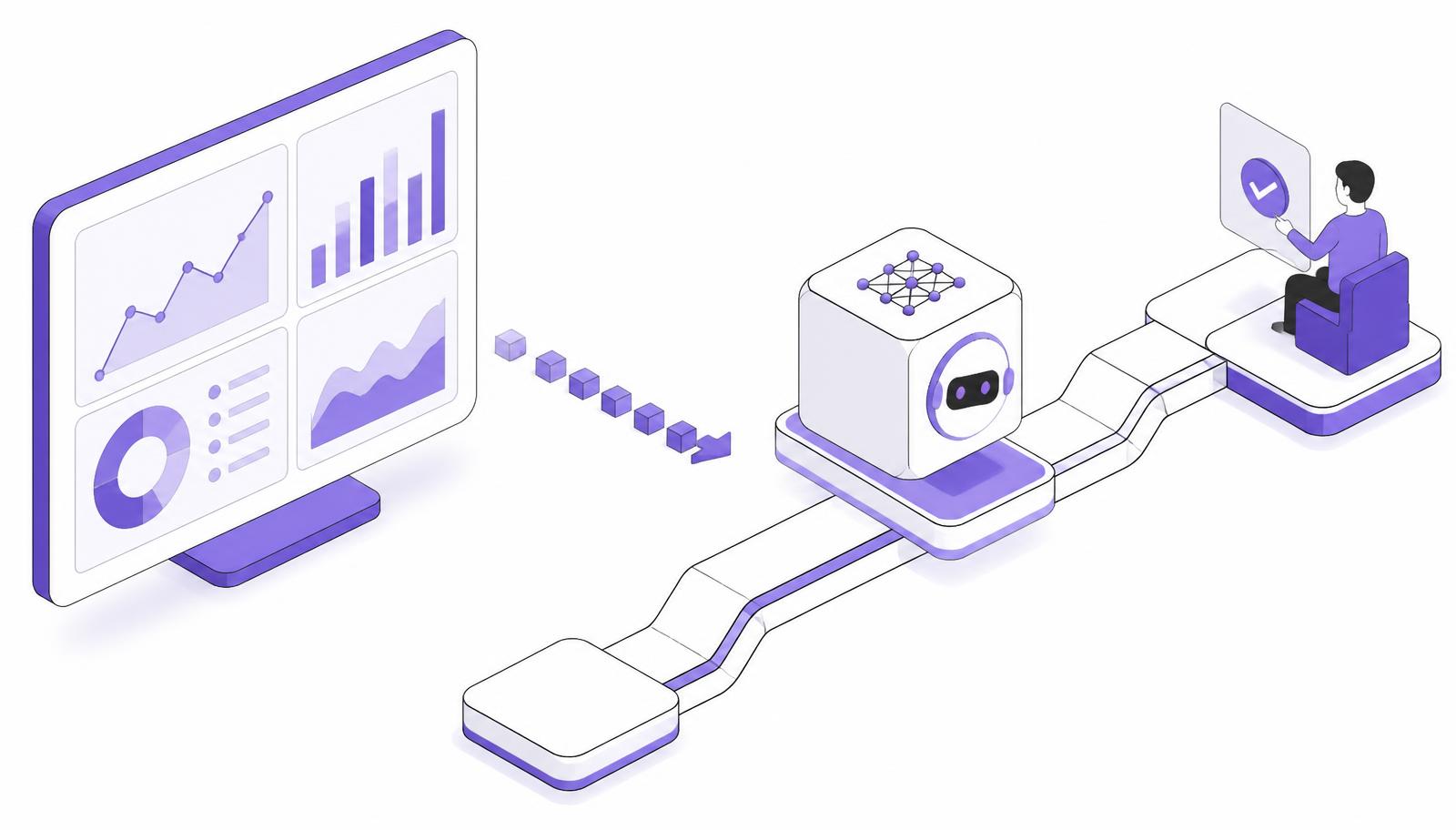
For years, clinical trial teams have used dashboards and reports to monitor operations — useful, but often leaving staff staring at charts, waiting to act. What is changing now is AI's role: moving beyond analysis to action. Autonomous agents do not just flag problems; they connect the dots and drive the next step.
- Automating enrollment outreach: agents scan EHRs and registries to identify eligible patients and automate outreach, speeding enrollment and improving retention.
- Streamlining protocol setup: agents digitize, validate, and update protocols, adjusting to regulatory changes and guiding compliance.
- Proactive safety monitoring: by scanning trial data continuously, agents can surface potential adverse event signals, flag risks, and recommend next steps.
- Enhancing data quality: agents standardize and validate site data in real time, flagging errors or resolving simple discrepancies without delays.
- Simplifying regulatory reporting: agents pull safety and efficacy data across sites, assemble reports, and draft submission-ready documents.
- Predicting trial outcomes: using past and real-time data, agents forecast outcomes and suggest protocol adjustments such as dosing or eligibility changes.
Together, these abilities can accelerate clinical trials. By acting on data as it arrives, they eliminate delays tied to manual checks. Studies suggest smart AI workflows could reduce clinical trial timelines by up to 50%. Even partial automation frees teams to focus on science while improving accuracy and speed.
Real clinical trial evidence is still emerging, but early results are promising. A Nature Cancer study tested an AI system in oncology that combined GPT-4 with image analysis and medical knowledge. Across 20 patient cases it reached the correct clinical decision 91% of the time — considerably better than GPT-4 alone.
Hype vs. reality: a balanced view
AI agents are drawing a lot of attention, but they also raise questions. Some claims suggest they could replace entire clinical trial teams or run studies on their own. That is not realistic. Agentic AI is a useful tool, not a replacement for human expertise.
The technology is starting to take off. Many organizations testing AI agents report real benefits, such as saving time and cutting operational costs. In clinical trials, that can mean automating scheduling, checking data, generating reports, and helping with recruitment or compliance. But AI has limits. It works best with clear tasks and well-organized data, and it can struggle in new situations where information is fragmented.
- Stick to clear, defined tasks. Agents perform best on routine, well-specified work such as resolving data queries or sending enrollment reminders rather than managing an entire trial.
- Humans stay in the loop. AI can highlight issues or suggest actions, but final decisions remain with coordinators, monitors, or statisticians.
- Enhance, don't replace, staff. Agents handle repetitive work so human experts can focus on critical thinking, scientific judgment, and regulatory responsibilities.
Reducing bottlenecks: how agents streamline clinical trials
Fewer bottlenecks
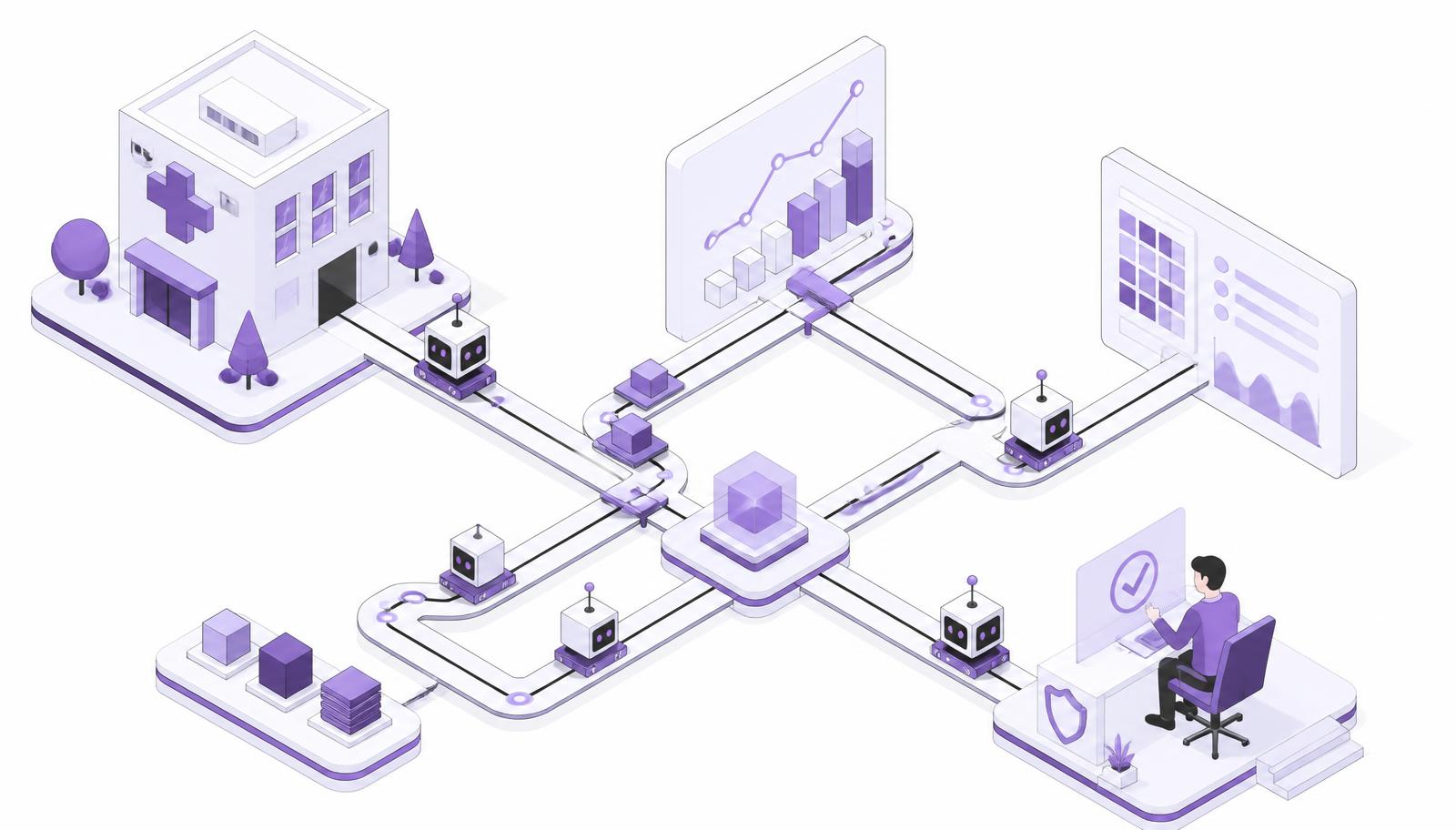
Clinical trials often slow down on routine tasks such as eligibility checks, missing data, or coordination. AI agents can automate these — scanning records to pre-screen patients in days instead of weeks, or monitoring safety data and alerting staff only when needed. At Maxis AI, agents have cut enrollment timelines by sending weekly reminders to sites, letting monitors focus on complex work.
Faster decisions
Instead of waiting for manual dashboard reviews, agents act in real time. If enrollment lags, they can analyze site performance, identify causes, and trigger reminders, providing continuous decision support so trials adapt quickly.
Better data quality
Agents clean and harmonize incoming data automatically. They standardize lab results, flag suspicious values, and check consistency across sources such as eCRFs and EHRs. One study found agents can manage eCRF anomalies and queries that usually require extensive human effort, reducing errors and speeding database lock.
Real-world results
While the literature is still emerging, early automation efforts are encouraging. A vaccine trial using AI-driven scheduling, eConsent, and monitoring achieved roughly 30% faster enrollment and shorter site activations. Our own pilots show that even a half-autonomous setup, where agents handle most tasks under supervision, can cut timelines by 20–40% and lower costs.
Challenges and responsible deployment
- Human-in-the-loop and governance: highly autonomous agents may be considered high-risk under regulations such as the EU AI Act. Sponsors need clear SOPs, audit trails, and human review of outputs. If an agent flags a serious adverse event, a clinician must verify it, and the agent's logic must be validated before deployment.
- Ethics and privacy: agents access sensitive data, so patient consent matters when using health records for trial eligibility. Systems must prevent bias, ensure fairness, and make decision logic transparent to participants and regulators.
Practical safeguards are essential. Agents should speed up trials, but not at the cost of quality or ethics. Fully autonomous clinical trial operations remain largely theoretical; achieving them would accelerate research, but only with a careful balance between efficiency and participant safety and rights. We recommend starting with low-risk tasks such as internal data checks or simple outreach, then expanding as agents prove reliable.
The future: intelligent action in clinical ops
This shift is not years away; it is already underway. At Maxis AI, autonomous agents are being integrated into daily trial operations. One agent reviews dashboards each morning and sends tailored task lists to site coordinators. Another compiles weekly performance snapshots across multiple sponsors. These may seem like small changes, but together they mark a turning point: from passive dashboards to AI systems that act.
Conclusion
Are autonomous agents hype or hope for clinical trials? They are the future, if used correctly. They will not replace your team, but they can become invaluable teammates. By handling routine work and responding quickly to changes, agentic AI can shorten timelines, raise data quality, and let human experts focus on strategy and science. Success depends on clear objectives, strong data foundations, and human oversight.
Frequently asked questions
What are autonomous AI agents in clinical operations?
Can AI agents replace clinical operations teams?
How much time can autonomous agents save in a trial?
What governance do autonomous agents require?
Where should a team start with agentic AI?
References
Sources & references

About the author
Rebecca Collins
VP, Clinical Operations Transformation
Rebecca Collins specializes in clinical operations transformation, workflow automation, and scalable execution models across complex clinical programs.