Clinical trials have become increasingly digital, but they have not necessarily become easier to operate.
Over time, pharma organizations have added CTMS, EDC, eTMF, safety systems, analytics platforms, risk-based monitoring tools, and other technologies to solve specific needs. Each has improved an important part of the trial environment. Yet much of the work required to keep a study moving still happens between those systems.
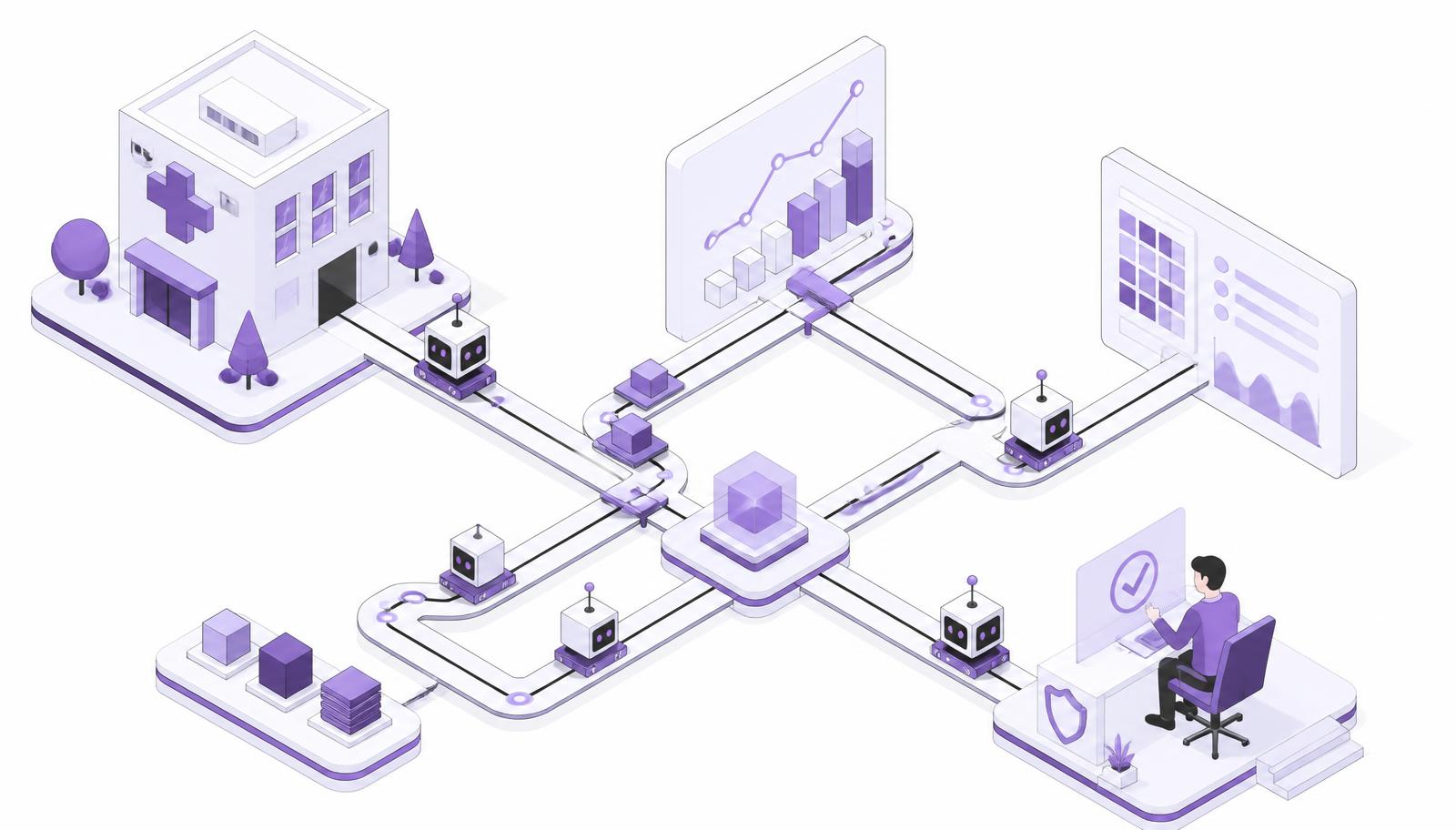
Teams interpret signals, follow up with sites, coordinate across functions, escalate issues, verify completion, and document what happened. That is where a growing operational gap is emerging. Pharma does not need another platform for more visibility. It needs an execution layer that coordinates governed work across the systems already in place.
Clinical trials already have systems of record. What is missing is a supervised execution layer for clinical workflow orchestration that connects signals, actions, owners, and human validation across those systems. This is the role of an Agentic OS for Pharma.
The Platform Paradox in Pharma
Clinical trials have never had more technology
Clinical trials are now supported by a broader digital operating environment than ever before. Research on digital technologies in clinical trials highlights the growing use of electronic health records, artificial intelligence, remote data capture, digital devices, and other technologies across research workflows.[1] The resulting challenge is increasingly one of coordination: how work moves between tools, teams, and workflows.
A dashboard can show enrollment risk. A CTMS can capture a milestone delay. An EDC can show aging queries. An eTMF can expose missing documents. But none governs how work moves from signal to response, escalation, and verified resolution.
More systems have not created more operational simplicity
Each platform addition addresses a within-function capability gap. None addresses the coordination layer between platforms, where workflows cross systems, teams, vendors, sites, and organizational boundaries. That layer remains largely manual.
A systematic review of international clinical trials found that trials can be difficult to operationalize because of policy, infrastructure, approval, and implementation differences across settings.[3]
The Hidden Cost of Enterprise Tool Sprawl
Execution breaks between systems
Consider a single query lifecycle in a running trial:
- A query is generated in EDC.
- It requires site resolution, clinical operations review, and documentation follow-up.
- If unresolved, it creates monitoring risk in CTMS.
- The risk requires escalation if someone catches it in time.
- The final outcome must be tracked, documented, and auditable.
Each step touches a different system and requires a person to observe, decide, route, escalate, and verify. When capacity is stretched, queries age, milestones slip, and risk becomes visible but unresolved.
The operational cost of manual coordination
Research on global randomized trials shows that startup delays often stem from approvals, contracts, budgets, site identification, activation, and inefficient processes.[4] The scale of the delay is significant. A 2025 cancer trial analysis found that startup can take six months or more, with lower-accrual studies showing a median activation time of 187 days.[5]
These are cross-functional execution problems, not single-system problems. Integration moves data. Dashboards display risk. Automation triggers predefined steps. Clinical execution still requires ownership, escalation, validation, and documented closure across workflows.
The Real Constraint: Operational Synchronization
Why visibility does not guarantee execution
Risk-based monitoring, dashboards, and real-time reporting have made operational risk more visible than ever. Visibility is necessary, but not sufficient. Research is direct: teams can identify delays earlier and track handoffs more clearly; the limitation is that visibility improves while execution does not.[2]
A dashboard can show that a site is underperforming. It cannot route ownership, trigger escalation, track response, and verify closure across systems.
When handoffs become operational risk
In clinical operations, risk often appears during handoffs. A task moves from data management to the site. A readiness issue moves from startup to clinical operations. A missing document moves from eTMF tracking to site follow-up. A protocol deviation moves from monitoring to quality review. If the handoff is not governed, the issue can remain visible but unresolved. This aligns with the broader operational complexity described in international clinical trial research, where execution is affected by differences in infrastructure, approvals, implementation conditions, and cross-setting coordination.[3]
This is why operational synchronization in clinical trials matters. Pharma does not need more disconnected alerts. It needs governed paths that move work from signal to action.
What Is an Agentic OS for Pharma?
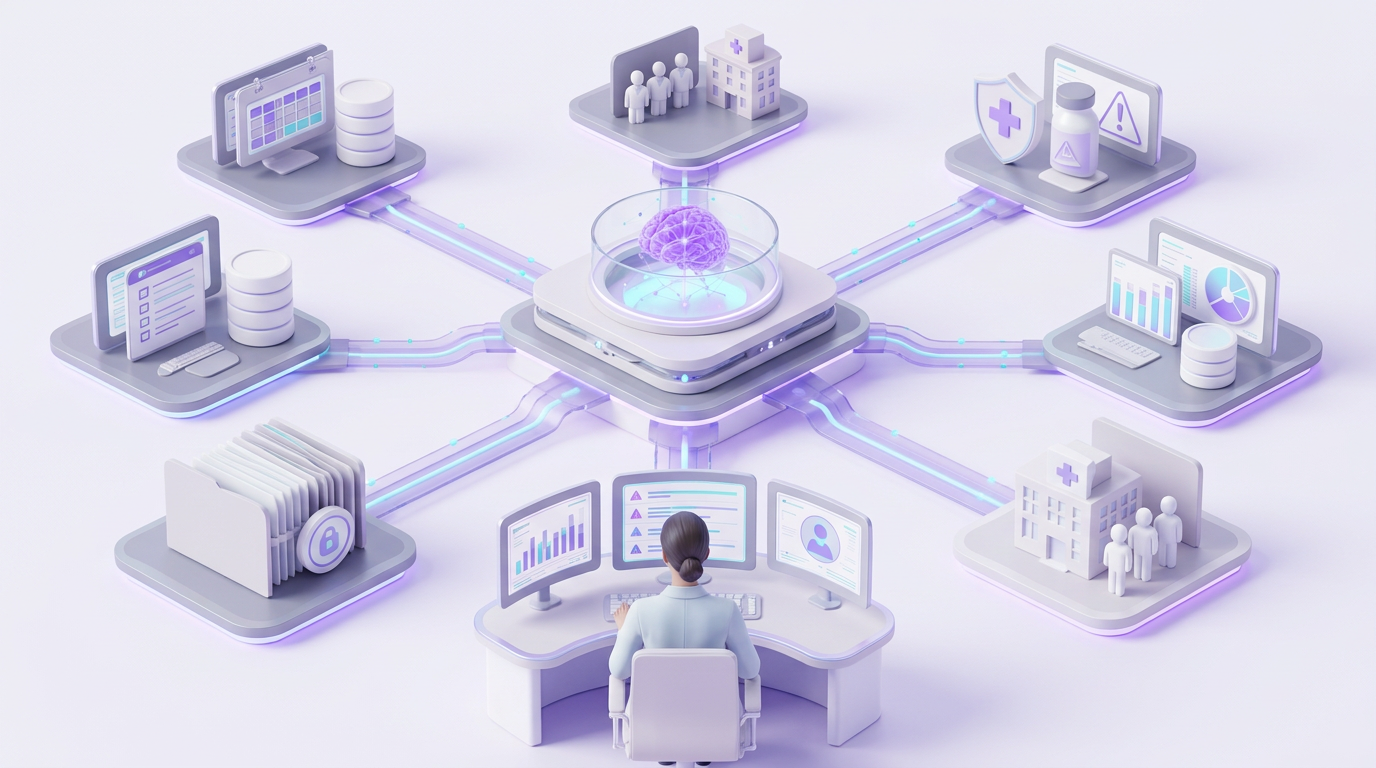
Clinical operations already have specialized systems for capturing data, managing studies, maintaining documents, monitoring safety, and identifying risk. The missing layer is what happens after those systems surface something requiring action.
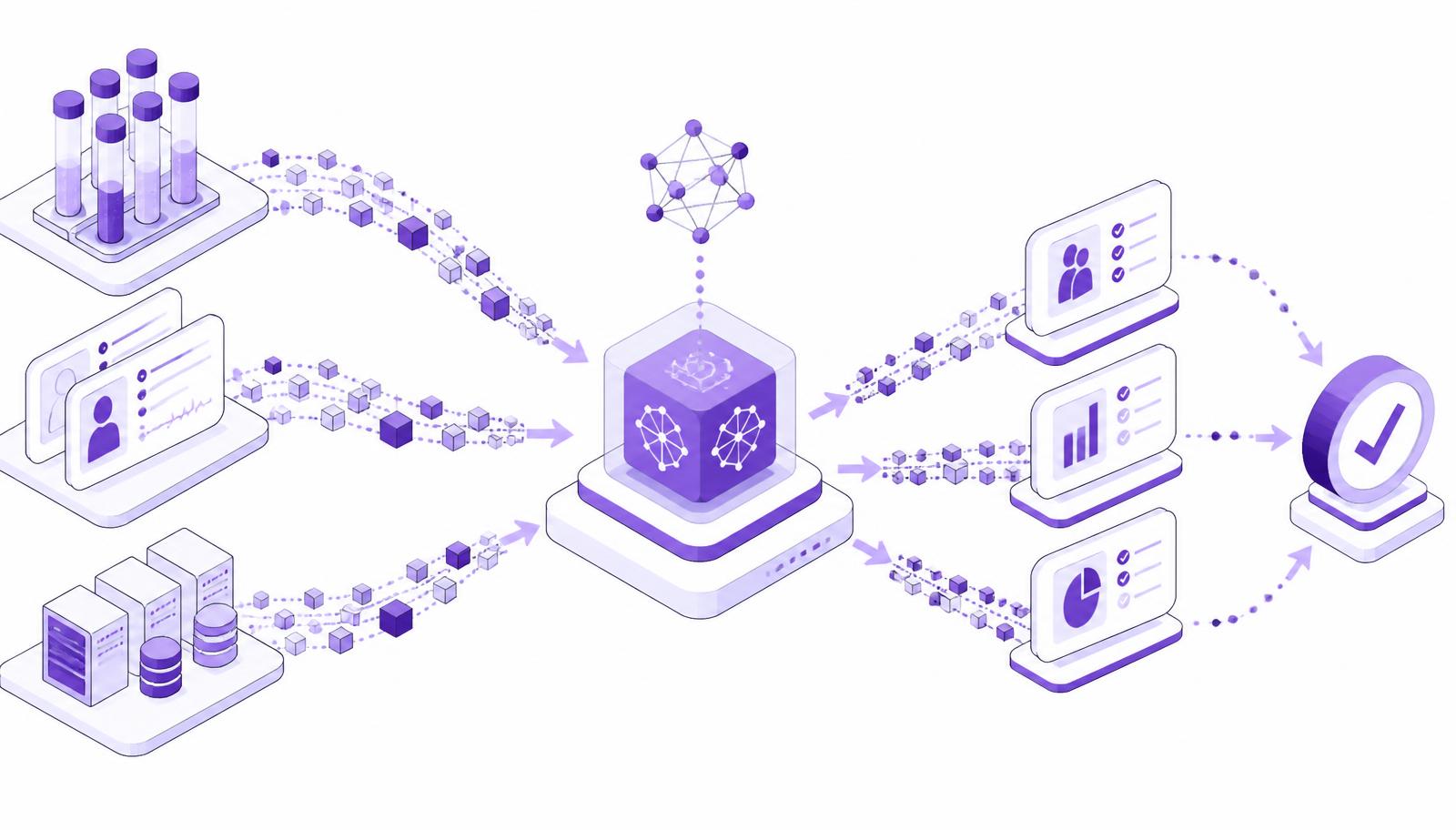
An Agentic OS connects operational signals with the appropriate workflow, owner, action, escalation path, and human checkpoint while preserving oversight and traceability. It provides the governed environment needed for a Bring Your Own Agent model.
What an Agentic OS Is Not
An Agentic OS for Pharma is not another platform, dashboard, or replacement for validated clinical systems. Its role is to coordinate execution across the systems already in place.
Not another platform
Pharma already has CTMS, EDC, eTMF, safety, and analytics systems. The problem is not the absence of platforms. It is the manual coordination between them. An Agentic OS does not add another destination system; it coordinates execution across those already in place.
Not another dashboard
Dashboards show what is happening. They do not resolve what needs to happen next. An Agentic OS turns defined operational signals into governed workflow actions, ownership, escalation, and closure.
Not a replacement for existing systems
An Agentic OS does not replace validated systems of record. CTMS, EDC, and eTMF remain validated systems of record. The Agentic OS operates across them as a supervised execution layer, coordinating governed workflows without replacing the systems already in place.
How an Agentic OS Works
An Agentic OS serves as a supervised execution layer that works alongside existing clinical systems. Rather than replacing established systems, it connects workflows, coordinates repetitive operational tasks, maintains process continuity, and ensures exceptions are routed to the appropriate stakeholders while preserving transparency, traceability, and regulatory oversight.
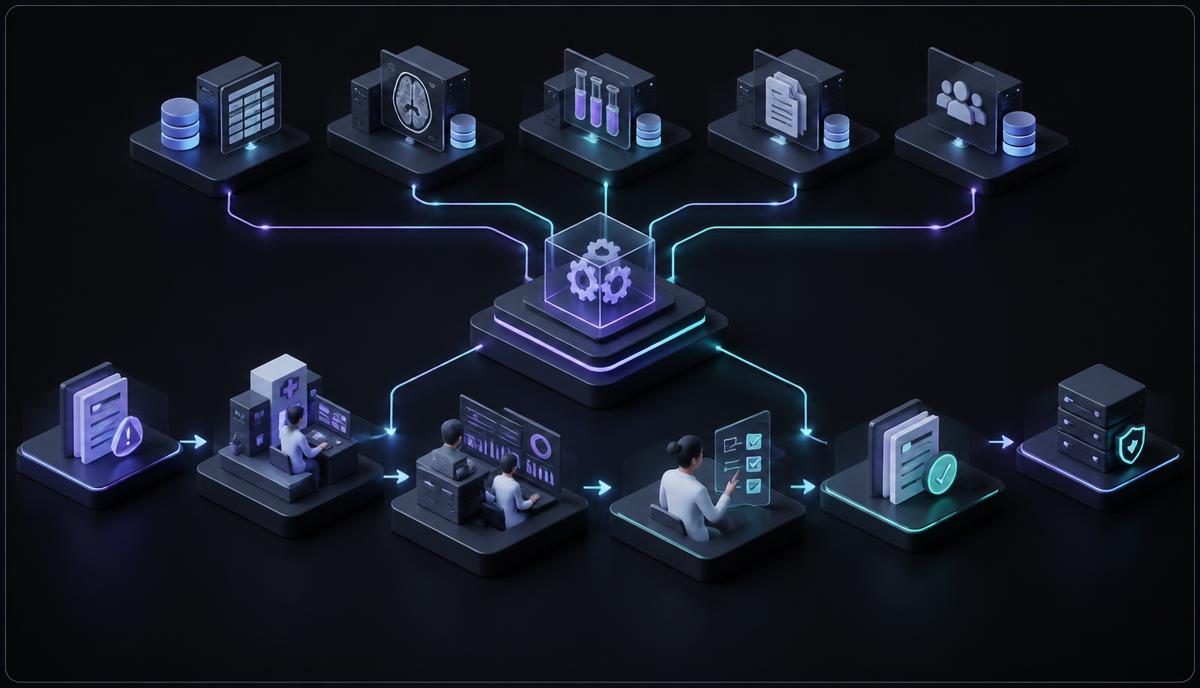
Observes workflows across systems
An Agentic OS reads defined workflow signals across CTMS, EDC, eTMF, safety, and analytics. It can detect:
- Aging queries
- Delayed documents
- Site activation risk
- Enrollment shortfalls
- Protocol deviation trends
Coordinates actions across teams
Once a signal appears, the Agentic OS routes defined next steps to the appropriate owner based on configured workflow and governance rules. This may include clinical operations, data management, monitoring, quality, vendors, or sites.
Maintains operational continuity
Role-specific AI agents support repeated workflow tasks inside defined boundaries. They can help with:
- Follow-up routing
- Readiness checks
- Risk summaries
- Workflow documentation
- Status tracking
Escalates exceptions under governance
Governance defines when human review is required and what thresholds trigger escalation. This ensures human accountability, controlled agent activity, clear escalation paths, traceable decisions, and documented closure.
Why Pharma Needs an Operating System for Execution
From integrated systems to integrated execution
Pharma has connected more clinical systems than ever, but integration does not automatically move work forward. An execution operating system is needed to connect signals from CTMS, EDC, eTMF, safety, and analytics systems; ownership across clinical operations, data management, sites, vendors, and quality teams; and actions, escalations, validations, and documented closure. The goal is not more connected data. The goal is governed execution across connected systems.
From manual handoffs to continuous workflow execution
Many workflows depend on someone noticing an issue, identifying the next owner, sending follow-up, checking whether action occurred, and escalating when it did not. That approach becomes difficult to sustain as studies, sites, vendors, data, and dependencies increase. An Agentic OS can support continuity by:
- Detecting defined workflow conditions
- Assigning the next action to the appropriate owner
- Tracking whether required actions occur
- Escalating exceptions when thresholds are crossed
- Maintaining workflow status across teams, vendors, and sites
The result is not autonomous clinical decision-making. It is a more consistent way to keep governed operational work moving without depending entirely on manual follow-up.
From visibility to coordination
Dashboards and reports show what is happening. They do not ensure what happens next. Pharma needs a coordination layer that turns visibility into accountable ownership, governed action paths, human validation checkpoints, and traceable outcomes. That is the shift from monitoring clinical operations to actively coordinating clinical execution. The category is explored further in What Is a Clinical Trial Execution System?.
The Future of Clinical Operations Is Orchestrated
Why the next layer in pharma is orchestration
Clinical technology improved individual functions: EDC improved data capture, CTMS improved tracking, eTMF improved documentation, and RBQM improved risk visibility. The next challenge is between systems.
Pharma now needs clinical trial orchestration to coordinate signals across systems, tasks across teams and sites, escalations across functions, human checkpoints across regulated workflows, and outcomes across systems of record. This is how clinical operations moves from fragmented activity to coordinated execution.
Why Agentic OS may become foundational infrastructure
An Agentic OS may become foundational because it addresses the execution layer existing platforms were not designed to own. It can help pharma create a more governed operating model for:
- Turning signals into action
- Coordinating AI agents within defined workflows
- Routing exceptions to human oversight
- Preserving auditability and traceability
- Scaling execution without adding proportional manual effort
As trials grow more complex, the ability to orchestrate work across systems may become as important as the systems themselves.
Frequently Asked Questions
Frequently asked questions
What is an Agentic OS for Pharma?
How is an Agentic OS different from a clinical platform?
Is an Agentic OS the same as workflow automation?
Can an Agentic OS replace CTMS or EDC?
Where should pharma start with an Agentic OS?
References
Sources & references
- Using Digital Technologies in Clinical Trials: Current and Future Applications — Contemporary Clinical Trials, 2021
- Clinical Trial Operations Automation: 3-Stage Maturity Model — Maxis AI, 2026
- Operational Complexities in International Clinical Trials — BMJ Open, 2024
- Drivers of Start-Up Delays in Global Randomized Clinical Trials — Therapeutic Innovation & Regulatory Science, 2021
- Evaluating the Impact of Delayed Study Startup on Accrual in Cancer Studies — Contemporary Clinical Trials Communications, 2025

About the author
Nisha Panwar
Content & Research, Maxis AI
Nisha Panwar is a content and research professional with more than five years of experience across clinical research, scientific writing, and pharmaceutical technology. Her work focuses on translating developments in clinical trials and Agentic AI into clear, practical insights for clinical development teams. She writes about how emerging technologies, including the AI Workforce for Clinical Trials, are reshaping clinical operations, decision-making, and study execution.