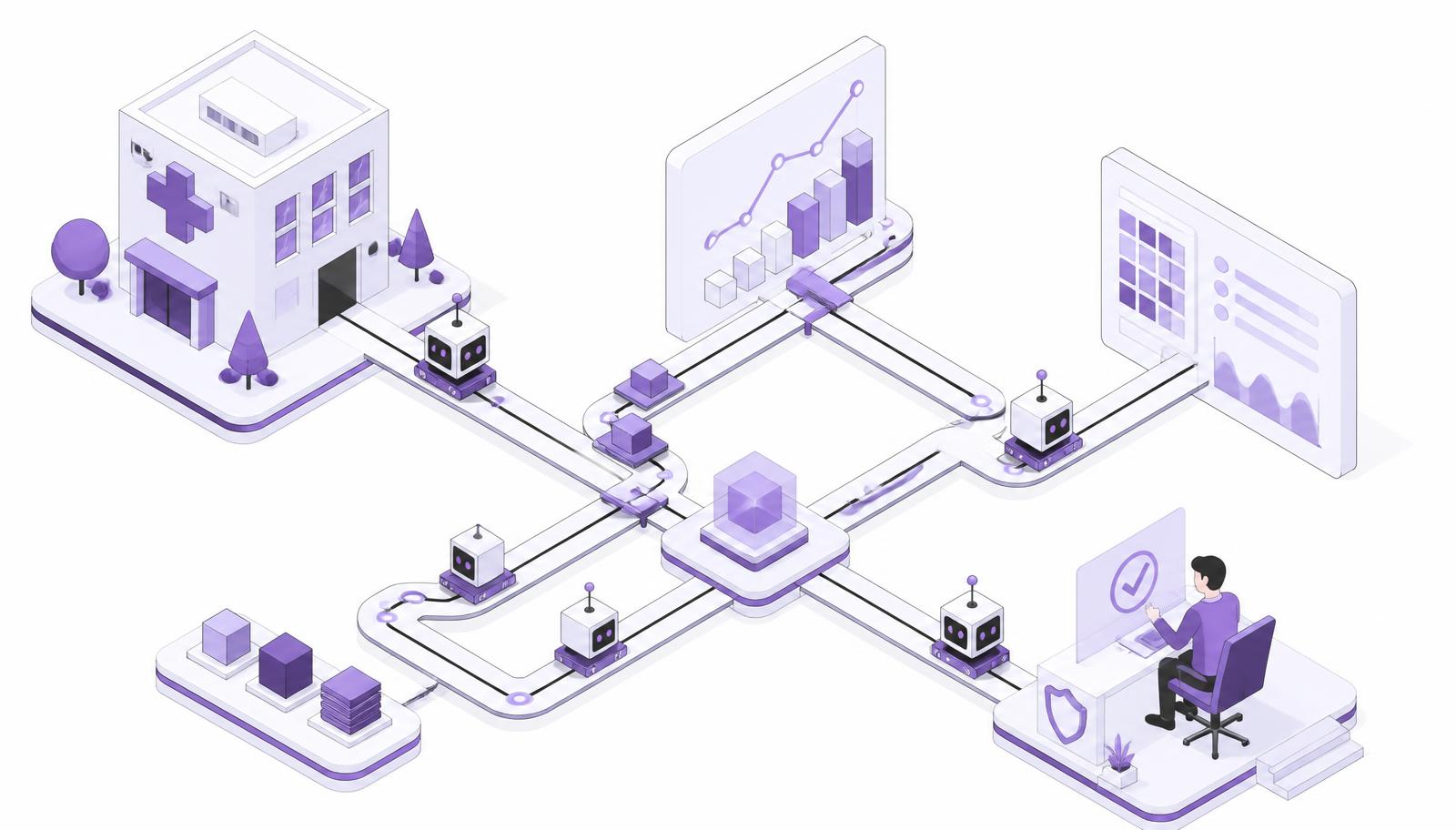

Three shifts have been reshaping clinical development in parallel. Real-world evidence has moved from supporting material to a recognized input for regulatory decisions. Adaptive designs have moved from statistical novelty to accepted practice. And agentic AI has moved from experiment to operational capability. Individually each is useful. Together they change what a trial can do.
The connection between them is execution. Adaptive designs create decision points. Real-world evidence sharpens what those decisions should consider. But both depend on an operational system capable of acting quickly, consistently, and with a defensible audit trail — which is exactly the gap agentic AI addresses. For the broader foundation, see our complete guide to AI agents in clinical trials.
Real-world evidence: from supplement to input
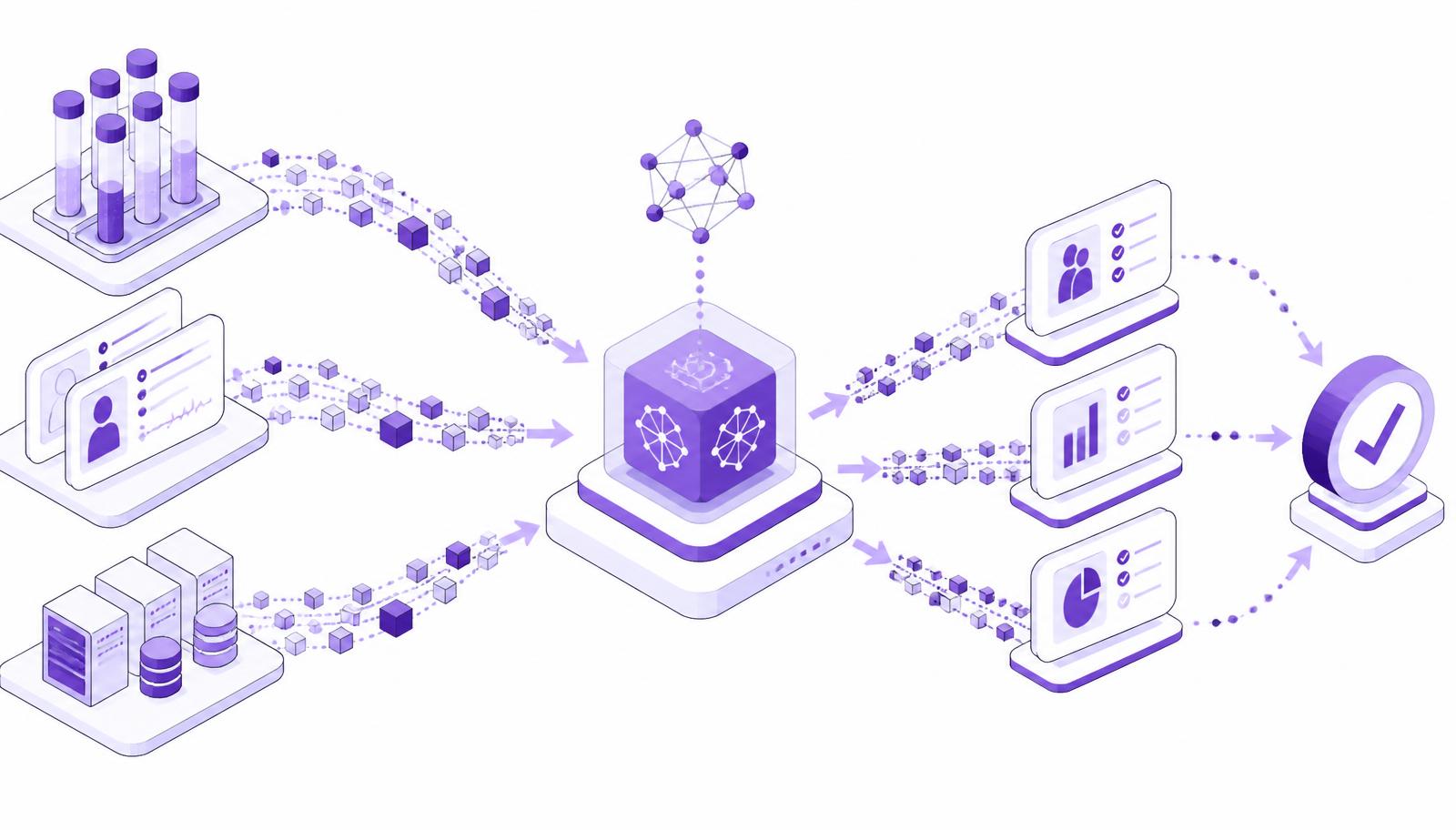
Real-world data from electronic health records, claims, registries, and connected devices describes how treatments behave outside controlled conditions. The FDA's real-world evidence program established a framework for evaluating its use in regulatory decision-making, and sponsors now use it to define realistic eligibility criteria, model expected event rates, identify candidate sites and populations, and contextualize safety findings.
The persistent obstacle is quality and structure. Real-world data arrives inconsistently coded, incompletely documented, and without the provenance that regulated analysis requires. Using it credibly demands harmonization, transparent methodology, and clear documentation of how each dataset was selected and transformed.
Adaptive designs: planned flexibility
An adaptive design allows pre-specified modifications based on accumulating data — sample size re-estimation, arm dropping, population enrichment, or seamless phase transitions. FDA guidance on adaptive designs for clinical trials of drugs and biologics sets out the statistical and operational expectations, including control of type I error and maintenance of trial integrity.
- Sample size re-estimation based on observed variability
- Dropping arms that show insufficient benefit at interim analysis
- Enriching enrollment toward populations showing response
- Seamless transitions between development phases
The statistical framework for these designs is mature. The operational burden is not. Every adaptation triggers downstream work: randomization updates, supply reforecasting, site notification, system reconfiguration, and documentation. When that work takes weeks, the advantage of adapting evaporates.
Agentic AI: the execution layer
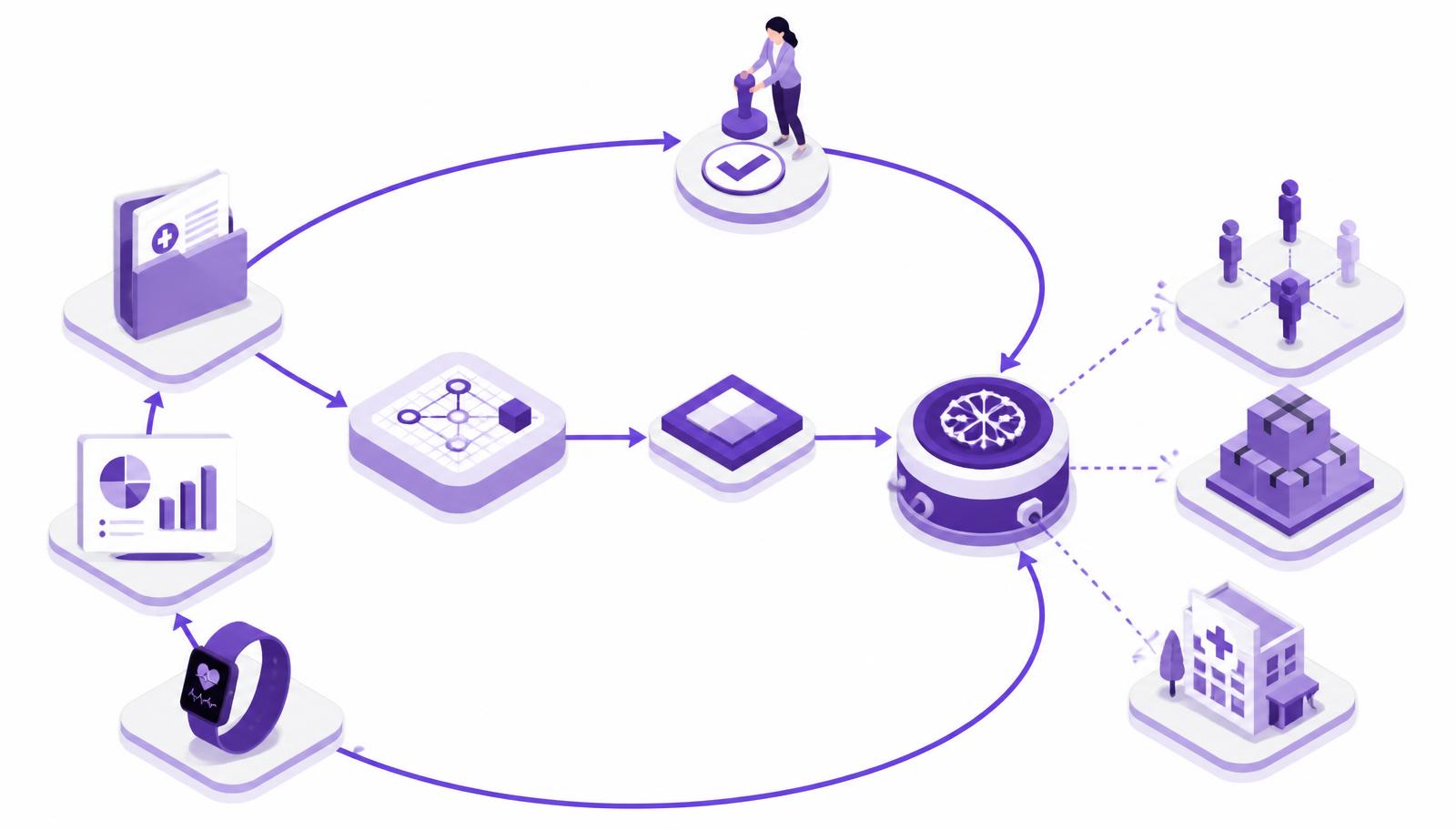
Agentic AI closes the gap between deciding and doing. Where adaptive designs define what may change and under what conditions, governed agents carry out the coordinated updates those changes require across connected systems.
- Continuous readiness: agents monitor accumulating data against pre-specified interim criteria so decision points are reached on evidence rather than on calendar cycles.
- Coordinated execution: once an adaptation is approved, agents propagate the change across randomization, supply planning, site instructions, and operational tracking.
- Evidence assembly: agents compile the data package supporting each interim decision, with lineage intact for inspection.
- Real-world data integration: agents help harmonize external datasets into the trial's common model, flagging gaps and inconsistencies rather than hiding them.
- Traceability: every action is logged, and every clinically consequential decision is approved by a person.
What this enables in practice
A study designed with real-world-informed eligibility criteria enrolls a population that actually exists at the selected sites. Accumulating data is evaluated continuously against interim criteria rather than in scheduled batches. When a pre-specified adaptation is triggered, the operational change reaches sites in days rather than weeks. And the evidence supporting each decision is assembled as the decision is made, not reconstructed months later for a submission.
The result is not a looser trial. It is a tighter one: the same statistical rigor, executed with less lag. Biostatistics teams working this way are described in our biostatistics solution.
Cautions worth keeping
- Pre-specification is non-negotiable. Adaptations must be defined in the protocol and statistical analysis plan before data is seen.
- Real-world data needs documented provenance. Selection, transformation, and exclusion decisions must be transparent and reproducible.
- Speed must not outrun review. Faster execution is valuable only when human approval and blinding safeguards remain intact.
- Complexity carries risk. Each additional adaptation adds operational and statistical surface area that must be justified.
Bringing it all together
Real-world evidence tells you what the treatment landscape actually looks like. Adaptive designs give you permission to respond to what you learn. Agentic AI gives you the operational capacity to respond in time. Used together, with pre-specification and human oversight preserved, they shorten the distance between evidence and action — which is ultimately the distance between a trial starting and a patient receiving a therapy that works.
Frequently asked questions
What is real-world evidence in clinical trials?
What is an adaptive clinical trial design?
How does agentic AI support adaptive trials?
Do adaptive designs increase regulatory risk?
What limits the use of real-world data?
References
Sources & references
- Real-World Evidence — U.S. Food and Drug Administration
- Adaptive Design Clinical Trials for Drugs and Biologics — Guidance for Industry — U.S. Food and Drug Administration

About the author
Priya Natarajan
Director, Clinical Operations
Priya Natarajan specializes in risk-based monitoring, site oversight, and AI-enabled clinical operations. Her work focuses on turning emerging risk signals into earlier, governed action across clinical trials.