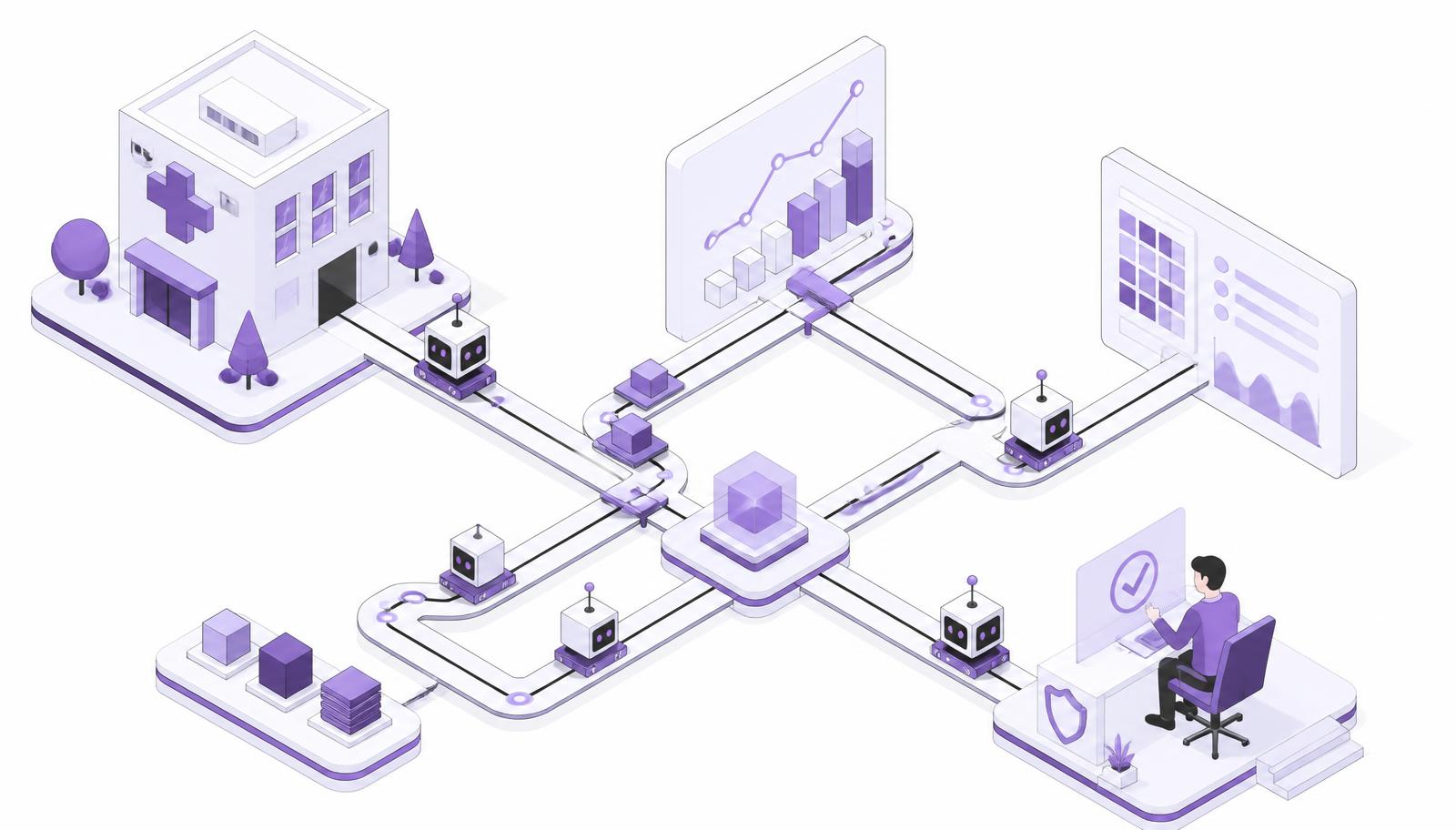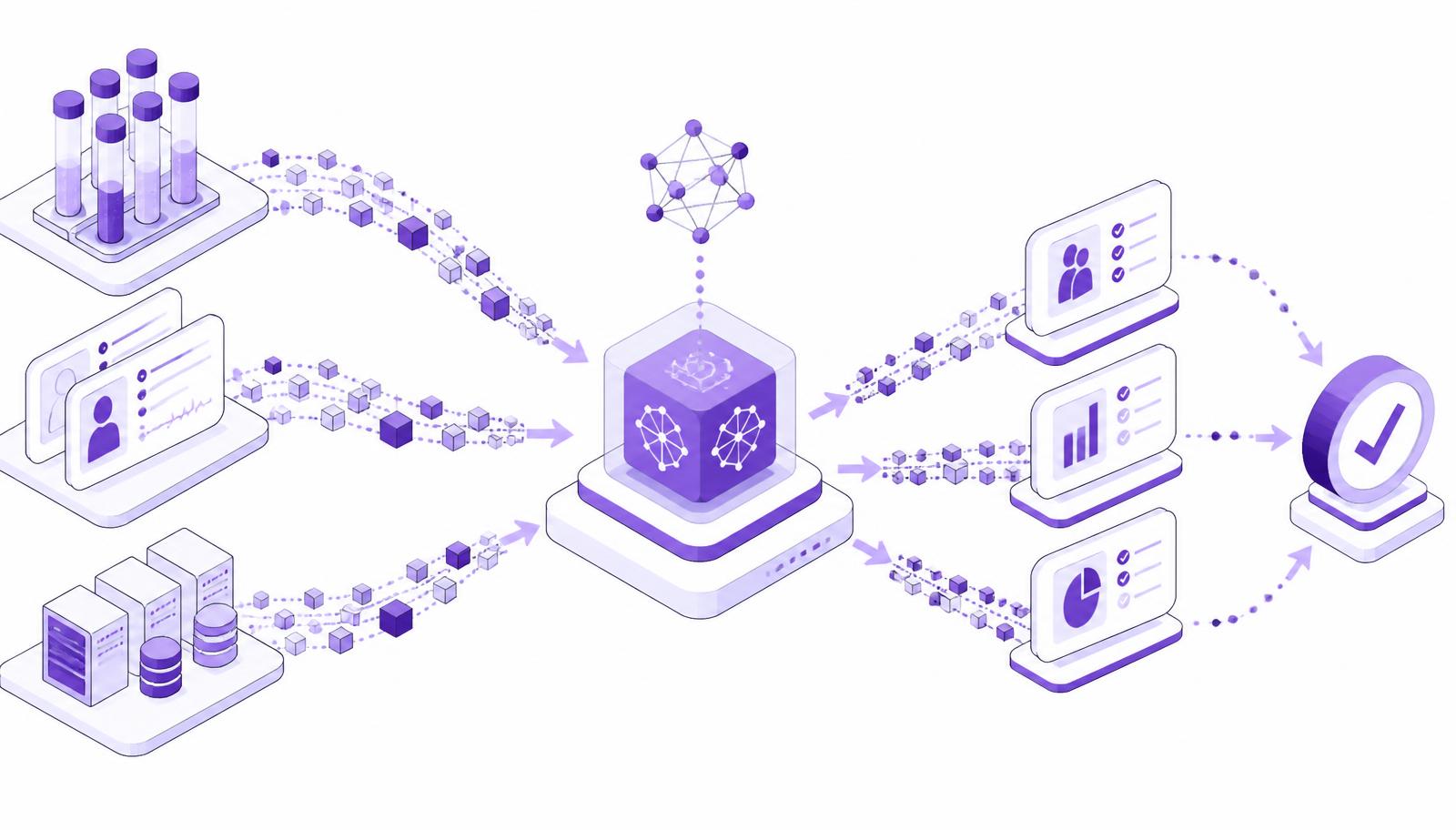

Execution scaling in clinical trials has quietly become the defining challenge of modern clinical operations.
For years, the economics were straightforward: more studies meant bigger teams. But as trial complexity accelerates and headcount scaling in CROs reaches structural limits, that equation no longer holds. The industry needs a model built on execution capacity, governed workflows, and scalable clinical operations—not just more people.
This article explains why the economics of clinical operations are shifting, what execution capacity means, and how the Agentic CRO model changes service delivery at scale. For the operating-model foundation, read The Agentic CRO.
The Traditional Economics of CRO Growth
The CRO business model was built on one equation: more studies, more people. When a sponsor awarded a new program, the CRO hired more CRAs, project managers, data managers, and regulatory specialists. Revenue and headcount moved in step. It made sense and worked for a while.
But the logic that built the industry is now the thing holding it back.
Why more studies meant more people
Sponsors outsourced to CROs for specialized talent without carrying that cost internally. Every new study needed a dedicated team.
- A project manager to own delivery
- CRAs to monitor sites
- A data management lead for the EDC build
- Regulatory specialists to handle submissions
Headcount became a proxy for capability, and hiring speed became a proxy for growth.
The limits of linear scaling
Growth came at a cost. Every new study meant new hires, and every new hire added overhead. Margins stayed flat or worsened. The industry bet on consolidation to change the equation. Bigger scale, better efficiency. Consolidation promised scale, but managing sprawling global teams proved just as expensive as building them. By the time headcount-driven growth hit its ceiling, trial complexity was already accelerating. The timing couldn't have been worse.
Clinical Complexity Is Growing Faster Than Headcount
The rising coordination burden
Between 2015 and 2025, Phase III pivotal trials saw procedures and investigative sites increase by more than 60%, while protocol deviations rose almost threefold.[1] Every new endpoint creates a new data workflow, and every new device integration—wearables, ePRO platforms, and remote monitoring—adds coordination that has to be managed across hundreds of sites at once.
Protocol complexity does not increase execution burden linearly. As workflows, data sources, sites, and dependencies multiply, the coordination required to move work forward can increase disproportionately. This is precisely where the traditional CRO model starts to face structural limitations.
Amendments compound the problem. Seventy-six percent of Phase I–IV protocols now require at least one amendment, up from 57% in 2015. The average has grown 60% to 3.3 amendments per protocol. Sites operate on different protocol versions for a mean of 215 days after each change, and each amendment triggers cascading rework across approvals, EDC validation, site retraining, and monitoring plans at a direct cost of $141,000 to $535,000, before accounting for delays.[2]
Trial volume has grown more than 30% since 2020, while the clinical research workforce has not kept pace.[3]
The hidden cost of execution variability
Underneath the headline numbers is a quieter problem: inconsistency.
A 2025 PMC study highlighted that site-level performance inconsistency directly compromises trial reliability, while standardized measurement remains underdeveloped.[4] Approximately 85% of trials encounter delays, many stemming from site-level variability in scheduling, data entry, and communication. Study startup alone can take six months or more, driven by regulatory hurdles, contract negotiations, and inefficiencies in site activation.[5]
One underperforming site in a 50-site network can disrupt an entire program. More headcount does not fix structural variability.
Headcount Architecture vs. Execution Architecture
Most CROs are solving a 2025 problem with a 2005 operating model.
The default is still building bigger teams to cover more ground. The shift that's now underway is toward building the infrastructure that makes delivery reliable regardless of who's on the team.
Replacing a single coordinator can cost $50,000–$60,000 in direct costs alone.[6] The larger loss is quality, continuity, and institutional knowledge. For every experienced coordinator seeking work, there are seven open positions; for clinical research nurses, the ratio is one to ten.[7] No hiring strategy outpaces that gap.

The difference is fundamental. A headcount-first model depends on the right people showing up. Governed workflows make quality repeatable by design, and that repeatability drives reliable execution scaling in clinical trials.
Execution Capacity Is the New Constraint
Dashboards and monitoring tools are everywhere, but visibility alone does not create execution capacity. The real bottleneck is execution capacity in clinical trials, the structural ability to process work at volume, on schedule, without tasks falling through the cracks.
Why visibility is not enough
Knowing site activation is 30 days late does not fix it. Knowing queries are aging across 40% of sites does not close them. Visibility surfaces problems; execution architecture determines how signals move toward coordinated action and resolution. That distinction is central to the economics of clinical operations at scale.
Why throughput matters
Study startup delays can cost sponsors from $600,000 to $8 million per day, depending on trial phase.[5] A single day is not a rounding error; it's a budget crisis for a program already running on compressed timelines. CROs that move work faster aren't just operationally better. They deliver measurably better value for their sponsors.
Why predictability matters
Sponsors don't just want delivery; they need reliability they can build a program around.
- Unpredictable timelines require contingency budgets
- Inconsistent data quality requires remediation rounds
- Coordinator turnover injects variability into startup and protocol adherence[3]
A CRO offering governed, predictable delivery offers something sponsors cannot easily price elsewhere. The progression from isolated automation to governed orchestration is detailed in the clinical operations automation maturity model.
How the Agentic CRO Model Changes the Economics
Previous waves of clinical technology made individual tasks faster. The agentic model does something more fundamental—it restructures how work moves between tasks, teams, and systems. A 2025 PMC scoping review found agentic AI moving from conceptual frameworks to functional deployment, particularly for complex decisions and workflow automation in regulated environments.[8] In clinical operations, that translates directly to better execution capacity.
Structured execution capacity
In an Agentic CRO model, execution capacity becomes a function of workflow architecture and governed execution, not only team size. AI agents can work across data review, site follow-up, TMF management, and quality control simultaneously. Research in Clinical and Translational Science confirms that agentic workflows are expanding the scope of tasks AI can reliably handle, with Andrew Ng noting in 2024 that “the set of tasks AI could do will expand dramatically because of agentic workflows.”[9]
Adding a new study no longer means building a new team from scratch.
Governed workflows
Multi-agent systems bring structure to what is typically scattered coordination through governed and supervised execution:
- Defined workflow boundaries for agent-supported execution
- Human validation checkpoints at defined stages
- Controlled escalation paths for exceptions and higher-risk decisions
- Documented supervision thresholds
- Traceable execution histories across workflow actions
The FDA's January 2025 draft guidance on AI for regulatory decision-making emphasizes systematic risk assessment, validation, and documentation within agentic workflows,[9] confirming that governance is what makes this model viable at clinical scale.
Predictable delivery
When workflow steps are templated, completion is tracked automatically, and deviations trigger defined responses, variability is reduced structurally rather than managed reactively. That consistency is what sponsors are contracting for.
The Future Economics of Clinical Service Delivery
Competing on execution capacity
The clinical research workforce crisis is structural and documented. Demand for coordinators is projected to grow 9.9% through 2026 in a market already stretched.[7] In that environment, headcount alone will not win. Successful CROs will combine strong talent with infrastructure that makes delivery reliable and repeatable at scale.
The emergence of execution-driven CROs
Frameworks to measure and compare site-level delivery performance across CROs are already being built and validated in peer-reviewed research.[4] As sponsors become more sophisticated in evaluating how CROs actually execute, structured and scalable delivery will move from differentiator to baseline expectation.
The CROs investing in execution architecture now are positioning themselves ahead of that shift and ahead of how this industry will be measured going forward.
Frequently Asked Questions
Frequently asked questions
What is execution scaling in clinical trials?
Why is headcount scaling in CROs becoming unsustainable?
What is execution architecture?
What is execution capacity in clinical trials?
How does the Agentic CRO model improve scalability?
References
Sources & references
- Protocol Design Scope and Execution Burden Continue to Rise, Most Notably in Phase III — Tufts Center for the Study of Drug Development, 2023
- New Benchmarks on Protocol Amendment Practices, Trends and Their Impact — Therapeutic Innovation & Regulatory Science, 2024
- Resource Management and Capacity Planning for Clinical Trial Sites — Journal of Clinical and Translational Research, 2024
- Development of the Clinical Trial Site Performance Metrics Instrument — MethodsX, 2025
- Evaluating the Impact of Delayed Study Startup on Accrual in Cancer Studies — Contemporary Clinical Trials Communications, 2025
- Navigating Workforce Stability in Clinical Research — Journal of Clinical and Translational Science, 2025
- Now Is the Time to Fix the Clinical Research Workforce Crisis — Clinical Trials, 2023
- Artificial Intelligence Agents in Healthcare Research: A Scoping Review — PMC, 2025
- Agents for Change: Artificial Intelligent Workflows for Quantitative Clinical Pharmacology — Clinical and Translational Science, 2025

About the author
Nisha Panwar
Content & Research, Maxis AI
Nisha Panwar is a content and research professional with more than five years of experience across clinical research, scientific writing, and pharmaceutical technology. Her work focuses on translating developments in clinical trials and Agentic AI into clear, practical insights for clinical development teams. She writes about how emerging technologies, including the AI Workforce for Clinical Trials, are reshaping clinical operations, decision-making, and study execution.