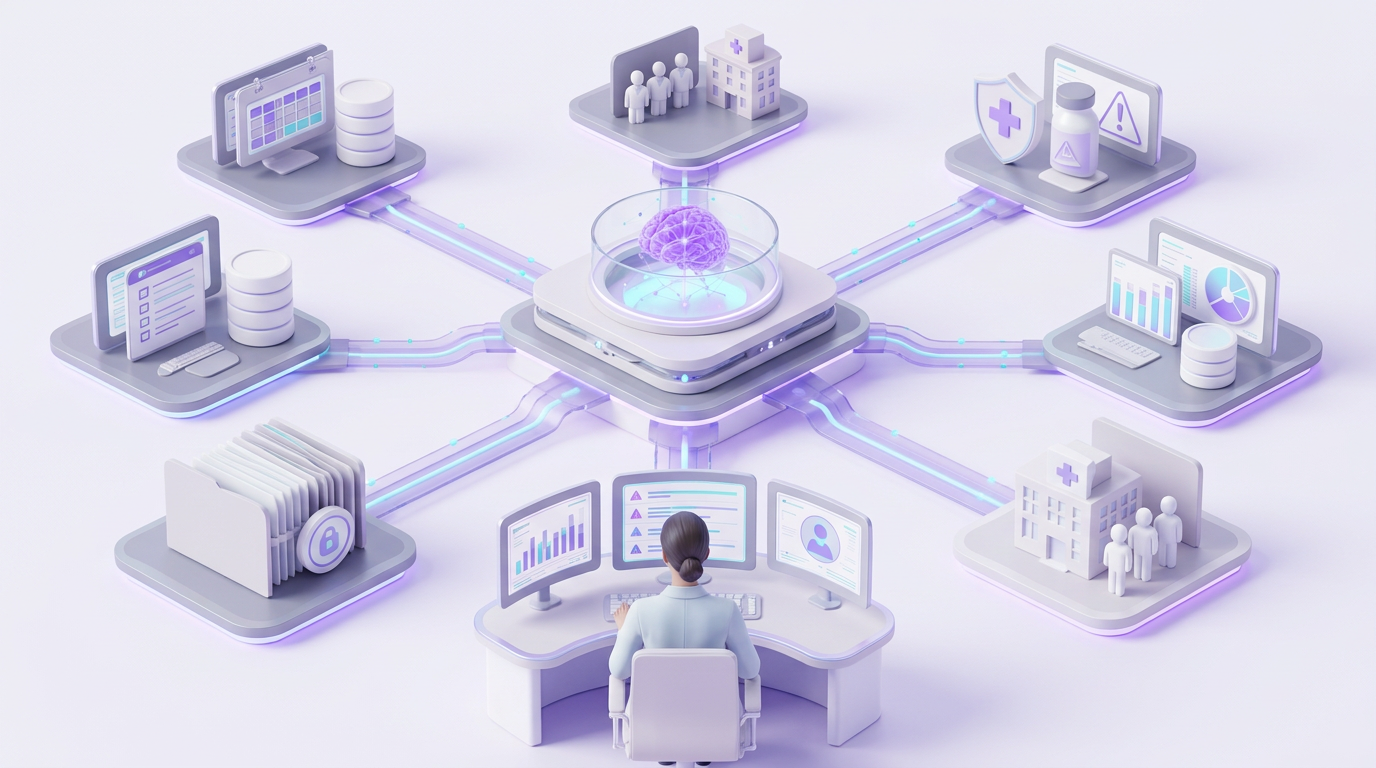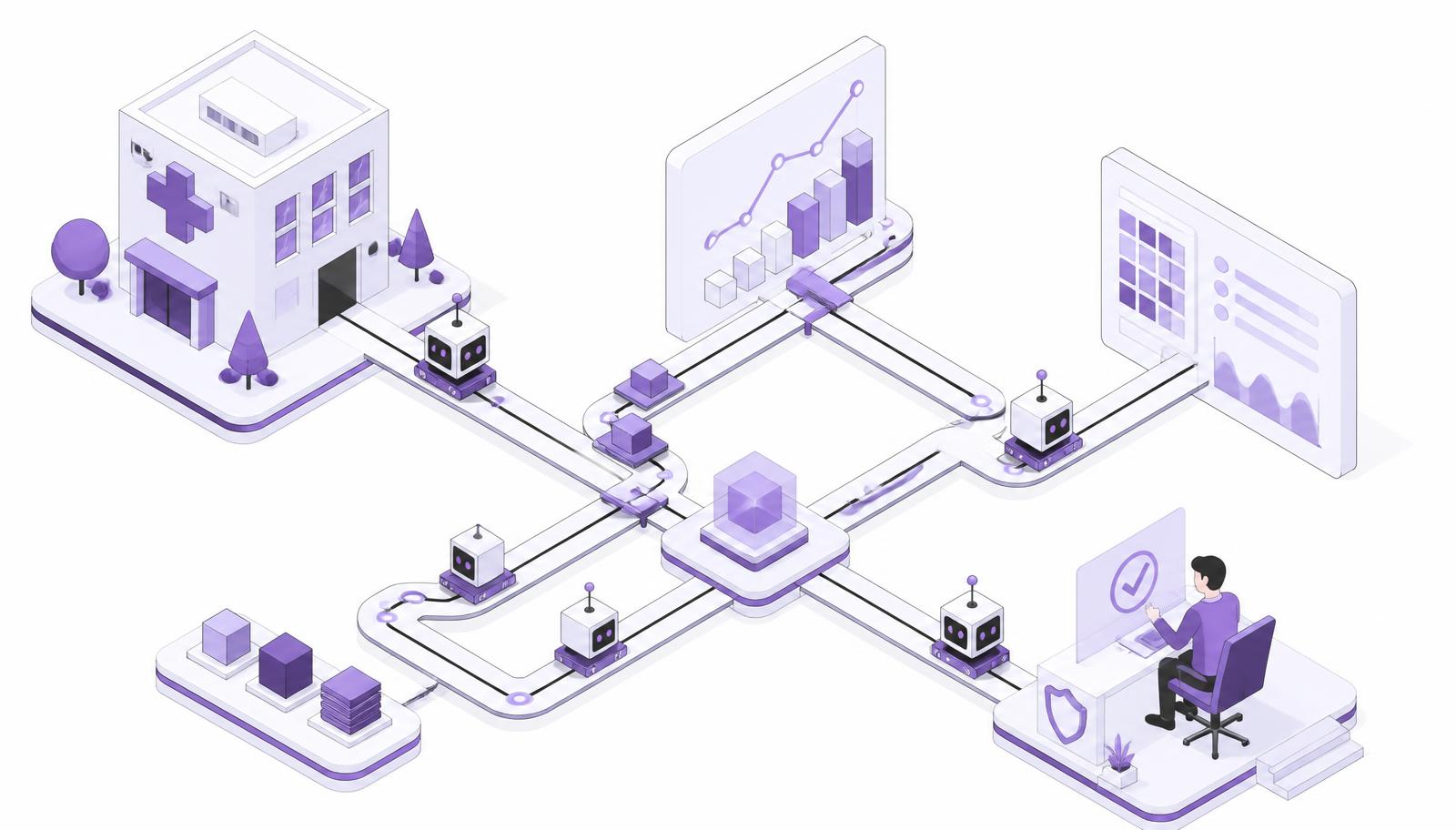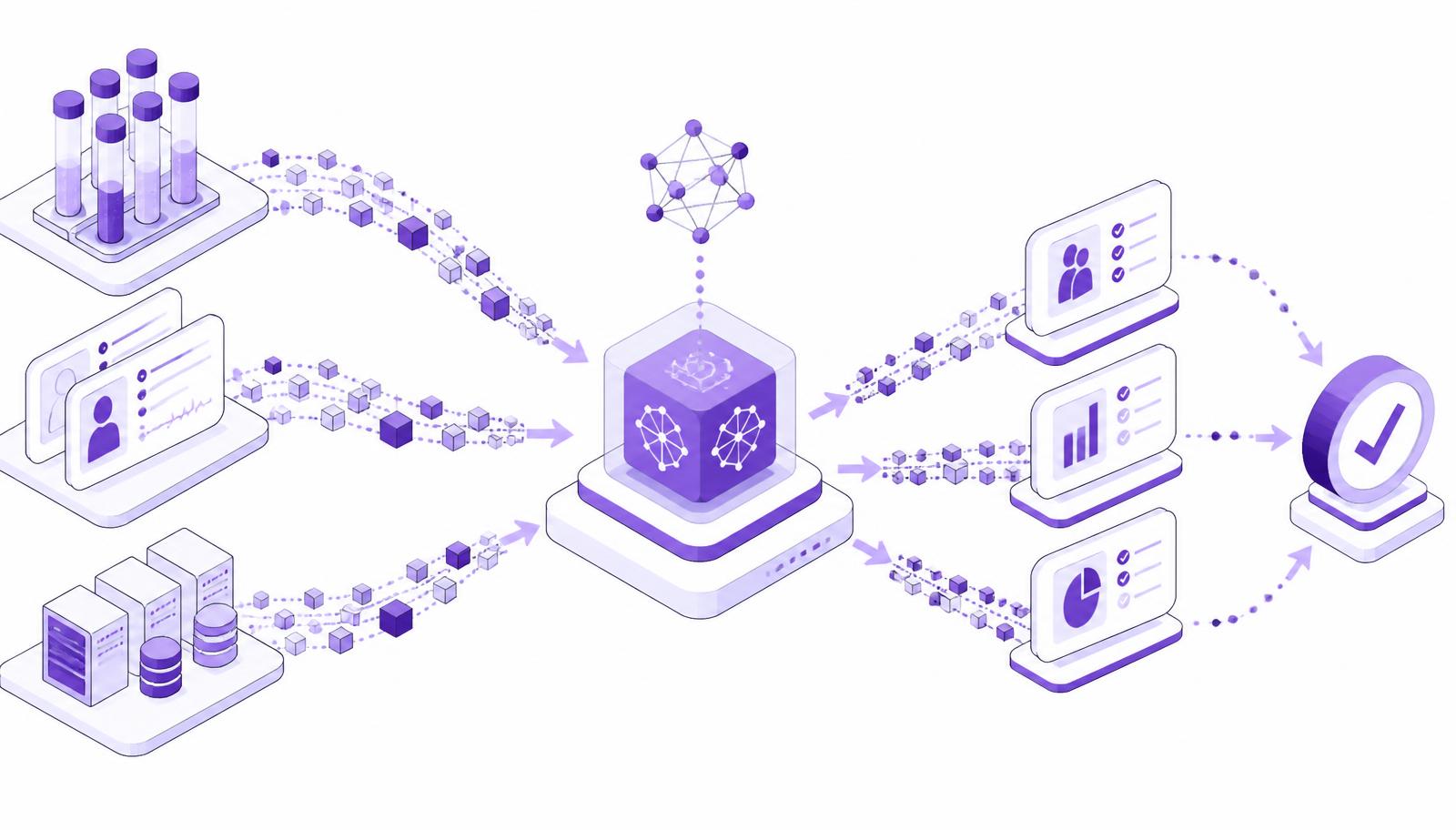

Clinical trial operations automation shifts clinical teams from manual coordination to governed execution. It ensures operational signals are translated into structured, cross-functional actions that are verified and traceable across the trial lifecycle.
This article builds on the execution gap defined in the pillar guide, Clinical Trial Execution Gap: Why It's Now a Cost, Timeline, and Compliance Problem, and on the category defined in What Is a Clinical Trial Execution System?. Here, the focus is practical: how to move through each stage of automation maturity, where to start, and what each stage actually delivers.
Why traditional manual coordination stalls modern trials
Trials depend on continuous handoffs across sponsors, CROs, and sites, each requiring manual initiation, tracking, and verification. As protocol complexity increases, these handoffs multiply and coordination demand exceeds what teams can sustain. The constraint is not effort; it is execution infrastructure.
- Adding staff increases coordination overhead but does not change how execution is managed.
- Manual follow-ups do not scale as trial complexity and handoffs increase.
- Execution remains inconsistent because actions are not systematically tracked or verified.
Tufts CSDD findings reinforce the pattern: study start-up timelines have increased 30–45% since 2015, amendment implementation now averages 260 days, and Phase III protocol deviations have risen 56% in five years. These trends persisted despite increased staffing, because the underlying model did not change.
The three stages of operational automation
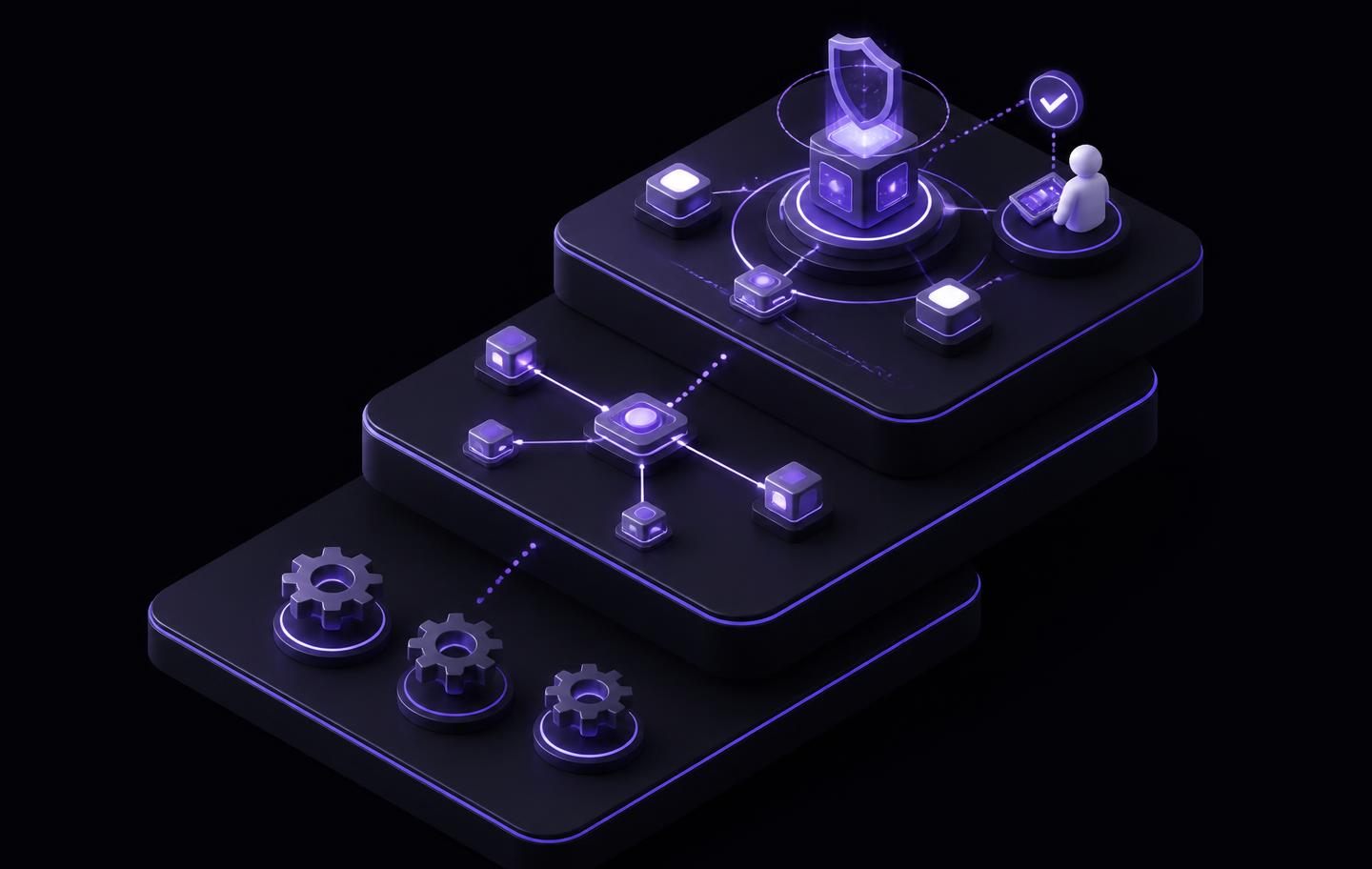
Operational automation progresses through three stages. Each improves efficiency, but only the final stage ensures consistent execution.
Stage 1: Digitizing manual tasks (point automation)
Point automation focuses on repetitive, high-volume tasks such as sending reminders, routing alerts, auto-filling fields, and generating standard reports. It delivers measurable time savings, but coordination remains unchanged: systems can send alerts, but they do not ensure the issue is acted upon, guide the next step, or confirm completion. This stage is useful, but it should not be mistaken for execution maturity.
Stage 2: Cross-functional workflow integration
Here, systems and teams are connected, improving visibility across CTMS, EDC, and shared data layers. Teams identify delays earlier and track handoffs more clearly. The limitation is that visibility improves but execution does not — systems show what is delayed, yet they do not route actions or confirm completion. Work still depends on manual follow-up.
Stage 3: AI-powered orchestration (supervised execution)
In Stage 3, a governed orchestration layer manages workflows from signal to verified resolution. The system routes actions, sets timelines, tracks progress, verifies completion, and escalates when needed. Actions are completed rather than only identified, responses are tracked and verified, and escalations happen automatically. Human oversight remains, but at defined checkpoints instead of manual follow-ups. This is the stage where the execution gap closes.
| Stage 1: Point Automation | Stage 2: Workflow Integration | Stage 3: AI-Powered Orchestration | |
|---|---|---|---|
| What it does | Automates isolated tasks | Connects systems and teams | Orchestrates end to end with governed AI |
| Handoff model | Task-level, no cross-functional reach | Visible but manually coordinated | Automated, closed-loop verified |
| Audit trail | None | Partial, via shared dashboards | Full, generated during execution |
| Human role | Initiates and reviews each task | Monitors and coordinates across systems | Validates at governance checkpoints |
| Compliance fit | Low | Moderate | High, aligned to ICH E6(R3) and FDA guidance |
Governance and compliance: the human-in-the-loop framework
Governance is not a constraint; it is what makes automation viable in a regulated environment. The human-in-the-loop model keeps control with clinical teams while execution is system-driven: the system handles routing, tracking, and verification, teams validate at defined checkpoints, and overrides are recorded with full traceability.
ICH E6(R3) requires that sponsors remain accountable even when work is delegated. In practice, every action must be traceable, every validation must be logged, and every escalation must be documented. The FDA guidance on protocol deviations reinforces this: corrective actions must show evidence of implementation, not just planning. Systems that verify and record completion meet this standard; systems that stop at alerts do not.
This model is being implemented through platforms like Maxis AI, structured as an AI Workforce operating under supervision with embedded governance and audit traceability.
Practical steps to operationalize your first automated workflow
The most effective way to begin is with a single, high-impact workflow where the execution gap is measurable. Do not start with full transformation — start with a controlled pilot.
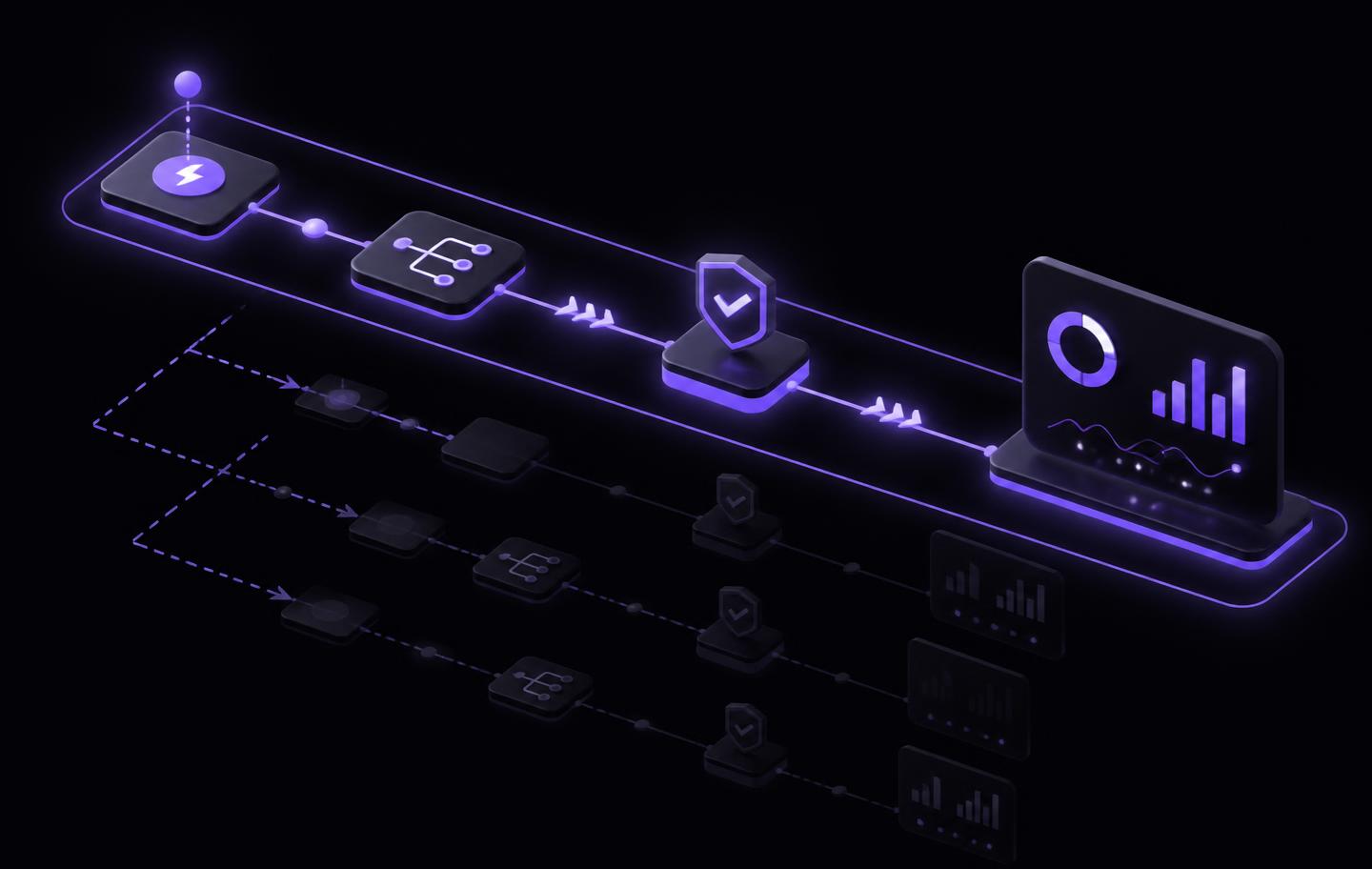
- Start with a high-impact workflow. Deviation management and data query resolution have clear triggers, defined timelines, and recurring delays that impact cost and outcomes.
- Define triggers and response pathways. Specify what starts the action, who is responsible, the response timeline, and the escalation path — this forms both the orchestration logic and the governance record.
- Set governance checkpoints early. Identify where human validation is needed, who approves actions, and how overrides are recorded, before deployment.
- Integrate with existing systems. The orchestration layer should read signals from current systems and write back verified actions, avoiding parallel environments.
- Pilot with clear success metrics. Track resolution time, escalation rates, and completion levels.
- Scale only after validation. Expand from deviation management to amendment tracking, enrollment coordination, and database lock readiness, reusing the proven governance structure.
These steps matter because they enable organizations to reach Stage 3, where execution is consistently completed, verified, and audit-ready. Together, they shift execution from manual coordination to system-driven, verifiable action — the structural shift Getz and Kaitin called for in their Applied Clinical Trials analysis. The economic case for this shift is detailed in The Economics of Scaling Clinical Trials.
Conclusion
Automation maturity in clinical operations is not measured by how many tasks are automated. It is measured by whether execution is governed, verified, and provable. Start from the beginning with the pillar guide: Clinical Trial Execution Gap, and understand the category in What Is a Clinical Trial Execution System? or see how signals become action in From Risk Signals to Action.
Frequently asked questions
What is clinical trial operations automation?
How is clinical trial automation different from task automation?
What are the key stages in automating clinical trial operations?
How do execution systems in clinical trials improve outcomes?
What problems does this model solve?
Does automation replace human oversight in clinical trial operations?
References
Sources & references
- Recognizing and Addressing the Execution Translation Gap in Clinical Trials — Applied Clinical Trials
- ICH E6(R3): Guideline for Good Clinical Practice — International Council for Harmonisation
- Draft Guidance: Protocol Deviations in Clinical Investigations — U.S. Food and Drug Administration

About the author
Rebecca Collins
VP, Clinical Operations Transformation
Rebecca Collins specializes in clinical operations transformation, workflow automation, and scalable execution models across complex clinical programs.