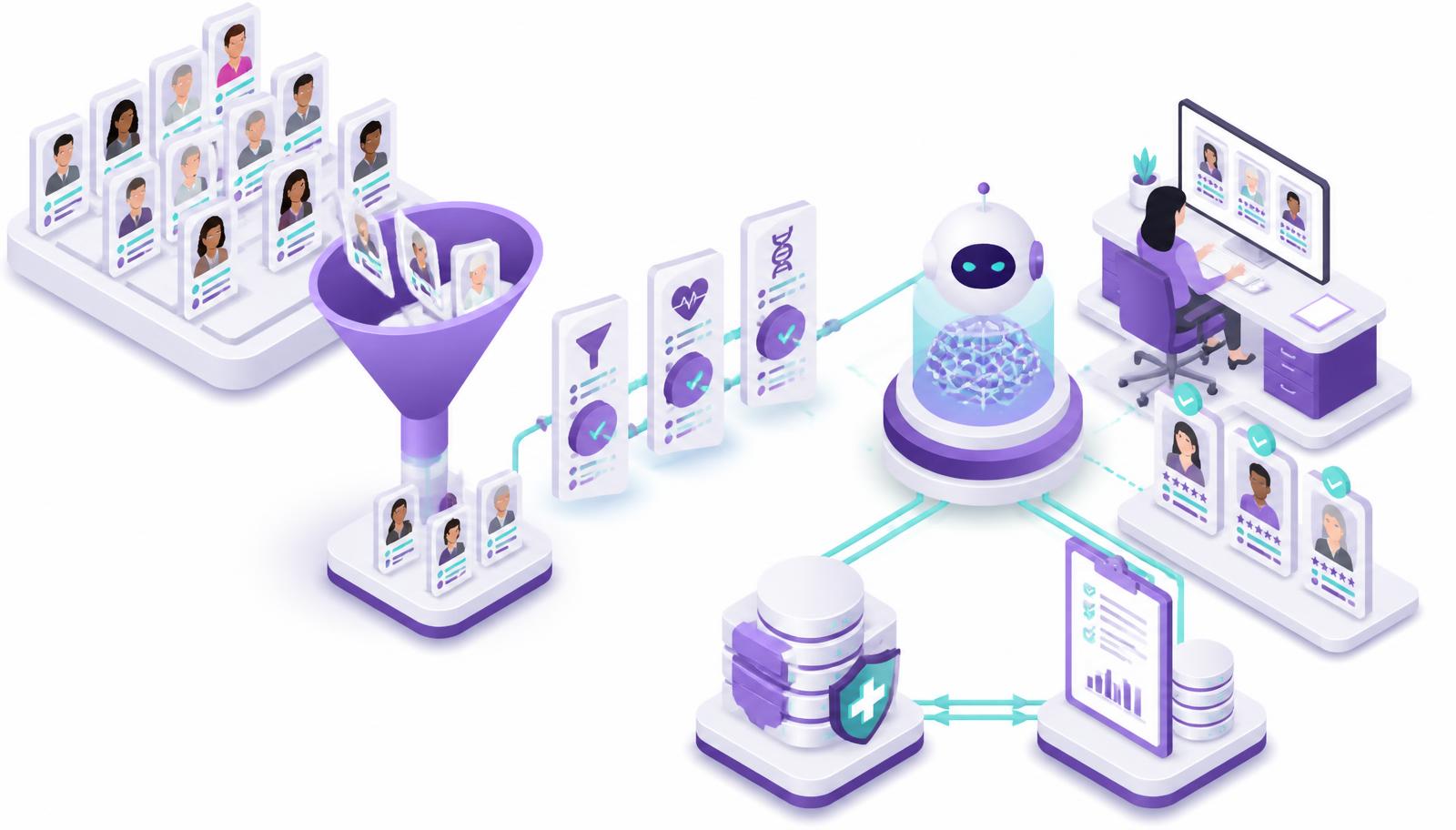
AI agents for patient recruitment are becoming important because recruitment is no longer limited by patient search alone. The larger constraint is execution: how quickly teams can move a potential candidate from identification to pre-screening, site review, follow-up, and enrollment without losing time across manual handoffs.
For broader context, read AI Agents in Clinical Trials: The Complete Guide.
Most enrollment delays are not caused only by a lack of patients. Eligible candidates may already exist across EHRs, referral networks, lab data, or site databases. The problem is that teams often cannot identify, qualify, engage, and route them fast enough. This is the invisible recruitment tax: manual chart review, repeated pre-screening, delayed follow-up, site overload, and candidate drop-off before enrollment.
The cost is material. Analysis published by Applied Clinical Trials reports that clinical trials cost roughly $40,000 per day on average, with Phase III trials reaching about $55,716 per day. A 2026 review in the International Journal of Medical Informatics also found that AI-powered recruitment tools improved enrollment rates by 65%, while highlighting the need for governance around interoperability, bias, and trust.
Why traditional recruitment breaks before enrollment starts
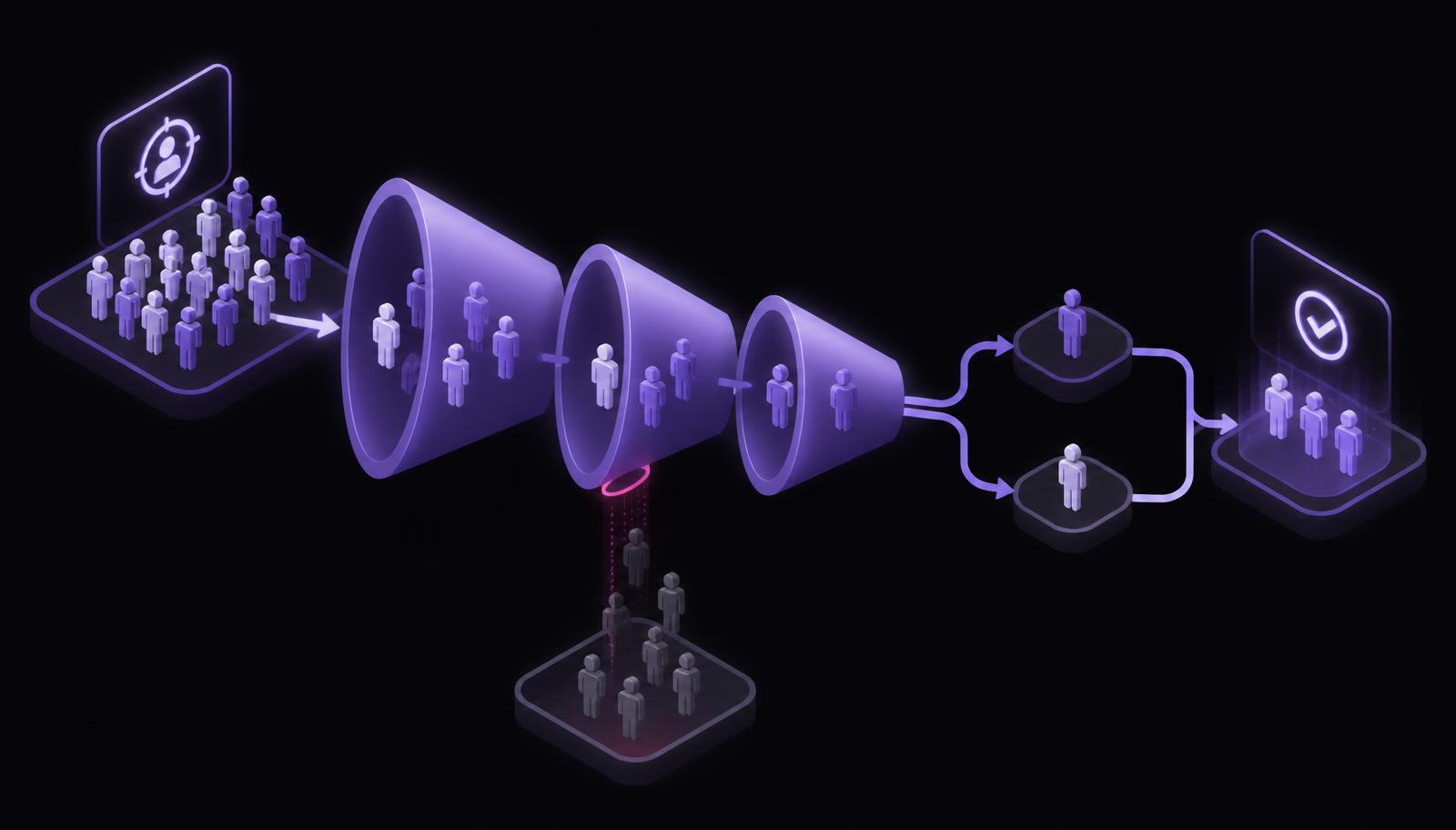
Traditional recruitment breaks because the work required to find, qualify, and move patients forward has outgrown manual site capacity. In a legacy model, coordinators review records, verify labs, interpret prior history, contact patients, document screening activity, and update sponsors across disconnected systems. When every step depends on manual follow-up, eligible patients can remain hidden in the workflow.
How agentic AI changes the recruitment model
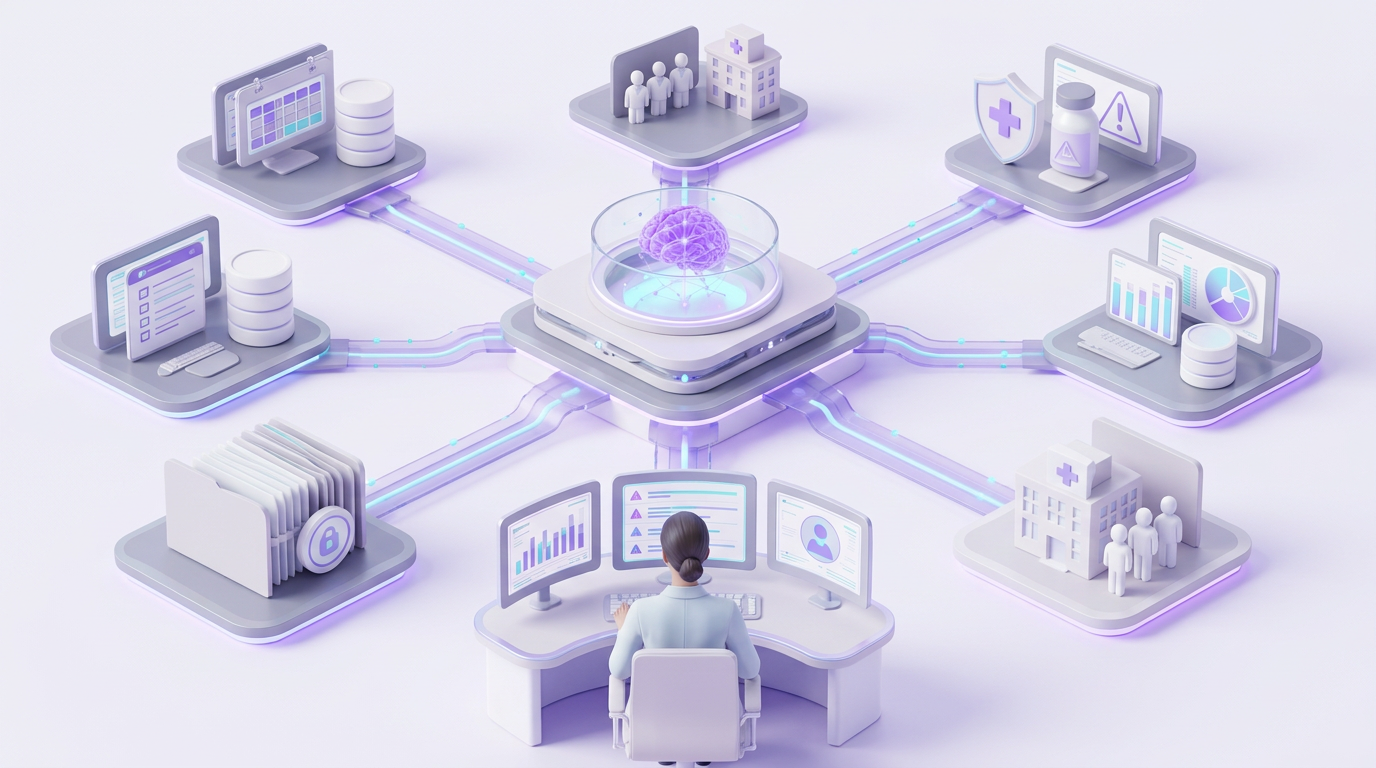
Agentic AI for patient recruitment is a proactive process that connects discovery, pre-screening, follow-up, documentation, and escalation into a governed workflow. Clinical teams retain control over eligibility, consent, safety, and patient judgment.
A scoping review in JAMIA found that AI use in clinical trial recruitment can improve efficiency, recruitment, accuracy, patient satisfaction, and usability. The same review flagged privacy, data security, transparency, discrimination, and selection bias as risks — which is why governance cannot be treated as an afterthought.
| Dimension | Legacy recruitment | Agentic AI recruitment |
|---|---|---|
| Operating mode | Manual and reactive | Proactive and workflow-driven |
| Primary filter | Coordinator time | Agents support coordinators under supervision |
| Record review | Episodic | Approved data signals monitored continuously |
| Follow-up | Depends on spreadsheets | Routed, logged, and escalated |
| System handoffs | Manual re-entry into CTMS/EDC; prone to error | Agents bridge recruitment platforms and CTMS directly |
| Visibility | Often stops at reporting | Work continues through defined next steps |
What recruitment AI agents do across the enrollment workflow
- Autonomous discovery under supervision: agents scan approved structured and unstructured data sources — EHR fields, lab values, referral records, and clinical notes — to surface likely candidates earlier, while final eligibility review stays with human teams.
- Intelligent pre-screening: agents identify missing information, prepare candidate summaries, and guide approved pre-screening interactions. Consent-sensitive questions are routed to qualified staff.
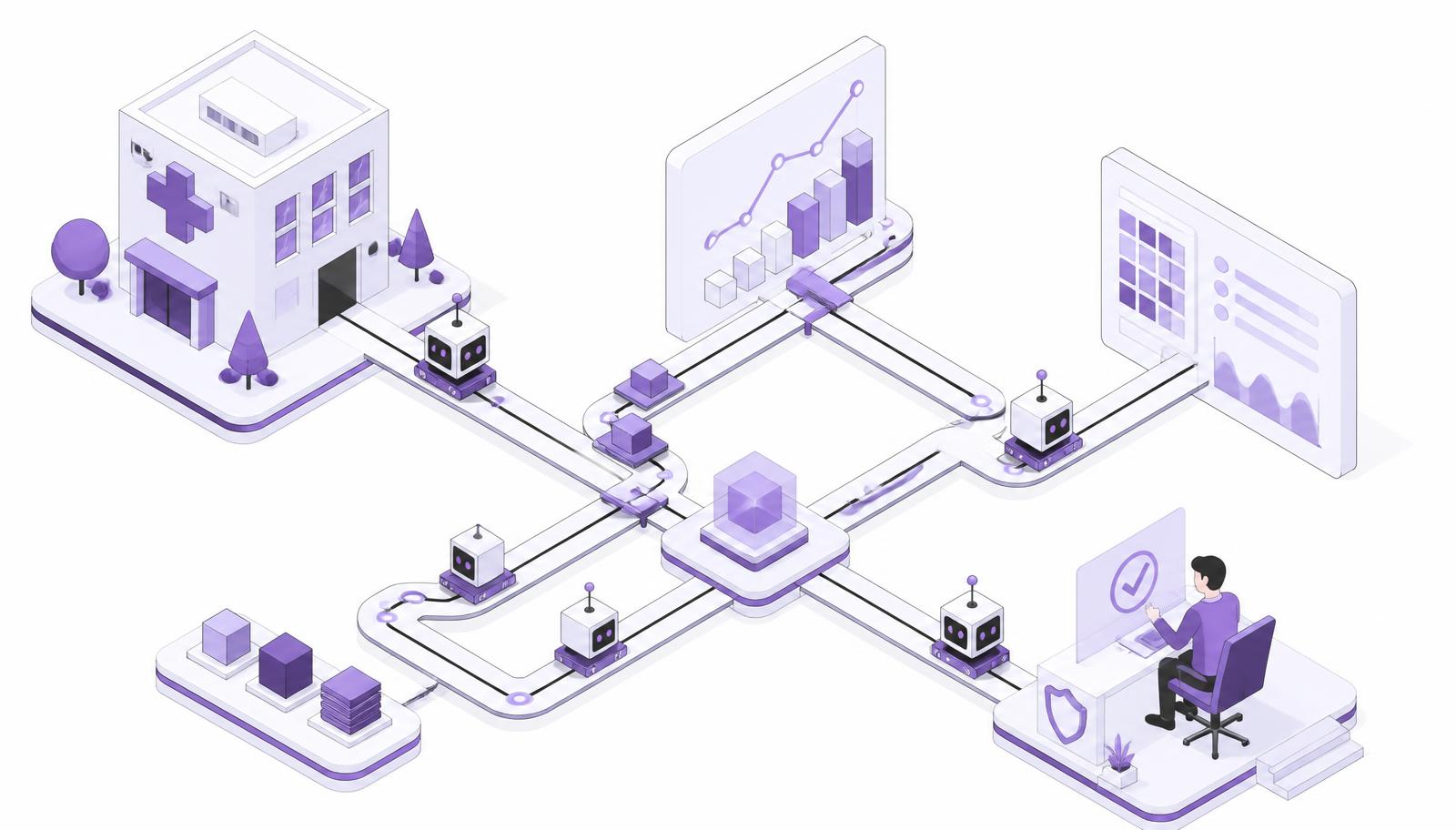
- Data continuity: agents connect recruitment activity with CTMS, EDC, eConsent, and site workflows, reducing repeated manual entry and loss of context.
In patient engagement, agents can also monitor missed responses, incomplete ePROs, delayed visit confirmations, and repeated rescheduling. These signals often appear before a patient formally drops out. For a deeper explanation of the agent execution loop, read How Do AI Agents Work in Clinical Trials?
How AI for clinical trial recruitment works
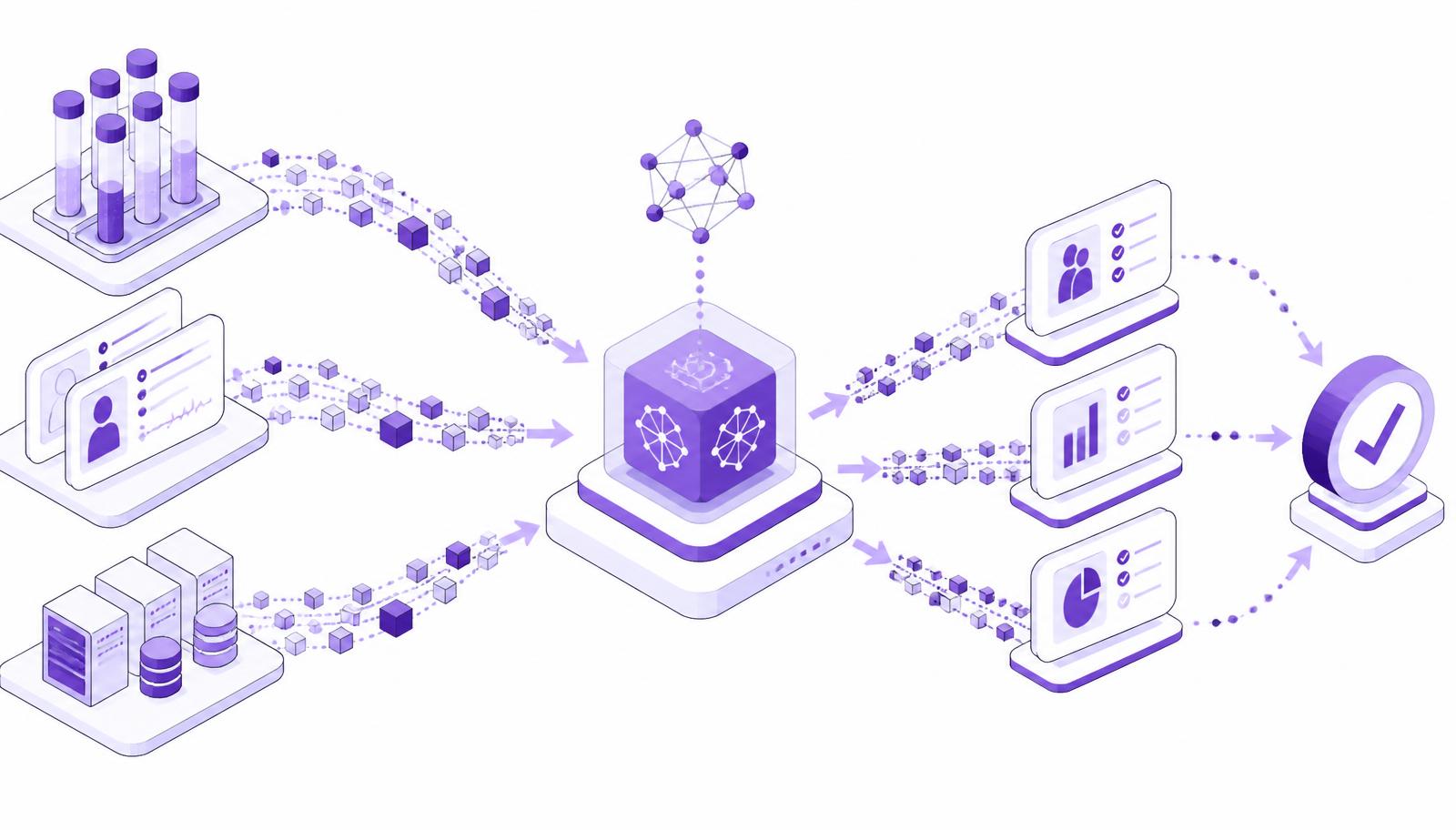
AI for clinical trial recruitment works by connecting patient signals to governed next steps. It observes approved data, reasons against protocol-defined rules, prepares the next action, routes work, logs outcomes, and escalates exceptions.
For example, when a potential candidate is identified, the agent may check available eligibility signals, flag missing lab or history data, prepare a pre-screen summary, route the case to the coordinator, track whether follow-up happened, and escalate if the candidate stalls.
How Maxis AI supports agent-first recruitment execution
A generic AI tool may summarize records, but clinical trial recruitment requires protocol-aware execution. Eligibility may depend on lab values, prior therapies, comorbidities, visit history, exclusion criteria, consent boundaries, and site-specific follow-up rules. As an AI Workforce for Clinical Trials, Maxis AI supports regulated recruitment workflows through governed agents, human validation checkpoints, controlled permissions, and audit traceability suited to GxP and HIPAA-sensitive environments.
1. Reducing avoidable screen-fail risk
Many screen failures begin before the screening visit — incomplete referrals, weak candidate fit, missing labs, or late eligibility gaps. Maxis AI agents prepare stronger candidate handoffs before site review by organizing protocol-relevant information, flagging missing data, identifying clear exclusion risks, and preparing structured candidate summaries. Final eligibility remains with qualified site teams.
2. Removing the site admin tax
Recruitment teams lose time to spreadsheets, repeated status checks, manual follow-up notes, and fragmented documentation. Maxis AI supports follow-up routing, status logging, escalation, and workflow documentation across recruitment, CTMS, EDC, and eConsent processes — so coordinators can spend more time on patient conversations, logistics, and enrollment readiness.
Governance, privacy, and human oversight
Governance is the foundation of agentic AI for patient recruitment. Recruitment agents should not make final enrollment decisions, interpret informed consent, or handle safety-sensitive judgment without qualified human review. For more detail, read Human-in-the-Loop AI in Clinical Trials.
A governed recruitment workflow should define what the agent can read, what it can prepare, what it can route, what requires human approval, what must be escalated, and how every action is logged. This matters because recruitment workflows often involve PHI, protocol-specific eligibility logic, patient communication, and site accountability.
Conclusion: manual recruitment is becoming a trial risk
As protocols grow more complex, candidate discovery, pre-screening, follow-up, and documentation cannot continue to depend on spreadsheets, manual review queues, and coordinator bandwidth alone. The next recruitment model will be built on governed execution, where human teams own eligibility, consent, safety, and patient trust while AI agents support the repeatable work that moves qualified candidates through the funnel.
Frequently asked questions
How do AI agents for patient recruitment help with enrollment?
How is AI in clinical trial recruitment different from traditional automation?
Can AI support patient retention in clinical trials?
What data can patient recruitment AI agents use?
Do patient recruitment agents replace clinical research coordinators?
References
Sources & references
- How Much Does a Day of Delay in a Clinical Trial Really Cost? — Applied Clinical Trials
- Artificial intelligence in clinical trials: a comprehensive review of opportunities, challenges, and future directions (2026) — International Journal of Medical Informatics
- Artificial intelligence for optimizing recruitment and retention in clinical trials: a scoping review (2024) — Journal of the American Medical Informatics Association

About the author
Dr. Megan Sullivan
Director, Patient Recruitment & Engagement
Dr. Megan Sullivan specializes in clinical trial recruitment, patient engagement, and data-driven strategies to improve screening and enrollment.