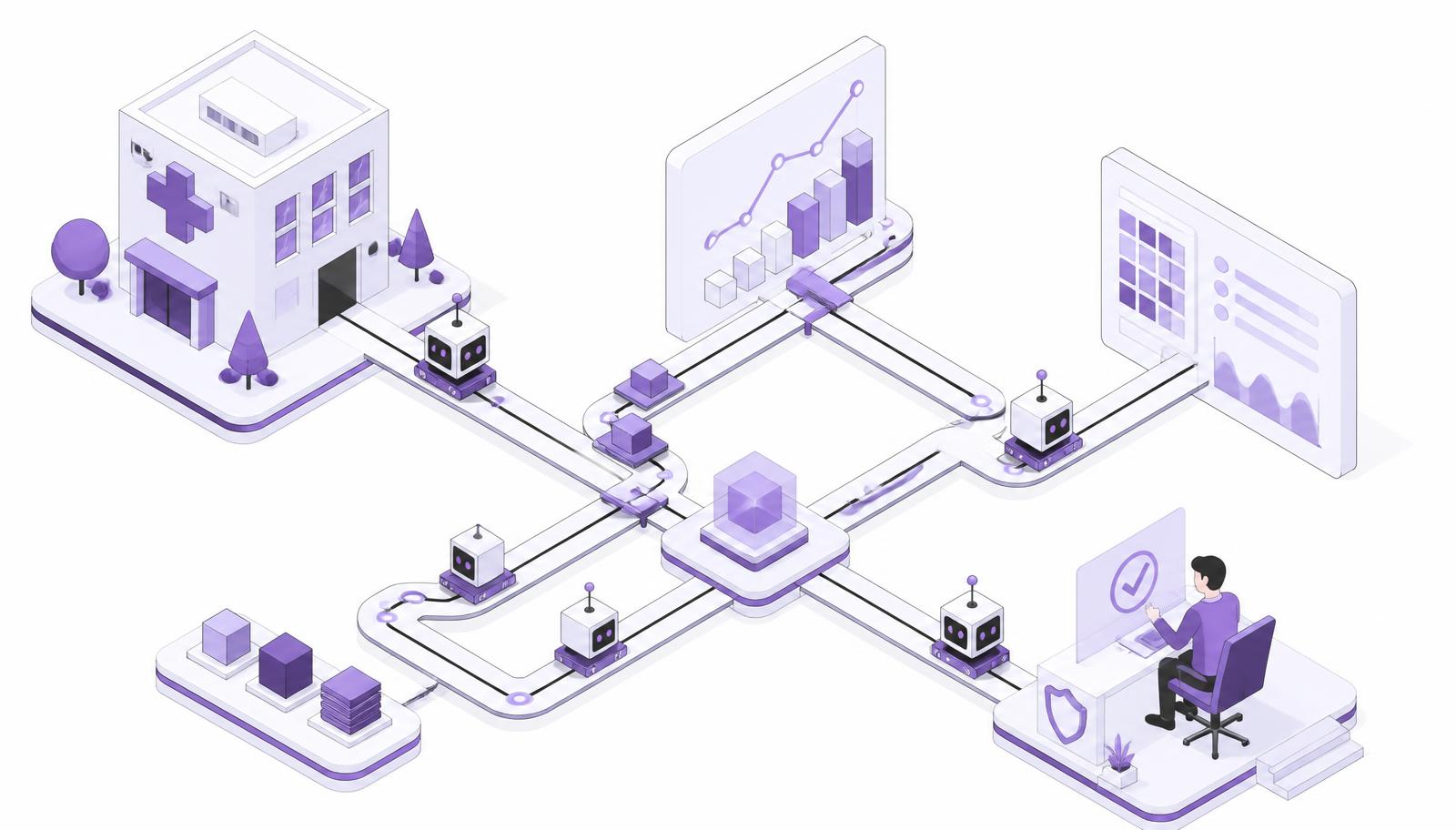
Clinical trials now generate operational signals continuously, from EDC updates and lab feeds to CTMS milestones, safety intake, and site performance data. The challenge is no longer only seeing the issue. It is acting on that issue quickly, consistently, and under governance.
In regulated trial operations, AI agents function as supervised execution systems that connect trial data, workflow rules, system permissions, and human review checkpoints. This blog explains the AI agent workflow in clinical trials, where agents fit, how the execution loop operates, and how sponsors and CROs can evaluate whether the model is safe for regulated use.
For the foundational definition, see What Are AI Agents in Clinical Trials?. For the full framework, see AI Agents in Clinical Trials: The Complete Guide.
Why clinical trials need AI agents
Clinical trials need AI agents because operational signals now arrive faster than manual teams can resolve them. Dashboards may show query backlogs, site delays, safety intake volume, or KRI alerts, but those signals still require review, routing, follow-up, documentation, and escalation.
A data manager on a Phase III study may receive new lab batches from multiple sites over a weekend. One value may be outside a protocol threshold, another may be missing a unit, and another may need reconciliation against a central lab feed. The issue may be visible in the data, but someone still has to identify it, assess it, prepare the next action, route it, and log the result.
| Area | Pain point | AI agent as solution |
|---|---|---|
| Clinical data management | Queries, discrepancies, reconciliations, and review packets require manual coordination. | Monitor data, identify rule-based discrepancies, prepare queries, and route exceptions for human review. |
| Recruitment and enrollment | Enrollment gaps are visible, but follow-up still depends on manual site coordination. | Monitor enrollment trends, identify recruitment risks, coordinate follow-up, and escalate gaps against predefined thresholds. |
| Safety and pharmacovigilance | AE intake, prioritization, and routing are high-volume workflows with timeline pressure. | Pre-populate case information, prepare evidence packets, prioritize intake by defined rules, and route urgent cases for safety review. |
| RBQM and site oversight | KRIs flag risk, but CAPA preparation and escalation still require follow-up. | Monitor KRIs, coordinate CAPAs, track actions, and escalate unresolved risks under governance controls. |
What AI agents actually do in clinical trial operations
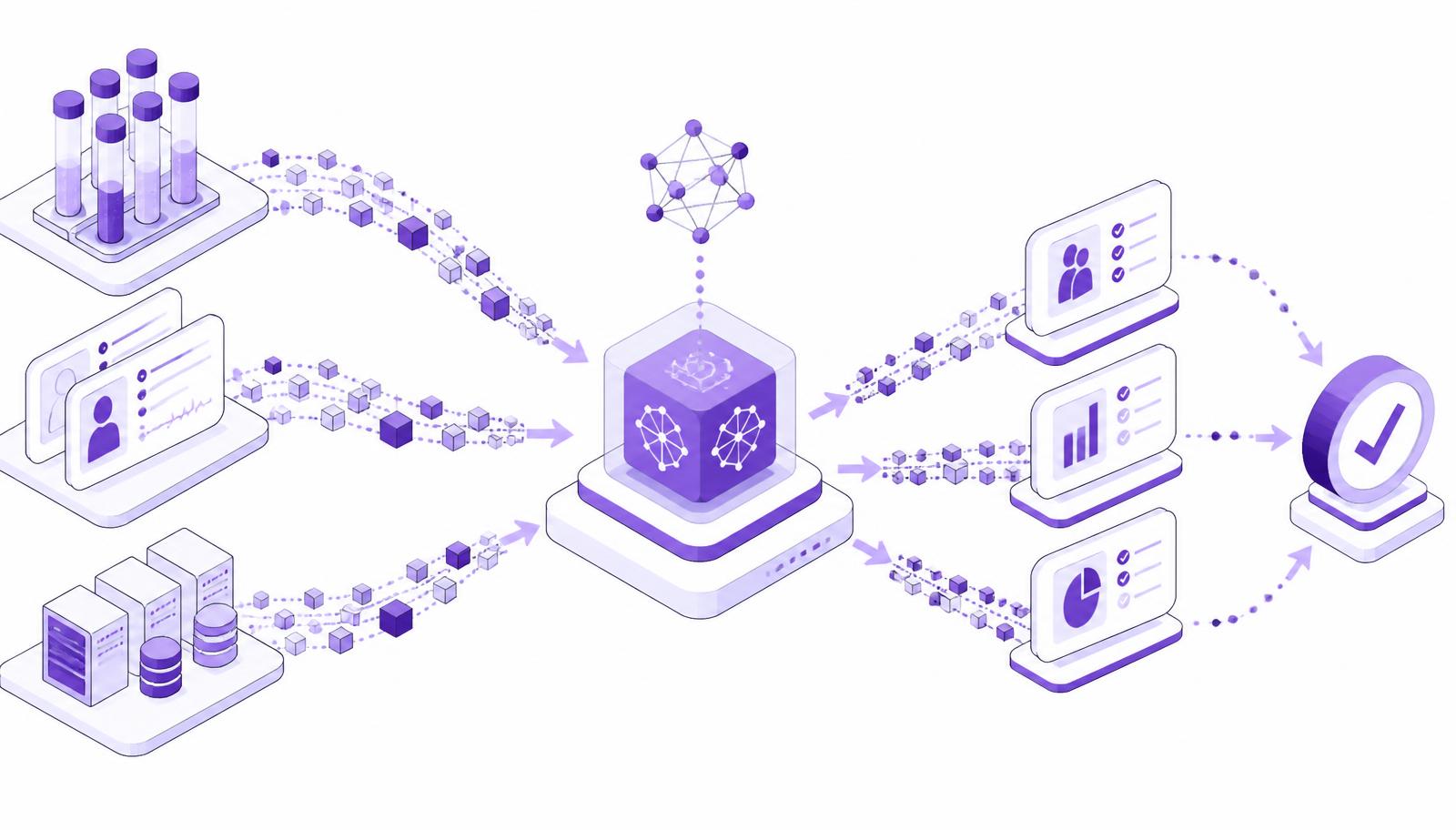
AI agents monitor approved inputs, apply workflow logic, prepare next steps, route tasks, escalate exceptions, and record outcomes under governance. They are not chatbots waiting for prompts — they are governed execution systems designed to support structured clinical trial work under human oversight.
- Monitoring trial data: read approved inputs from EDC, CTMS, eTMF, lab feeds, safety systems, or site performance data.
- Applying workflow rules: compare incoming data against protocol rules, study thresholds, escalation criteria, or operational logic.
- Preparing next actions: draft a query, prepare a site follow-up, assemble a review packet, or classify a task for review.
- Routing work: send the prepared action to the right data manager, safety reviewer, clinical operations lead, or site team.
- Escalating exceptions: pause and flag cases that are incomplete, ambiguous, high-risk, or outside approved workflow rules.
- Recording outcomes: log what the agent observed, what action it prepared, who reviewed it, and what happened next.
AI agents do not replace systems of record. EDC, CTMS, eTMF, safety systems, and lab platforms remain in controlled environments governed by 21 CFR Part 11 electronic record requirements. The agent works around them as a supervised execution layer under permissions, validation, and audit traceability.
How the AI agent workflow operates
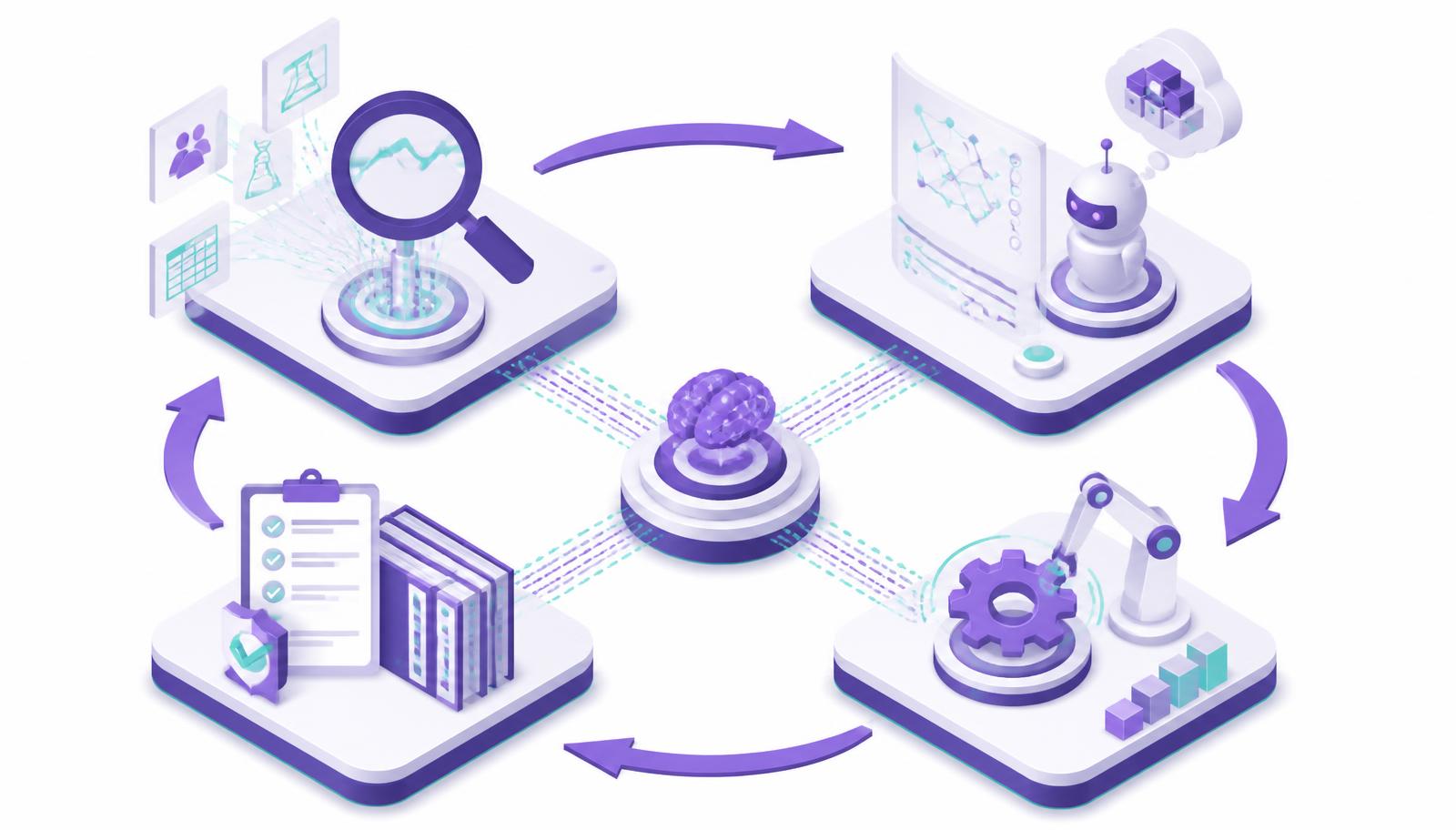
The AI agent workflow in clinical trials usually follows four governed stages: observe, reason and plan, act, and verify and audit. Each stage is constrained by approved data access, workflow rules, human oversight, and logging.
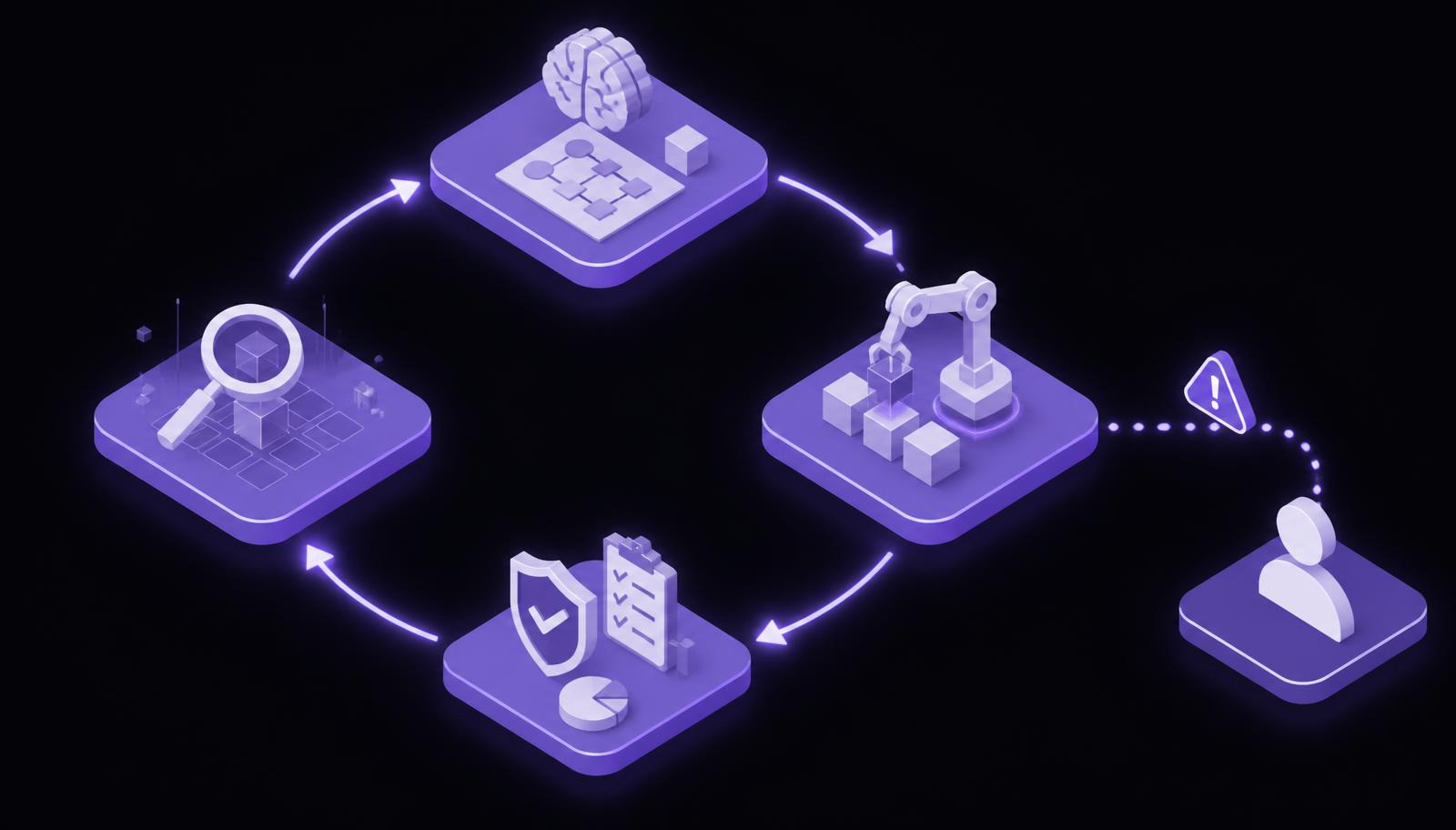
| Execution step | What the agent does | Governance control | Example |
|---|---|---|---|
| Observe | Reads approved trial data | Scoped access and approved system connections | Detects a missing lab value |
| Reason and plan | Applies protocol and workflow rules | Defined logic and escalation thresholds | Determines whether a query is needed |
| Act | Prepares or executes approved workflow action | Role-based permissions and human approval | Drafts a query or routes a case |
| Verify and audit | Confirms outcome and logs the trail | Audit record and exception handling | Confirms query posting or escalates failure |
Every action is checked and recorded. The agent confirms execution, maintains an audit-ready trail, escalates unresolved issues, and handles errors by logging and alerting.
How governance keeps AI agent workflows controlled
Governance keeps AI agent workflows controlled by defining what the agent can read, what it can prepare, what requires human approval, and what must be escalated. This keeps the execution loop from becoming open-ended automation.
In practice, control is applied through workflow permissions, role-based access, approval thresholds, exception handling, audit logs, and change control — consistent with the quality-by-design and oversight principles in ICH E6(R3) Good Clinical Practice and FDA's guidance on AI in drug development. For the detailed oversight models — Assist Mode, Execute with Approval, and Bounded Autonomy — see Human-in-the-Loop AI for Clinical Trials.
How teams deploy AI agents responsibly
| Stage | What to do |
|---|---|
| 01. Start with one controlled workflow | Choose high-volume, rule-bound work such as query management, startup coordination, or safety triage. Define success metrics and begin in read-only or approval-based mode. |
| 02. Lock down access and permissions | Use least-privilege access, separate read from write permissions, and involve IT and Quality before go-live. |
| 03. Run a parallel pilot | Run beside the existing process for 2–6 weeks. Review outputs daily and keep humans in the loop. |
| 04. Scale with governance | Formalize SOPs and validation documents, manage rule changes through change control, and monitor for drift before expanding. |
Where AI agents create operational impact
| Workflow | Operational impact |
|---|---|
| Clinical data management | Reduced query backlogs, earlier discrepancy detection, exception-focused review, and shorter cleaning cycles. |
| Patient recruitment | Continuous eligibility pre-screening, earlier enrollment gap detection, and improved candidate matching. |
| Safety and pharmacovigilance | Faster case intake and routing, continuous signal detection support, and higher reviewer throughput. |
| Site monitoring and RBQM | Real-time KRI updates, earlier protocol deviation detection, and automated CAPA preparation and routing. |
What to check before choosing an AI agent platform
Teams should evaluate an AI agent platform by its governance, workflow control, and auditability. Feature lists matter less than whether the platform can operate safely inside regulated clinical workflows. Ask these questions:
- Can the platform provide a complete, exportable audit log for every action, including failed actions?
- Are read and write permissions scoped separately by workflow and system?
- What happens when the agent reaches a state it cannot resolve?
- Can oversight levels be configured per workflow?
- How are model updates, rule changes, and workflow changes controlled?
- Can human approval events be linked to the final system action?
A platform that cannot answer these questions clearly is not ready for GxP-aligned workflows. Once the mechanics are clear, the next question is where to start. The use-case series covers each function in depth: clinical data management, patient recruitment, safety and pharmacovigilance, and RBQM and site oversight.
Conclusion
The core model is straightforward: agents observe approved data, reason against defined rules, prepare or execute controlled actions, verify outcomes, and preserve the audit trail. The strongest use of AI agents is not broad autonomy. It is supervised execution inside workflows where the rules are defined, the work is repetitive, and traceability is non-negotiable.
Frequently asked questions
How do AI agents work in clinical trials?
What is the AI agent workflow in clinical trials?
How are AI agents different from chatbots in clinical trials?
Can AI agents update clinical trial systems directly?
What clinical systems can AI agents work with?
References
Sources & references
- Artificial Intelligence and Machine Learning in Drug Development — U.S. Food and Drug Administration
- E6(R3) Good Clinical Practice (GCP) — U.S. Food and Drug Administration

About the author
Dr. Jason Reynolds
Director, Clinical AI Architecture
Jason Reynolds specializes in clinical AI architecture, agent orchestration, and governed execution across regulated trial workflows. His work focuses on how AI agents connect clinical systems, reason over context, and execute actions with human oversight.