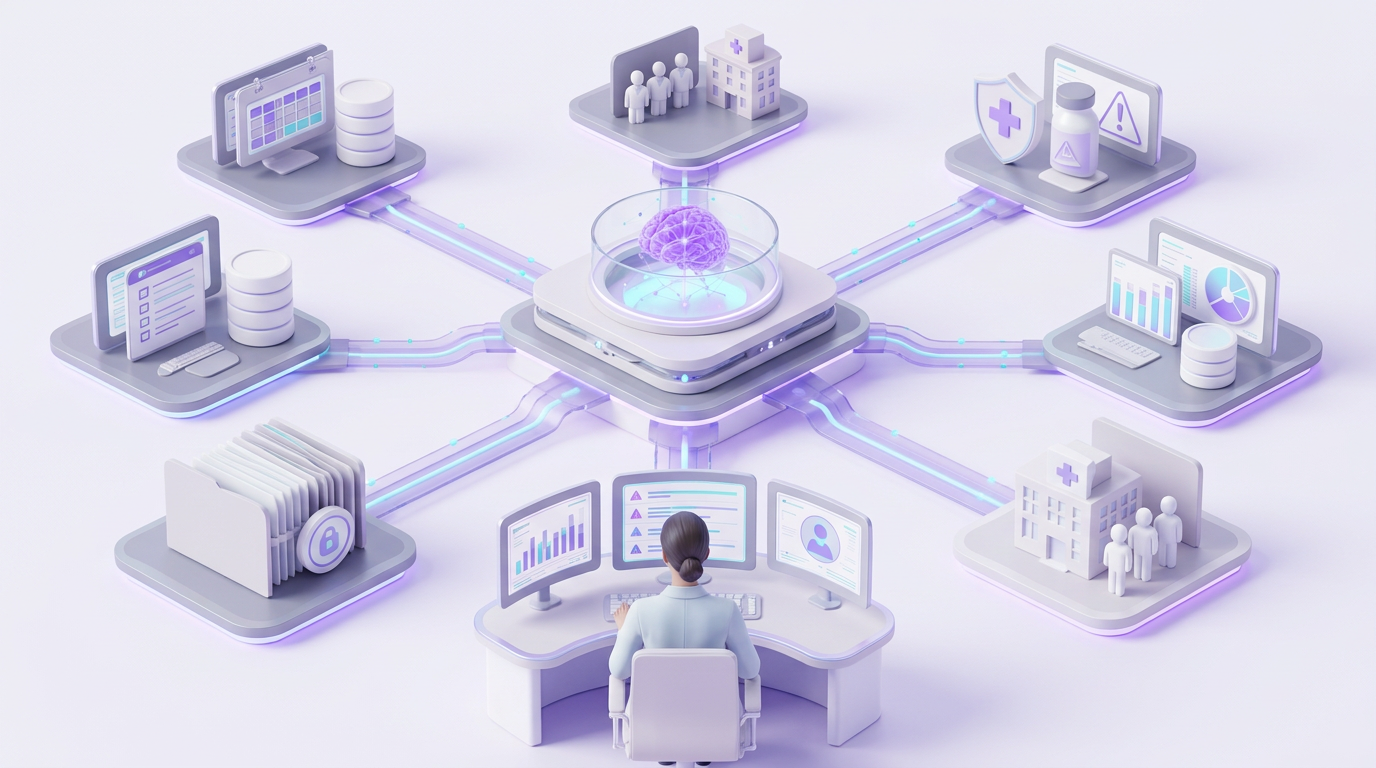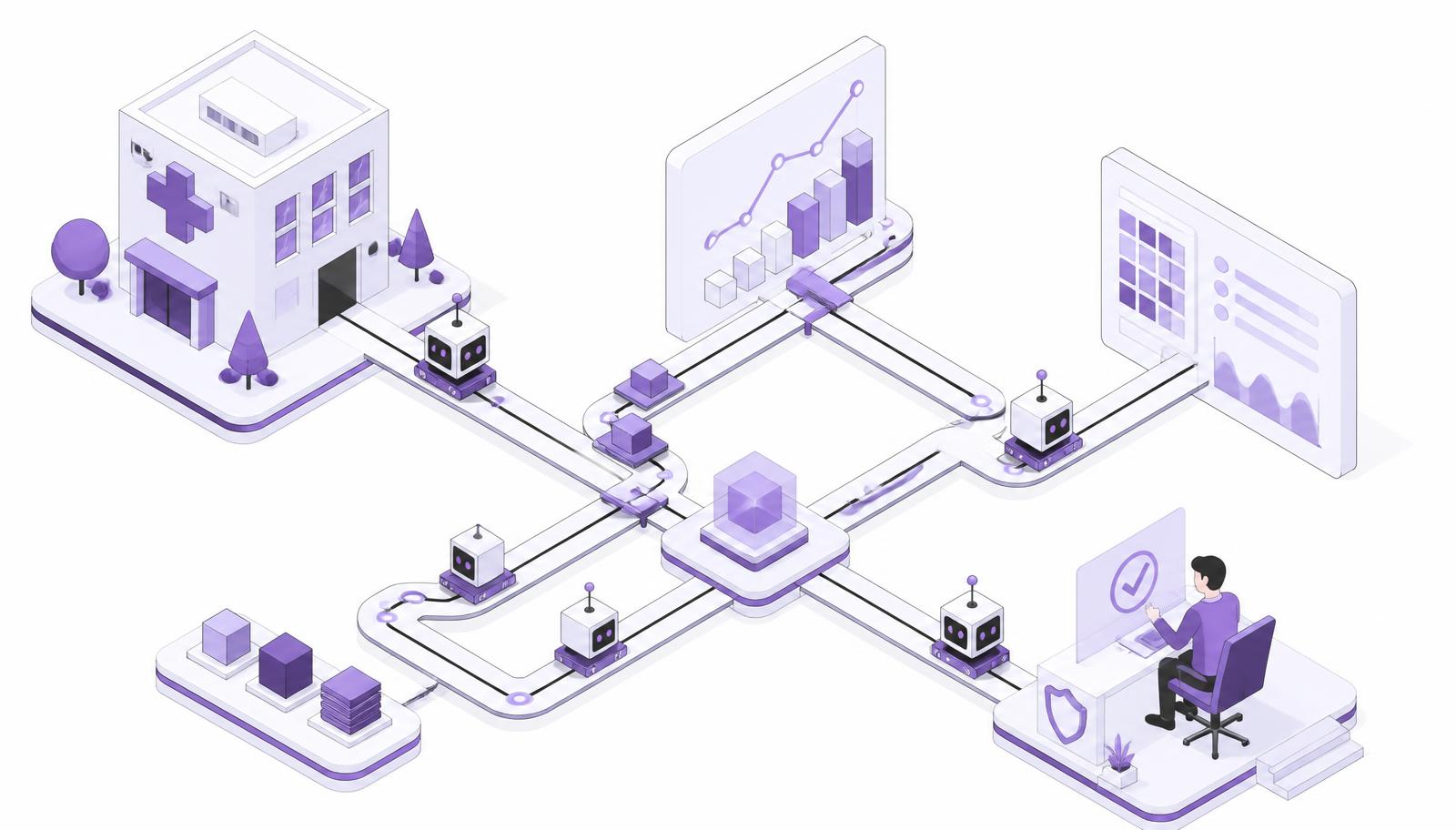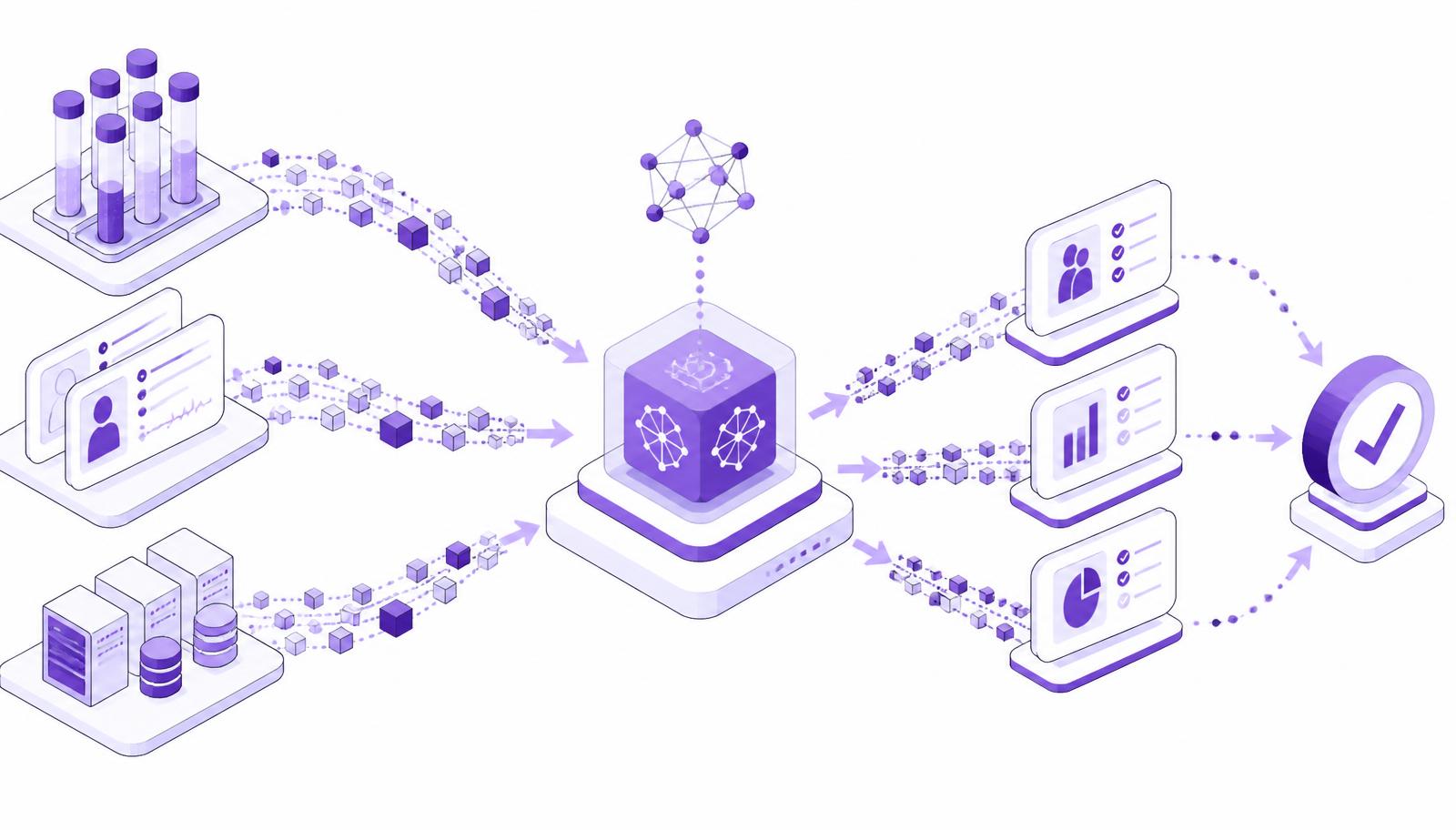
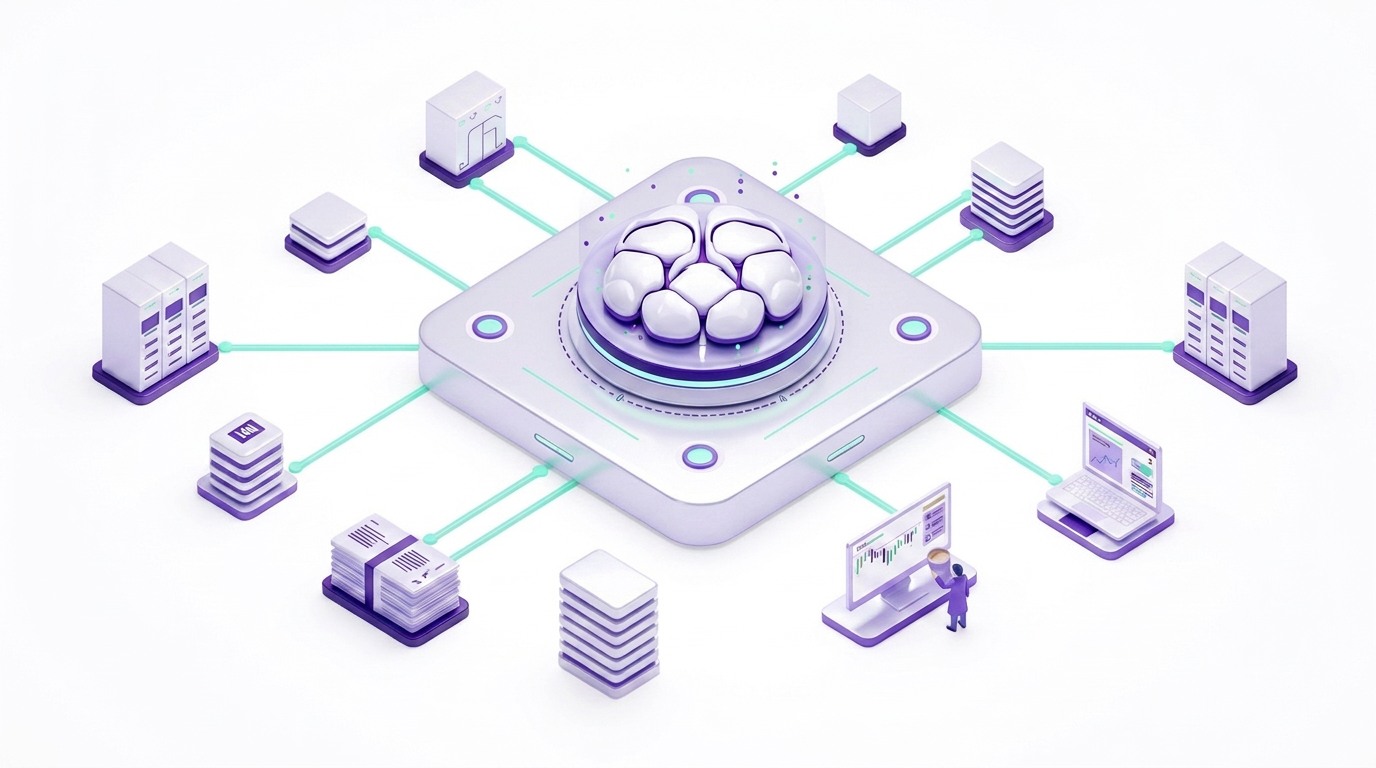
Clinical trial execution systems convert detected risks into structured, verified actions across workflows, ensuring issues are not only identified but resolved under defined governance controls.
The pillar guide, Clinical Trial Execution Gap: Why It's Now a Cost, Timeline, and Compliance Problem, established why that gap exists: the industry built sophisticated visibility into trial performance, but the operational infrastructure to act on that visibility has not scaled at the same pace. Deviations recur, amendments stall, costs compound, and audit trails fragment — not because teams are uninformed, but because no system governs what happens between the flag and the fix.
This article defines what execution systems are, how their architecture works in practice, and what to look for when evaluating one. It is written for clinical operations leaders and IT teams moving from recognizing the gap to deciding how to close it.
Systems of record versus systems of action
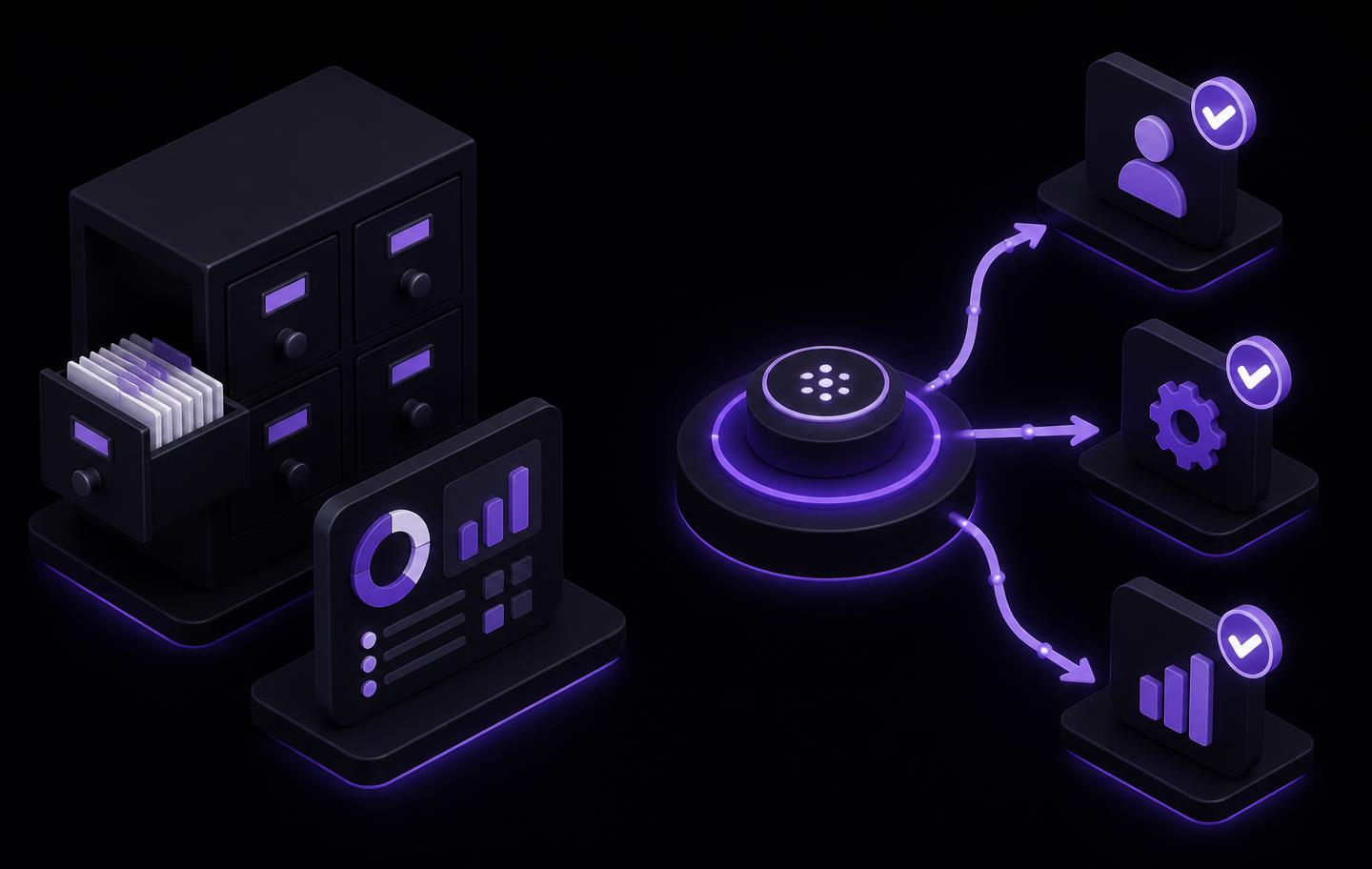
A CTMS accurately captures enrollment milestones, site activation status, and amendment history. An EDC accurately records data queries, discrepancies, and resolution flags. These systems do exactly what they are designed to do. The limitation is not accuracy — it is scope: they record what happened, and they stop there.
| Dimension | Systems of Record (CTMS/EDC) | Systems of Action (Execution Layer) |
|---|---|---|
| Primary function | Capture, store, and retrieve trial data and milestone events | Translate data-driven signals into governed, cross-functional action pathways |
| Output produced | Records, status dashboards, and compliance reports | Verified, documented workflow completions with a closed-loop audit trail |
| What it tracks | What happened and when it was recorded | What happened, what was triggered in response, and whether the action was confirmed complete |
| What it cannot do | Initiate, coordinate, or verify a corrective response without human intervention | Replace clinical judgment or the expert oversight that governs every action pathway |
| Example tools | Veeva Vault CTMS, Medidata Rave EDC, Oracle Clinical One, Cognizant TrialSpark | AI Workforce for Clinical Trials (Maxis AI) |
The two layers are complementary. CTMS and EDC platforms provide accurate, reliable visibility into trial operations. The opportunity lies in extending that foundation with an execution layer that converts visibility into coordinated, verifiable action.
Core architecture: three essential features of an execution layer
Not every tool that claims to be an execution system is one. Three architectural characteristics define clinical trial workflow orchestration in practice. A system that lacks all three is describing the execution gap, not bridging it.
1. Automated workflow orchestration
Automated workflow orchestration means the system moves a detected signal through a complete, multi-step response pathway without a human initiating each step. This is meaningfully different from point-to-point automation, which connects two systems in a fixed sequence and breaks the moment a response requires coordinating three or four functions simultaneously.
Consider a typical amendment delay scenario:
- The CTMS flags that Site 14 has not acknowledged a substantial amendment 28 days after issue.
- An execution system routes an escalation to the assigned CRO project manager with a 72-hour response protocol.
- Simultaneously, it notifies the sponsor's regulatory contact that the amendment timeline is at risk.
- It logs the escalation, timestamps the acknowledgment, and tracks response at the site level.
- If the 72-hour window closes without a confirmed response, it escalates again to the next defined owner.
None of these steps require a human to notice the flag and decide what to do. This is what workflow orchestration enables: not automation of tasks, but management of resolution cycles. The underlying mechanics are the same governed loop described in how AI agents work in clinical trials.
2. Closed-loop verification
Closed-loop verification is the execution memory of the process. Most processes end at the trigger: an alarm is raised, a task is assigned, the system records it. That is notification, not verification. Closed-loop verification confirms the task was completed correctly, on time, by the right team, at the right location.
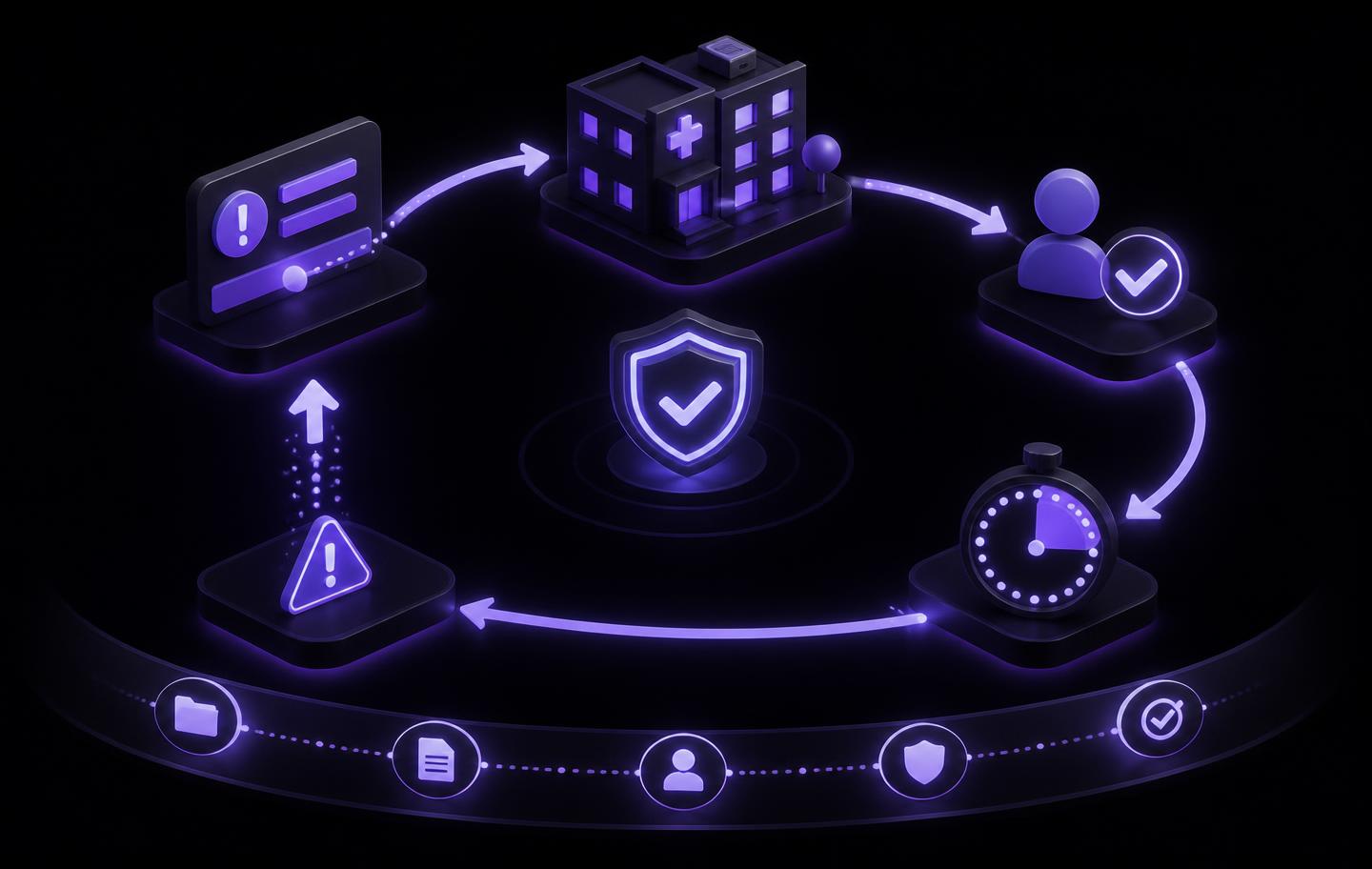
This distinction matters most at inspection. A regulator reviewing a recurring deviation pattern will ask not only when the correction was issued, but when it was confirmed as implemented, at which sites, by whom, and what the system did when implementation was not confirmed. Closed-loop verification produces those answers without manual reconstruction.
3. Unified oversight across the trial network
Unified oversight connects sponsor, CRO, and site activity within a single governed execution record. It does not replace existing systems; it ensures a shared, traceable record of what was triggered, what actions were taken, and what was verified as complete. Fragmented oversight creates an accountability gap, and coordination failures stay hidden until they surface as delays.
Evaluation checklist: what a real execution system must do
- Orchestrates complete response workflows — routes signals through a governed, multi-step response without manual initiation.
- Integrates with existing CTMS and EDC systems — reads and writes directly, without parallel environments.
- Provides closed-loop verification with automated escalation — confirms completion, not just initiation, with timestamped traceability.
- Supports orchestration across all stakeholders — adapts to sponsor-led, CRO-led, or hybrid models without fixed templates.
- Generates a complete, inspection-ready audit trail — from signal to verified completion, including escalations and acknowledgments.
- Enables governed human oversight — validation checkpoints, approvals, and overrides logged with the same traceability as system actions.
How execution systems protect study integrity and audit trails
Data quality problems are often execution consistency failures. The FDA's December 2024 draft guidance on protocol deviations emphasizes root cause resolution and consistency of implementation over counting deviations. That cannot be achieved through monitoring alone; it requires a governance system for corrections and documented compliance, aligned with 21 CFR Part 11 expectations for electronic records.
What the audit trail gap looks like in practice
In manually coordinated trials, audit trails capture detection well but often miss what happens after corrective actions are issued.
- Typically recorded: when a deviation was flagged, which monitoring visit identified it, and the corrective action plan submitted.
- Often missing: whether the action was implemented at the site, when it was acknowledged, and whether completion was confirmed or assumed.
This gap between issuance and confirmed implementation is where regulatory scrutiny focuses. If implementation cannot be proven, it is treated as incomplete — and the burden of proof must come from the trial record, not reconstructed communication.
How execution systems close the integrity gap
An execution record captures the full lifecycle: signal detected, action routed with owner and timeline, acknowledgment timestamped, closed-loop verification confirmed or escalation triggered on non-response, and outcome recorded with site-level attribution and reviewer sign-off. That record is inspection-ready without manual preparation.
This is also what makes execution systems directly relevant to ICH E6(R3) and its reinforced emphasis on sponsor oversight in outsourced environments. When a CRO manages site-level corrective actions on a sponsor's behalf, the sponsor's ability to demonstrate oversight depends on a complete, traceable record — provided structurally, not retrospectively. This is the structural shift Getz and Kaitin called for in their Applied Clinical Trials analysis.
Where the Maxis AI Workforce fits in the execution architecture
The clinical trial execution system category is now being implemented through supervised, governed execution layers that sit between systems of record and operational outcomes. Maxis AI is structured as an AI Workforce for clinical trials that executes defined clinical workflows under human oversight, with audit traceability and controlled validation checkpoints embedded throughout.
The governed execution platform reads signals from existing CTMS, EDC, safety, and reporting systems and writes back verified action records — keeping oversight, approvals, and evidence in one place. This orchestration role is examined in Why Pharma Needs an Agentic Operating System. For teams evaluating delivery support alongside the technology, Maxis AI services for clinical operations apply the same governance model.
Conclusion
An execution system is not another monitoring layer. It is the governed infrastructure that determines who acts, in what sequence, within what timeline, and with what proof of completion. Read the pillar for the full context: Clinical Trial Execution Gap, and continue with Clinical Trial Operations Automation: A 3-Stage Maturity Model.
Frequently asked questions
What is the difference between a CTMS and a clinical trial execution system?
Can an execution system work with existing EDC and CTMS platforms?
What does closed-loop verification mean in a clinical trial context?
How does an execution system support audit trail requirements?
Is a clinical trial execution system the same as a risk-based monitoring platform?
References
Sources & references
- Recognizing and Addressing the Execution Translation Gap in Clinical Trials — Applied Clinical Trials
- E6(R3) Good Clinical Practice (GCP) — U.S. Food and Drug Administration
- Draft Guidance: Protocol Deviations in Clinical Investigations — U.S. Food and Drug Administration

About the author
Daniel Brooks
VP, Clinical Systems & Execution Strategy
Daniel Brooks specializes in clinical systems architecture, workflow orchestration, and execution models for complex clinical development programs. His work focuses on connecting fragmented technology environments with governed, scalable execution.