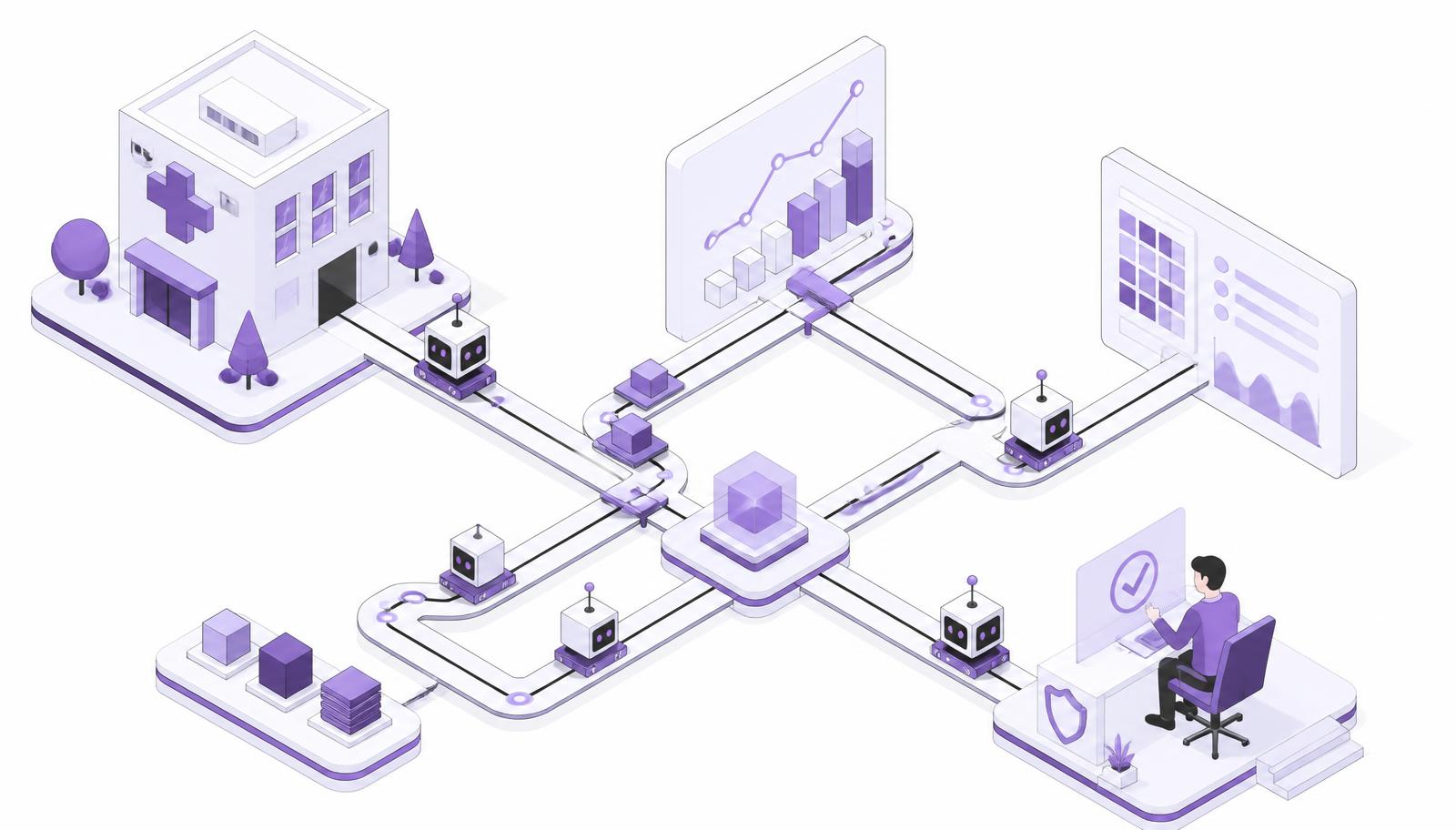
Modern pharmacovigilance is no longer limited by access to safety data. It is limited by the ability to process that data quickly, consistently, and under regulatory control. As adverse event reporting expands across clinical trials, post-marketing surveillance, electronic health records, patient support programs, literature, and real-world data, traditional safety workflows are struggling to keep pace.
Related reading: What Are AI Agents in Clinical Trials? · AI Agents in Clinical Trials: The Complete Guide · Human-in-the-Loop AI in Clinical Trials · Agentic AI vs Generative AI in Clinical Trials
Key terms
| Term | Meaning |
|---|---|
| ICSR (Individual Case Safety Report) | A report describing one or more suspected adverse events associated with a medicinal product. |
| MedDRA | The global standard medical terminology used to classify and code adverse events consistently. |
| PRSI (Product Reference Safety Information) | The approved reference document used to determine whether an adverse event is expected or unexpected. |
| FAERS | The FDA's database for collecting and monitoring adverse event reports submitted in the United States. |
| VigiBase® | The WHO global database of Individual Case Safety Reports, maintained by the Uppsala Monitoring Centre. |
The signal vs. noise problem in modern pharmacovigilance
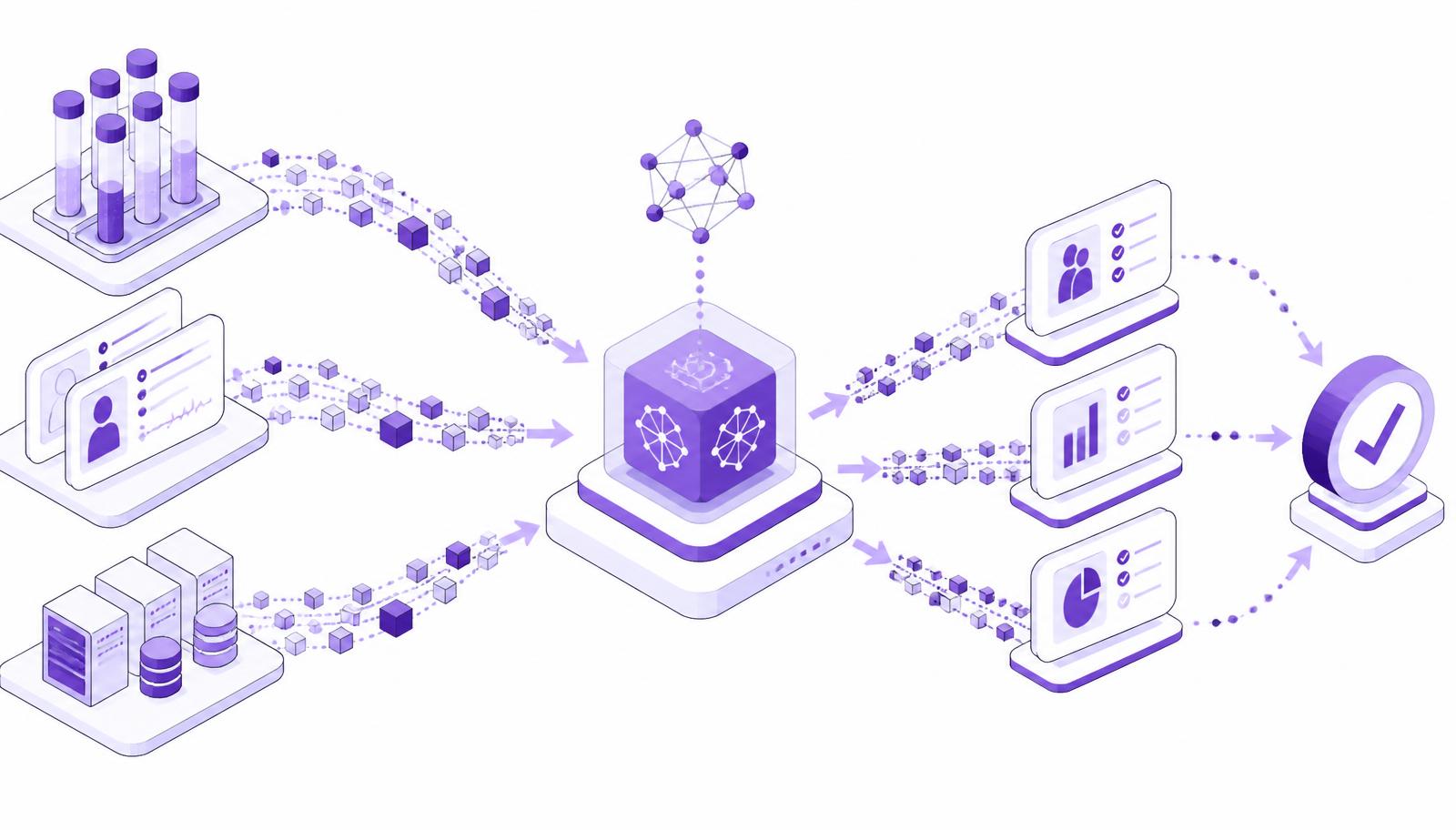
Safety organizations now receive adverse event data from far more than traditional ICSRs. Scientific literature, organized data collection systems, digital media, and post-marketing surveillance have become important sources of safety information, while many organizations are also incorporating broader real-world data. The problem is no longer a lack of data. It is the ability to operationalize that data at scale.
- The volume and diversity of safety information continue to grow, increasing operational demands on pharmacovigilance teams.
- Before medical review begins, every valid ICSR must undergo collection, validation, follow-up where required, duplicate management, coding, documentation, and regulatory processing.
- Expanding reporting channels continue to increase the complexity of safety information that must be evaluated and managed.
Safety scientists are trained to evaluate causality, assess benefit-risk, and identify emerging safety signals. Yet a significant portion of their day is spent managing operational work rather than applying scientific expertise. The challenge is no longer visibility. It is execution.
From automation to agentic AI: a new operating model
| Technology | What it does well | Where it falls short |
|---|---|---|
| Robotic process automation (RPA) | Automates repetitive, rule-based tasks such as moving files and updating records | Cannot interpret unstructured safety data or adapt to changing workflows |
| Generative AI | Summarizes case narratives, extracts information, and answers questions | Generates content but cannot coordinate or complete regulated workflows |
| Agentic AI | Coordinates multi-step safety workflows across systems and teams | Requires governance, validation, and human oversight for regulated use |
Pharmacovigilance rarely follows perfectly structured workflows. Safety cases often arrive with incomplete information, unstructured narratives, or missing documentation that require context and judgment before the next step can be determined. Content generation is valuable; workflow execution is something different. For a deeper comparison, see Agentic AI vs Generative AI in Clinical Trials.
How agentic AI improves safety case processing

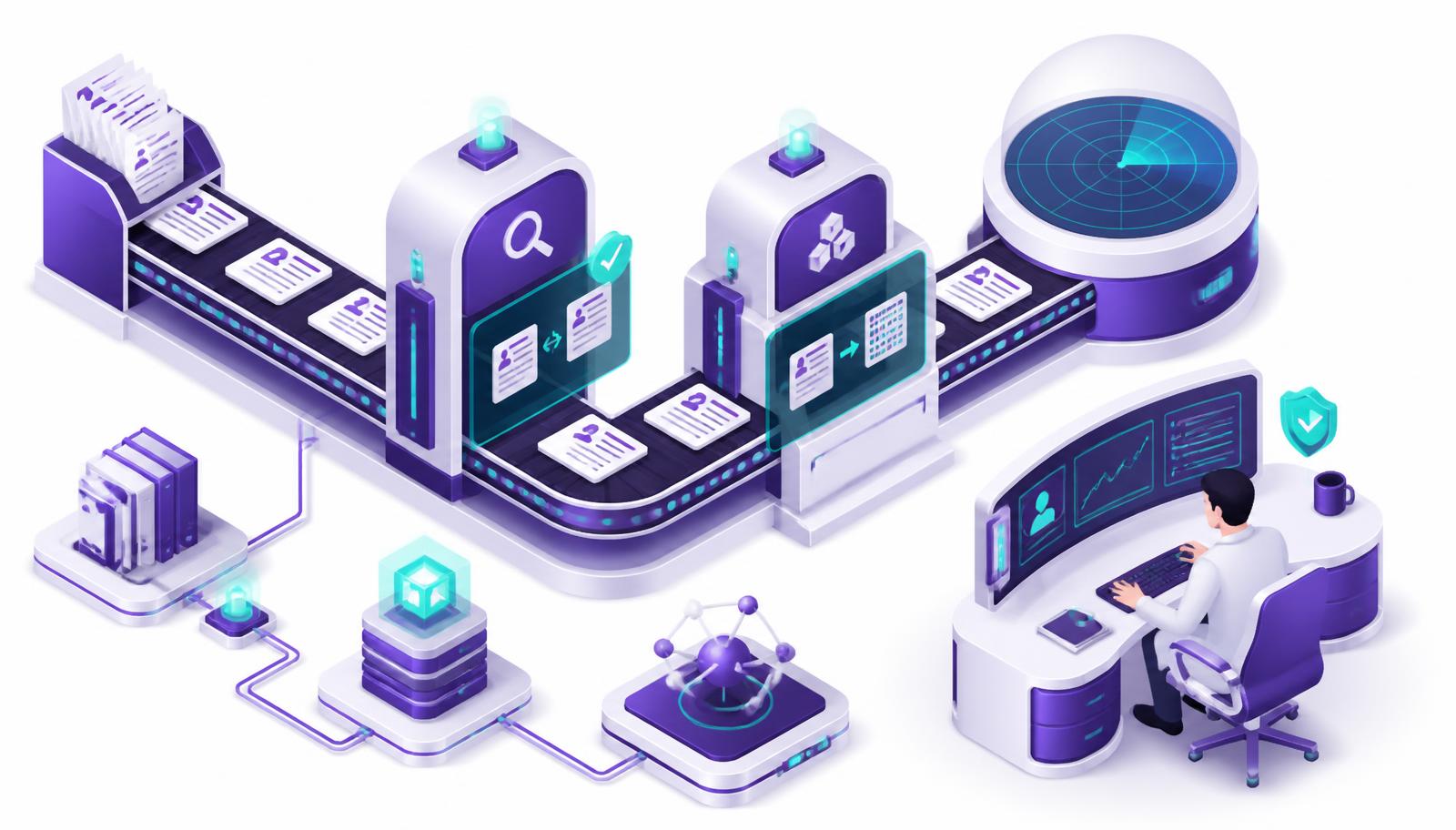
Every safety case follows a structured operational journey: safety data intake, case validation, duplicate detection, MedDRA coding, follow-up preparation, medical review, and regulatory submission under EMA good pharmacovigilance practices (GVP). While the scientific review may take minutes, preparing a case for that review often requires multiple manual activities across different systems, teams, and checkpoints.
Rather than automating one task at a time, agentic AI coordinates these activities as a connected workflow. Instead of manually coordinating every handoff, safety teams receive cases that are already organized and ready for assessment.
Moving beyond periodic signal detection
Historically, safety data was reviewed periodically and signals were assessed at predefined intervals. Today's safety environment moves faster: new evidence emerges continuously from regulatory databases, real-world data, scientific publications, digital channels, and post-marketing surveillance. Waiting for the next scheduled review can delay the identification of important safety signals.
Instead of batch-based monitoring, AI agents continuously evaluate incoming safety information as it becomes available — from sources such as FAERS, VigiBase®, scientific literature, and validated internal safety systems.
AI agents do not determine whether a safety signal is clinically significant. They ensure that the right information reaches the right experts at the right time, supporting faster, more consistent signal management under human oversight.
Governance enables trust
In regulated environments, AI agents should operate within clearly defined permissions and supervised workflows. Organizations evaluating GxP-validated AI should look for:
- Human approval for clinically significant decisions
- Complete audit trails for every AI-assisted action
- Role-based access and workflow controls
- Validation aligned with 21 CFR Part 11 and GAMP® 5
- Continuous monitoring and exception handling
These controls allow AI agents to support execution while qualified pharmacovigilance professionals remain accountable for medical and regulatory decisions. The oversight models behind these controls are covered in Human-in-the-Loop AI in Clinical Trials.
Conclusion
As safety data continues to grow across traditional and emerging sources, the challenge is no longer collecting more information. It is executing the right actions quickly, consistently, and within regulatory requirements. Agentic AI provides that governed execution layer while safety expertise stays where it belongs.
Frequently asked questions
What is agentic AI for pharmacovigilance?
How does agentic AI improve safety case processing?
How does agentic AI support signal detection?
Does agentic AI replace safety scientists?
What governance is required for AI in pharmacovigilance?
References
Sources & references
- Guideline on good pharmacovigilance practices (GVP) Module VI — European Medicines Agency
- VigiBase®: the WHO global database of individual case safety reports — Uppsala Monitoring Centre
- FDA Adverse Event Reporting System (FAERS) Public Dashboard — U.S. Food and Drug Administration
- Part 11, Electronic Records; Electronic Signatures — Scope and Application — U.S. Food and Drug Administration

About the author
Dr. Allison Mercer
Director, Drug Safety & Pharmacovigilance
Dr. Allison Mercer specializes in pharmacovigilance, safety signal detection, and technology-enabled adverse event surveillance. Her work focuses on strengthening safety oversight across complex clinical development programs.