Clinical trial teams can now see operational issues earlier than ever, from query backlogs and site delays to safety intake volume. But visibility alone does not move the work forward.
Someone still has to review the issue, decide the next step, route the task, and document the outcome. This is where execution slows down, even when the problem is already visible. AI in clinical trial execution is gaining attention because it addresses this gap: not by replacing clinical teams, but by helping defined workflow actions move forward under governance, oversight, and traceability.
That is where AI agents in clinical trials fit. They are governed execution systems that use trial context, workflow rules, and human oversight to support structured actions across clinical operations without replacing clinical teams.
This blog explains what AI agents are in clinical trials, how they differ from chatbots and basic automation, and why they are becoming relevant for sponsors, CROs, and clinical operations teams evaluating the next layer of trial execution. For the complete breakdown across all trial functions and implementation guidance, see AI Agents in Clinical Trials: The Complete Guide.
Why clinical trials need a new execution model
Clinical trials need a new execution model because the volume, complexity, and speed of operational work have outgrown manual coordination. Teams can detect risks earlier, but resolving them across systems, sites, vendors, and functions still depends heavily on human follow-up.
- More complex protocols: modern studies involve more endpoints, procedures, data sources, and amendments, which increases the operational burden on sponsors, CROs, and sites.
- Fragmented clinical systems: trial data sits across EDC, CTMS, eTMF, labs, safety platforms, and ePRO. Each system shows part of the picture, but execution still requires people to connect the dots.
- Manual handoffs: a risk signal may appear in one system, but the next step usually happens elsewhere. Someone must review, assign, follow up, validate, and document the action.
- Capacity pressure: clinical operations, data management, safety, and regulatory teams are asked to manage more work without proportional increases in experienced staff.
The need is not another dashboard or another alerting layer. The need is a governed execution model that helps structured work move forward while keeping human oversight, auditability, and clinical accountability intact.
Where AI agents fit in clinical trial operations
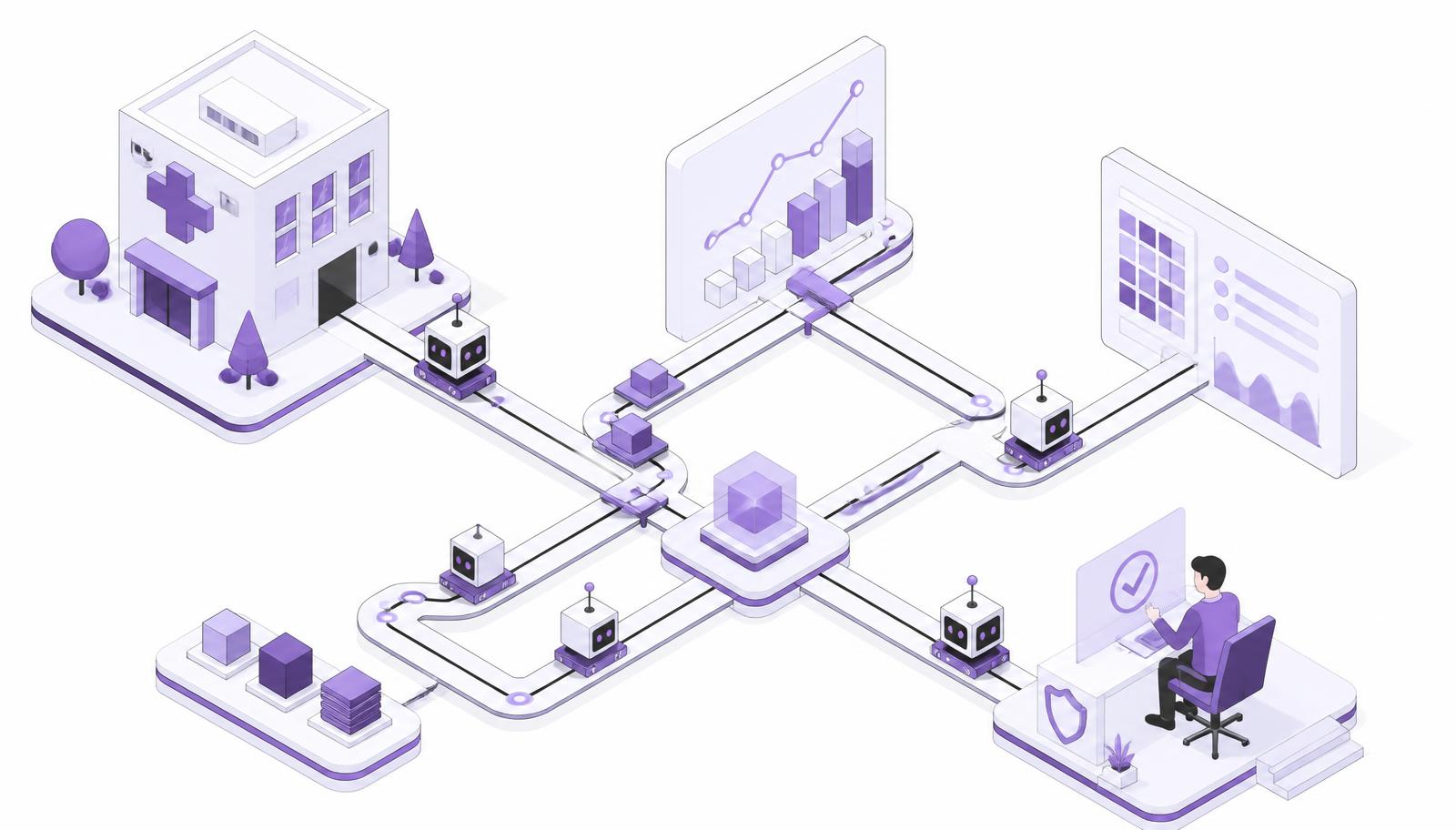
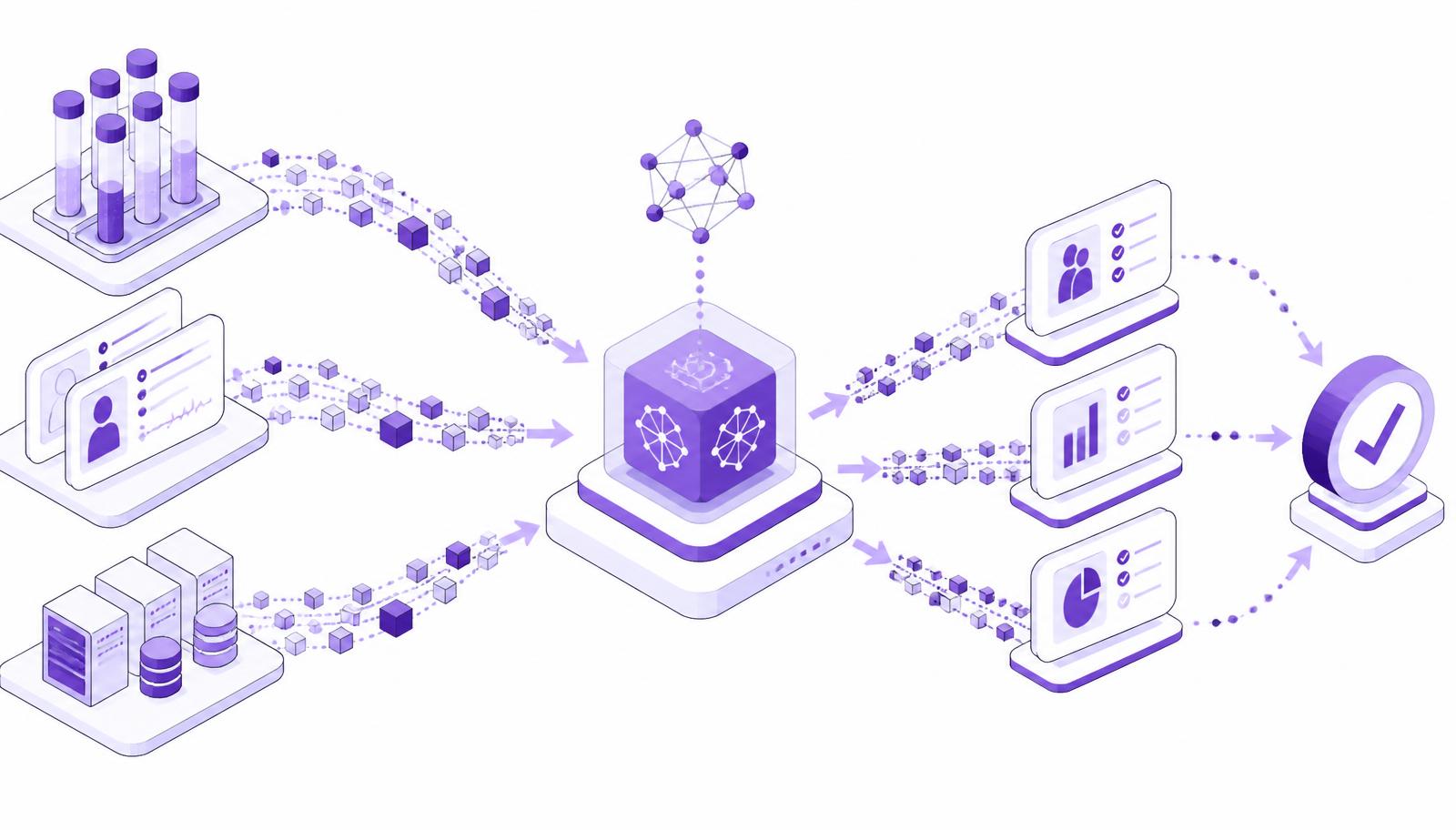
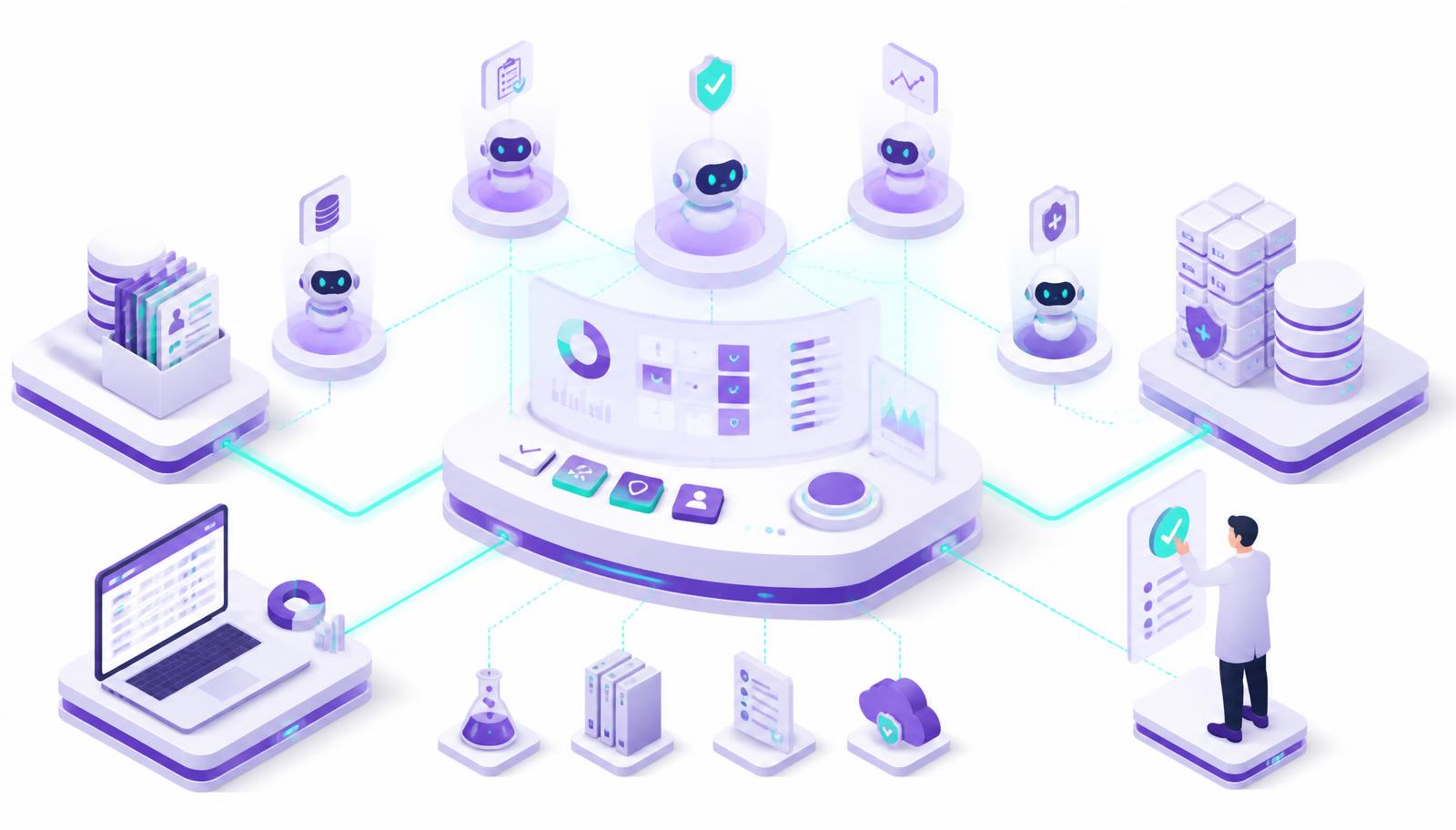
AI agents in clinical trials are governed software systems that help execute defined workflow steps across clinical trial operations. They use trial context, approved rules, and controlled system access to support work such as reviewing data, preparing actions, routing tasks, escalating exceptions, and logging outcomes.
Their role is not to replace clinical systems or clinical teams. They sit between trial data, workflow logic, and human oversight — helping structured work move forward when the next step is clear, and escalating when it is not.
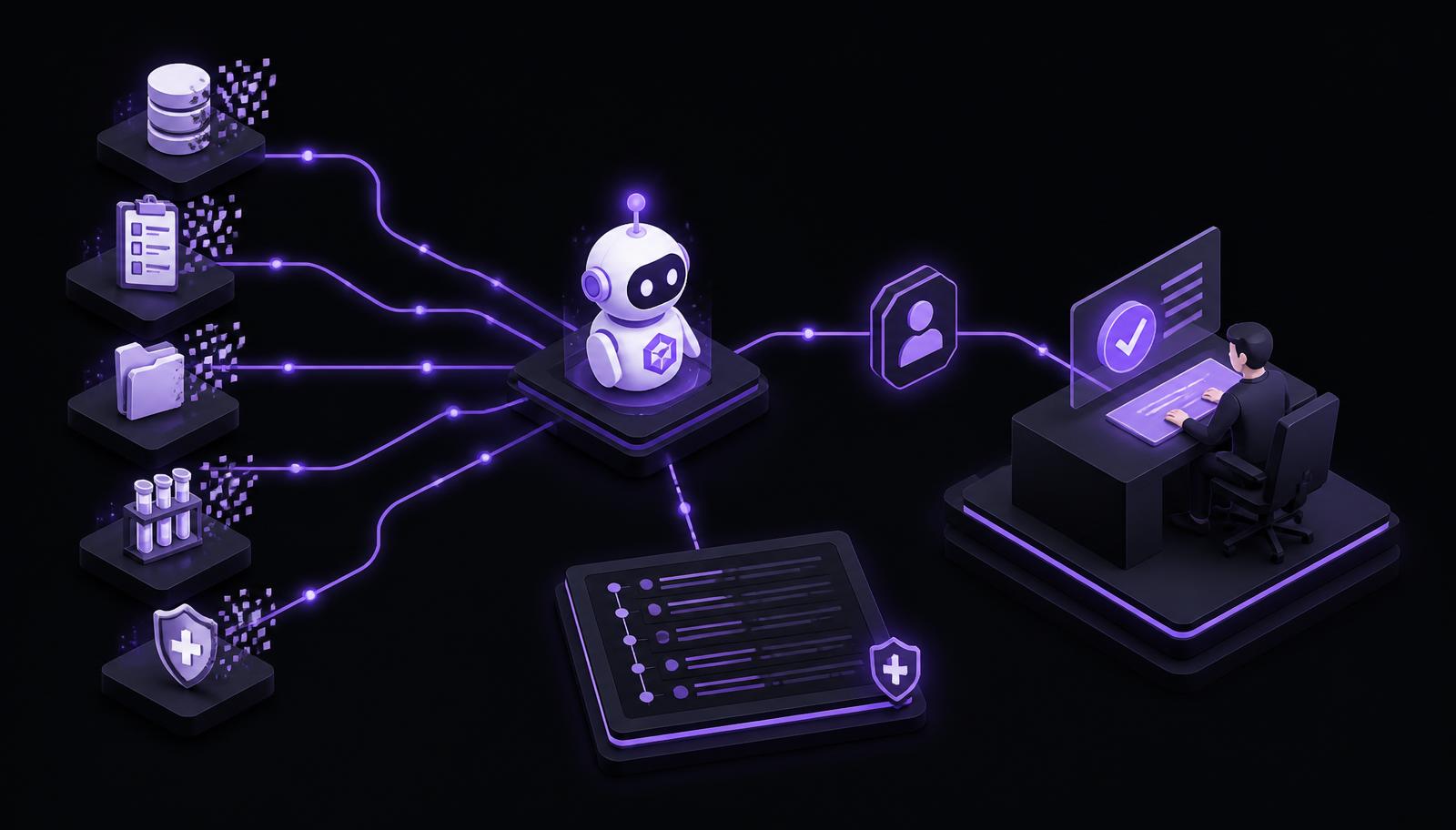
In practice, an AI agent may help with:
- Reviewing incoming trial data against predefined rules
- Preparing a query, task, or review packet
- Routing the action to the right team or system
- Flagging missing or inconsistent information
- Escalating exceptions to a human reviewer
- Recording each step for traceability
This is what separates AI agents from basic automation. A traditional automation script follows fixed instructions. An AI agent can evaluate context within approved boundaries and decide whether to proceed, pause, or escalate. If information is incomplete, unclear, or outside the defined workflow rules, the agent should not force an action — it should route the case to a qualified human reviewer and preserve a clear record of what happened.
The detailed mechanics of this execution loop are covered in How Do AI Agents Work in Clinical Trials?
How AI agents differ from automation, ML, and generative AI
AI agents differ from other clinical AI approaches because they are designed to move defined workflows toward resolution, not just identify issues, repeat fixed steps, or generate content. In regulated clinical trials, that distinction matters because operational value depends on what happens after a risk, discrepancy, or delay is detected.
| Approach | What it does well | Where it breaks in trials | Example |
|---|---|---|---|
| Rule-based automation | Repeats predictable steps consistently | Brittle to exceptions; cannot adapt to protocol changes | Auto-email a report weekly |
| ML / predictive analytics | Finds patterns and forecasts risk | Needs clean historical data; does not execute actions itself | Predict site enrollment rates |
| Generative AI | Summarizes, drafts text, answers questions | May produce inaccurate outputs; lacks audit trail and system integration | Draft a monitoring visit report |
| Agentic AI (AI agents) | Plans and executes multi-step workflows with tool use | Requires strong governance, validation, and integration design | Detect outlier labs, generate query, notify DM, log rationale |
For a deeper comparison of content generation versus workflow execution, see Agentic AI vs Generative AI in Clinical Trials. For governance, approval thresholds, and escalation models, see Human-in-the-Loop AI for Clinical Trials.
Where AI agents deliver the most impact in trials
AI agents deliver the most impact in clinical workflows that are structured, high-volume, rules-based, and dependent on cross-system coordination. These are the workflows where teams spend significant time moving work forward, even when expert clinical judgment is not required at every step.
Clinical data management
AI agents can support query triage, discrepancy detection, reconciliation review, and data review packet preparation. The value is not just speed — it is reducing repetitive review effort while keeping exceptions visible and traceable. For a deeper workflow view, see Agentic AI in Clinical Data Management.
Patient recruitment and enrollment
AI agents can help screen patient data against eligibility criteria, monitor site-level enrollment risk, and route follow-up when recruitment slows. Real-world use still requires privacy controls, site workflow alignment, and human review. Explore this further in AI Agents for Patient Recruitment.
Safety and pharmacovigilance
AI agents can support adverse event intake, pre-populate fields from approved sources, prioritize cases, and prepare evidence packets for medical review — reducing triage burden and helping urgent cases reach reviewers faster. See Agentic AI for Pharmacovigilance.
RBQM and site oversight
AI agents can support KRI monitoring, deviation pattern detection, targeted review preparation, and escalation routing when predefined thresholds are crossed. See AI-Enabled Risk-Based Monitoring.
These workflows share a common profile: the rules are defined, the volume is high, the systems are fragmented, and the outcomes can be measured. This is where governed AI execution creates durable value.
Governance controls for AI in clinical trial execution
Most governed deployments use three oversight levels:
- Assist: the agent monitors information, drafts outputs, or recommends next steps. A human reviews and executes the action.
- Execute with approval: the agent prepares the action — query text, routing, or case classification — and sends it for human approval before it reaches the system.
- Bounded execution: for low-risk, high-volume tasks with validated rules, the agent may act within pre-approved boundaries. Exceptions are escalated, and every action is logged for review.
This control structure is essential in regulated environments. FDA expectations around AI emphasize a human-centered, risk-based approach, while 21 CFR Part 11 reinforces the need for attributable, time-stamped, and inspection-ready electronic records. Governance cannot be added after deployment — it has to define how the agent works from the start.
Frequently asked questions
What are AI agents in clinical trials?
How are AI agents different from generative AI in clinical trials?
Where can AI agents be used in clinical trial operations?
Why are AI agents becoming important for AI in clinical trial execution?
What governance controls are needed for AI agents in trials?
References
Sources & references
- Costs of Drug Development (2020) — JAMA Network Open
- Day of Delay White Paper (2024) — Tufts CSDD
- Clinical Research Workforce Crisis (2023) — PMC
- Artificial Intelligence and Machine Learning in Drug Development — U.S. Food and Drug Administration

About the author
Sarah Mitchell
Director, Clinical AI Strategy
Sarah Mitchell specializes in clinical AI strategy, agentic systems, and the application of governed AI across regulated clinical trial workflows. Her work focuses on making AI agents practical, accountable, and operationally relevant for clinical research teams.