For many clinical data teams, the real struggle is not following the protocol but managing constant data friction around it. Lab results, site entries, and patient forms often carry small but costly issues — missing values, duplicate entries, inconsistent formats, or delayed updates. Each issue requires review, cleaning, and follow-up.
Mid-study protocol amendments make things worse, forcing teams to recheck previously clean datasets, revalidate rules, and retrain sites. When clean data is late, biostatisticians wait longer, sponsors lose decision speed, and patients wait longer for trial outcomes.
This article is part of our AI agents in clinical trials series. For the broader foundation, read the pillar guide: AI Agents in Clinical Trials: A Complete Guide. You can also explore What Are AI Agents in Clinical Trials?, How Do AI Agents Work in Clinical Trials?, Agentic AI vs Generative AI in Clinical Trials, and Human-in-the-Loop AI in Clinical Trials.
Why clinical data management needs agentic AI
Key challenges AI can help address
- Too many queries — manual review slows teams down and higher-risk issues can be missed. AI helps identify what matters most so teams prioritize meaningful queries.
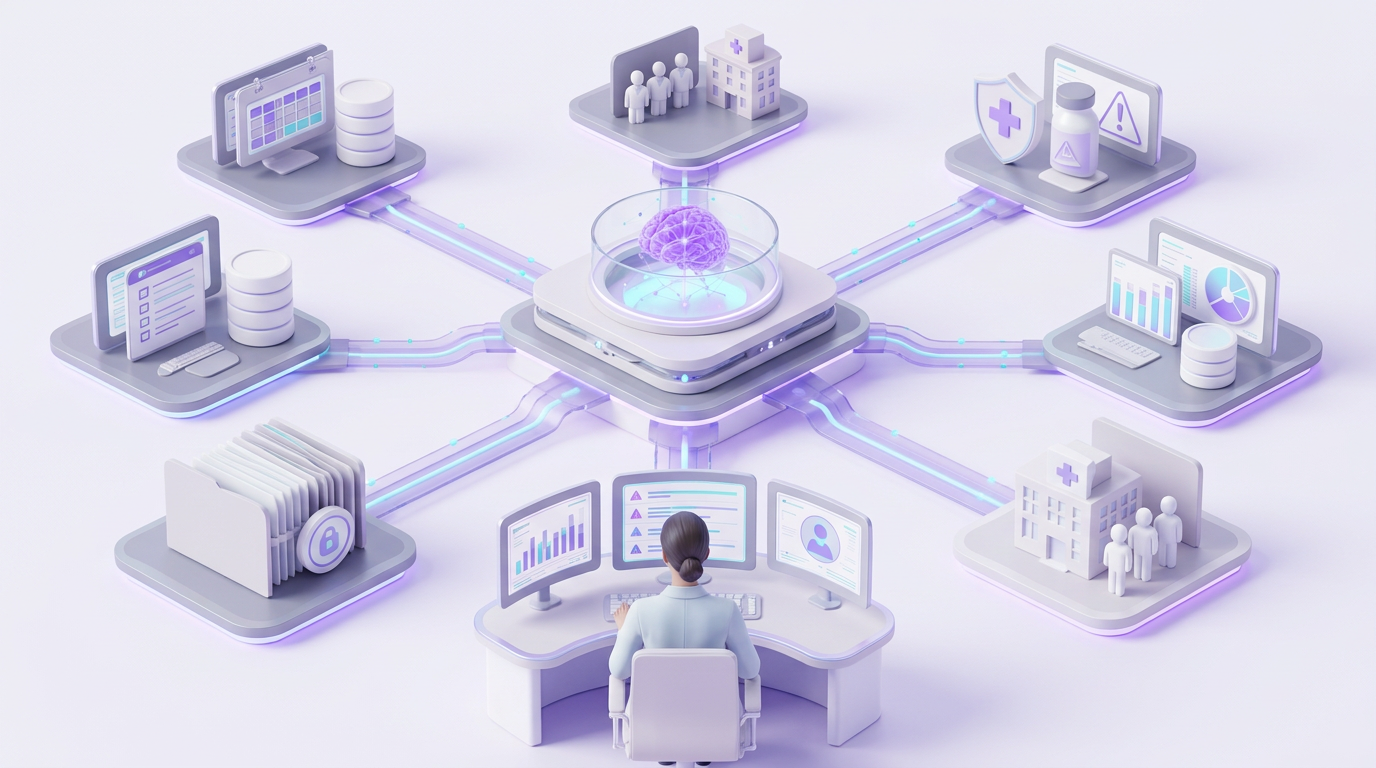
- Disconnected systems — EDC, CTMS, labs, and safety systems often do not sync. AI connects data signals across systems and identifies mismatches.
- Compliance challenges — when protocols change, keeping rules, records, and review processes audit-ready is difficult. AI supports real-time updates, traceability, and structured review workflows.
- Speed vs. quality — accelerating manual work increases the risk of missed errors. AI supports earlier detection, prioritization, and governed review so speed does not cost quality.
Agentic AI as a proactive partner in data management
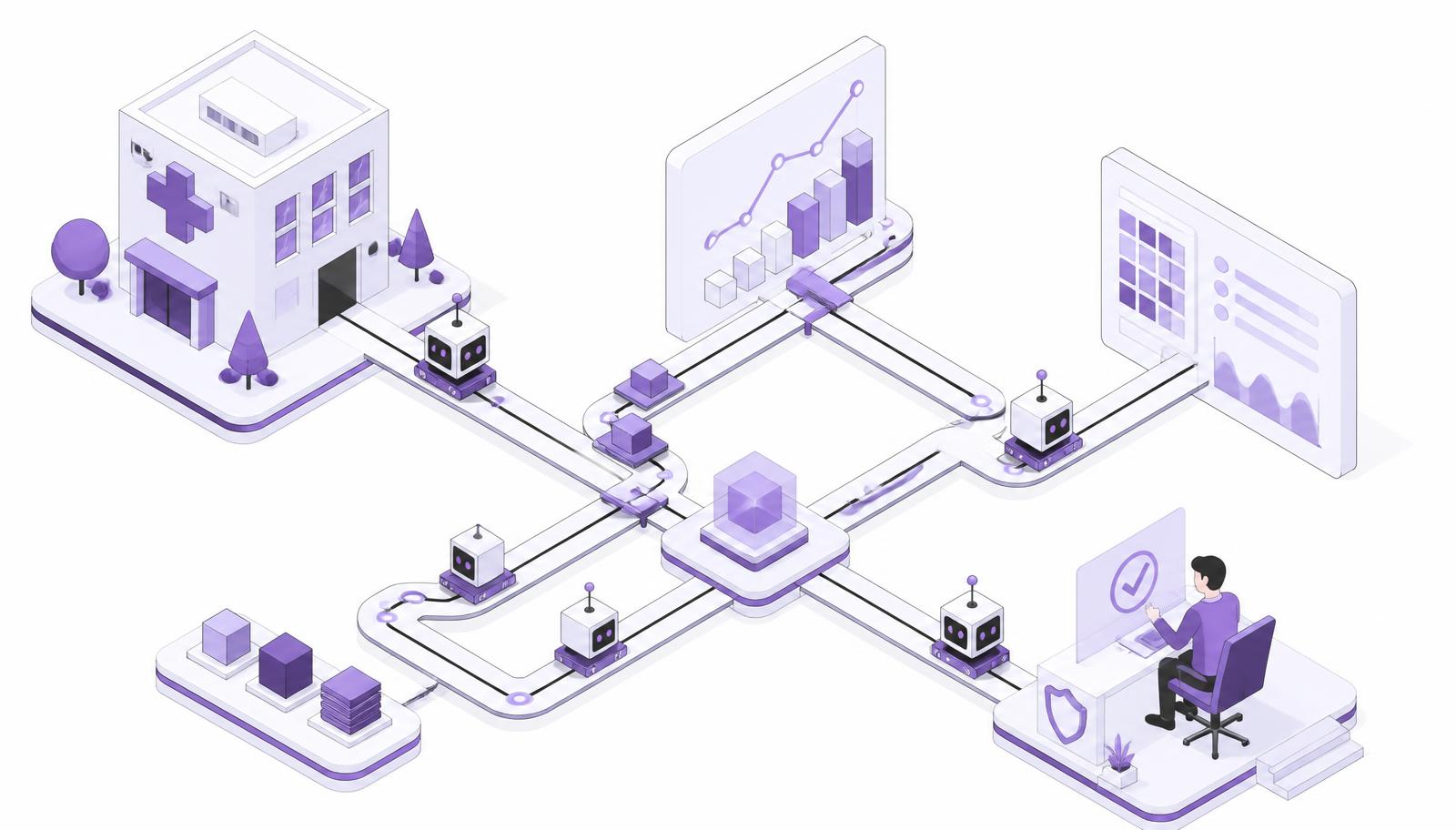
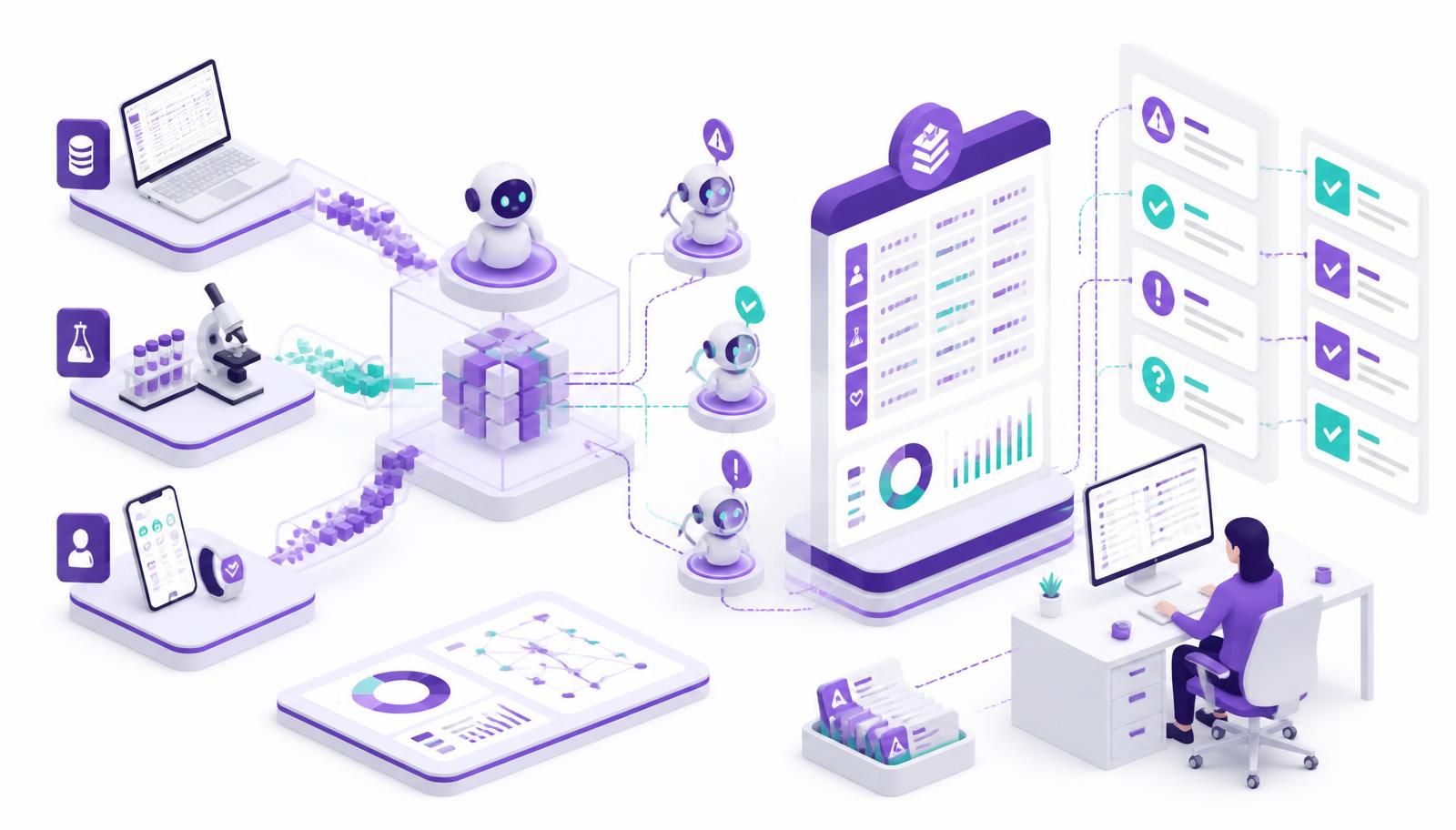
Think of it as a team of governed digital assistants that work together to support trial operations. Each one understands goals, applies defined workflow rules, and carries out tasks — escalating exceptions when human review is required.
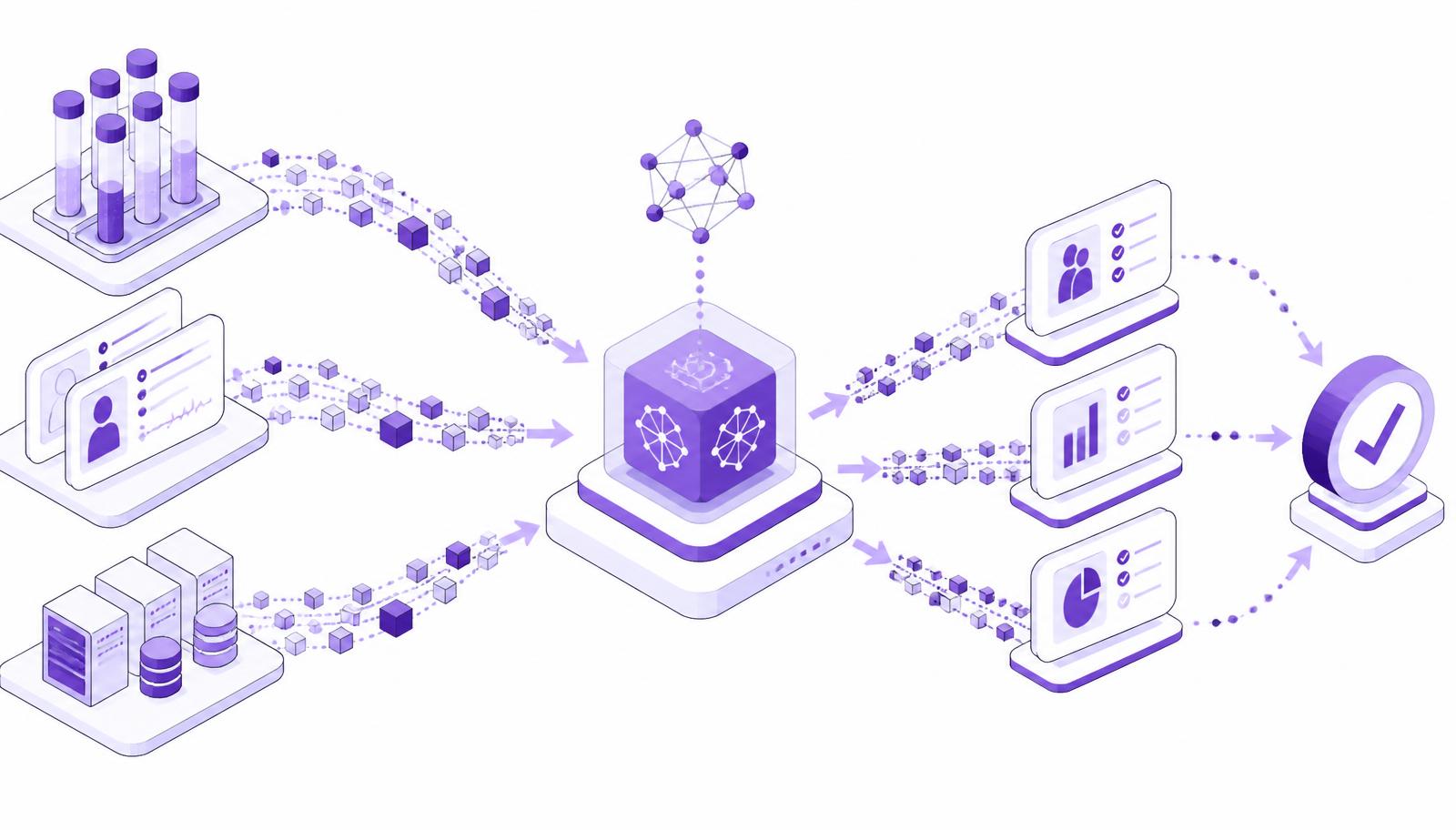
In clinical data management, tools like the Maxis AI Data Management Workbench bring EDC, lab, and ePRO data into a single source of truth. From there, different AI agents handle tasks like data cleaning, flagging discrepancies, and monitoring risks as data arrives.

These systems include built-in safeguards: audit trails, user access controls, and checks aligned to HIPAA, ICH E6(R3) Good Clinical Practice, and 21 CFR Part 11. Every action is tracked, so nothing is hidden or unchecked.
Smarter clinical data cleaning with AI agents
- Real-time error detection: agents scan data as it arrives, spotting out-of-range values, missing entries, or protocol deviations that would otherwise surface later in manual review.
- Smart prioritization: machine learning continuously assesses and ranks data issues based on their potential impact on patient safety or trial outcomes, filtering out low-priority noise.
- Fewer manual queries: simple errors can be resolved automatically or grouped for bulk handling, reducing query workload.
- Proven impact: early adopters of AI-powered data management workbenches report 40–50% faster data cycles, with cleaner datasets and less manual effort.
Streamlined data mapping and transformation
- Auto-mapping to standards: AI platforms use metadata and patterns to convert raw data into submission-ready CDISC SDTM datasets, saving up to 50% of the time this once took.
- Intelligent coding: NLP tools read free-text entries such as adverse events or drug names and suggest the right MedDRA or WHODrug code, flagging ambiguities for human coders.
- Standardization at entry: AI-enabled EDC checks catch wrong units or misspellings before data enters the pipeline.
Faster reconciliation and proactive reporting
- Cross-system reconciliation: agents compare EDC, lab, ePRO, CTMS, and safety data to surface mismatches before they delay analysis or database lock.
- Unified data views: teams work from the same up-to-date dataset instead of merging reports manually, with some organizations reporting up to 35% faster data discovery.
- Real-time reporting and insights: dashboards surface trends, safety signals, and patient progress continuously, freeing experts to focus on interpretation.
Compliance by design: aligning with 21 CFR Part 11 and GCP
Any new tool in clinical data management must reinforce compliance. Governed AI platforms provide audit trails, role-based access, validated operation, and explainable outputs. Regulators such as the FDA and EMA continue to stress transparency, explainability, and monitoring, so predictions or flagged issues can be understood and audited. For oversight models, see Human-in-the-Loop AI in Clinical Trials.
Measuring the impact of agentic AI in CDM
Benefits should be evaluated within clearly defined workflows — data cleaning, reconciliation, query handling, compliance checks, and database lock readiness — against a documented baseline and governance model. Use this checklist:
- Query backlog volume: are fewer queries remaining open over time?
- Time to query resolution: are queries reviewed, routed, and resolved faster?
- Number of unresolved discrepancies: are fewer data issues carrying forward into later review cycles?
- Manual review effort: are data teams spending less time on repetitive checks?
- Reconciliation cycle time: are cross-system mismatches identified and resolved earlier?
- Readiness for interim analysis or database lock: is cleaner data reaching biostatistics sooner?
- Audit trail completeness: are actions, approvals, and exception routes documented clearly?
From reactive cleanup to proactive data oversight
Earlier, clinical data managers spent most of their time fixing problems after they happened, while biostatisticians waited for clean datasets. With routine cleaning and validation automated, CDMs and quality associates can focus on oversight, strategy, and innovation — roles that are more impactful and less repetitive.
Conclusion
Agentic AI in CDM is not just about automation. It helps clinical data teams manage growing data volume through governed, traceable, and supervised workflows: faster timelines, fewer errors, and more space for people to focus on data quality and faster insights.
Frequently asked questions
What is agentic AI in clinical data management?
How does clinical data cleaning with AI improve data quality?
What do AI agents do in clinical data management?
How does clinical data reconciliation automation help before database lock?
Does agentic AI replace clinical data managers?
References
Sources & references
- Artificial Intelligence and Machine Learning in Drug Development — U.S. Food and Drug Administration
- Part 11, Electronic Records; Electronic Signatures — Scope and Application — U.S. Food and Drug Administration
- CDISC SDTM standards — CDISC

About the author
Dr. Lauren Mitchell
Director, Clinical Data Strategy
Lauren Mitchell specializes in clinical data strategy, data quality, and AI-enabled transformation of regulated clinical data workflows.